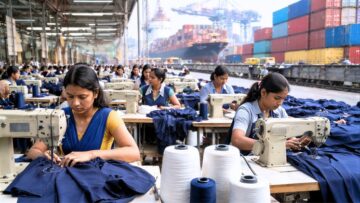
Bangladesh observed its sixth National Textile Day with renewed emphasis on strengthening the country’s textile workforce, as industry leaders warned that widening skill gaps threaten the long-term competitiveness of the nation’s largest industrial sector. The event, held under the theme, Growth of the textile sector, prosperity of the economy, was attended by Sheikh Bashir Uddin, Adviser to the Ministry of Textiles and Jute, as chief guest.
A key highlight of the commemorations was a special workshop titled Resilience and Reinvention: Creating Skilled Professionals for the Textile and Apparel Sector of Bangladesh, aimed at assessing how effectively the education system is preparing future textile professionals. Dr Mohammad Abbas Uddin Shiyak, Associate Professor at BUTEX and Consultant at Reed Consultancy, underscored the growing disconnect between academic training and industry needs.
Dr Abbas Uddin said graduates possess strong theoretical foundations but often lack the hands-on technical capabilities required on modern production floors. This mismatch, he noted, is making job placement more difficult while pushing manufacturers to hire foreign experts for critical technical roles — a trend that weakens local competitiveness and results in a significant outflow of foreign currency. Industry representatives echoed these concerns, describing the issue as a dual challenge for both the workforce and the wider economy.
Speakers called for structural reforms in textile education, urging institutions to transition to competency-based, machine-focused and industry-integrated training models. Priority areas include strengthening laboratory infrastructure, expanding research capabilities, enhancing faculty development and implementing rigorous internship programmes that reflect real-world environments. Such improvements, they said, would help graduates enter the industry as skilled professionals without the need for extensive post-employment retraining.
Representatives from the Bangladesh Technical Education Board, public and private universities, textile colleges, mill owners and ministry officials participated in the session. Discussions repeatedly highlighted the need to modernise curricula in line with rapid technological shifts across global textile and apparel value chains.
Addressing attendees, Adviser Sheikh Bashir Uddin urged closer collaboration between academia and industry to ensure graduates are equipped for current manufacturing demands. He emphasised that sustained export growth and the protection of Bangladesh’s global market position depend on a coordinated and future-ready strategy.
Presiding over the event, Bilkis Jahan Rimi assured that the Ministry of Textiles and Jute would take comprehensive measures to address the challenges identified, pledging reforms that will strengthen the textile education system and prepare the industry for emerging global opportunities. Industry stakeholders expressed confidence that targeted reforms would support Bangladesh’s export ambitions and reinforce its competitive advantage in the global marketplace.