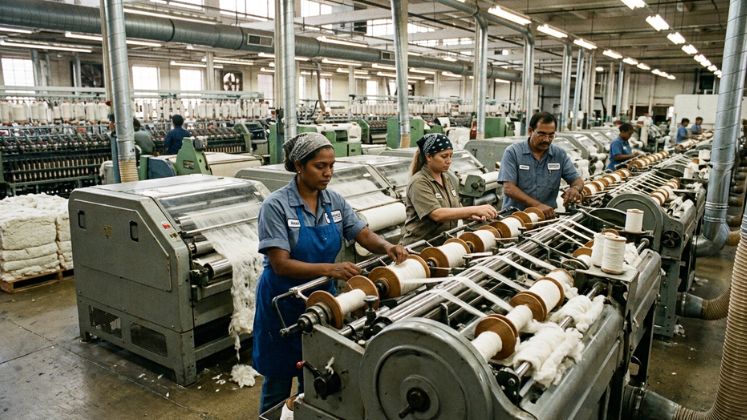
Arvind Limited filed its Business Responsibility and Sustainability Report (BRSR) for FY26 on August 26, 2026, detailing its progress on environmental and social governance targets across its textile operations. The report covers standalone operations and has received limited assurance from Intertek India Private Limited. Arvind operates 12 plants and six offices across India, serving markets in 14 states and 62 countries. Exports accounted for 38% of total turnover during the reporting period.
According to reports Arvind sourced 87% of its cotton from sustainable sources in FY26, exceeding its 50% target for 2025. Of this sustainable cotton, 87% was sourced from small and medium holder farmers, also surpassing the company’s 50% target. Renewable energy accounted for 43% of total energy consumption, above the 40% target set for 2025. Total energy consumption increased to 6,452.00 TJ from 6,187.58 TJ in FY25, while renewable energy consumption rose to 2,523.7 TJ. Non-renewable energy consumption stood at 3,928.3 TJ.
All Arvind facilities achieved zero freshwater use for manufacturing operations, meeting the company’s 2025 target. Total water withdrawal declined to 2,379,724 kilolitres from 2,684,427 kilolitres in FY25, while water consumption fell to 2,356,210 kilolitres. Water discharged also declined to 23,513 kilolitres from 38,443 kilolitres.
Total waste generation increased to 42,199 metric tonnes from 34,493 metric tonnes in FY25. Of the total waste generated, 27,164 metric tonnes were recovered through recycling or reuse. Hazardous waste disposed of through landfilling increased to 15,064 metric tonnes from 10,899 metric tonnes.
Scope 1 greenhouse gas emissions increased to 256,769 metric tonnes of CO2 equivalent from 253,283 metric tonnes in FY25, while Scope 2 emissions declined to 174,213 metric tonnes from 190,808 metric tonnes. Combined Scope 1 and Scope 2 emission intensity per rupee of turnover increased to 6.03E-06 MT CO2e per rupee from 5.82E-06 MT CO2e per rupee.
Total energy consumption increased by around 4.3% year-on-year, while renewable energy consumption grew by approximately 10.1%, indicating a shift towards a higher share of renewable energy despite increased overall energy demand.