As pale summer washes retire, deep indigo is resetting the denim wardrobe. The dress is the pivot, and Indian labels from mass-market to couture are already working in the same territory.
Denim has changed its tone for autumn. Rich, inky indigo is the season’s key wash and the pale blues that filled high street rails this summer are ready to be packed away. With October close, the argument goes, the wardrobe should darken.
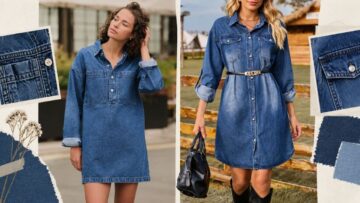
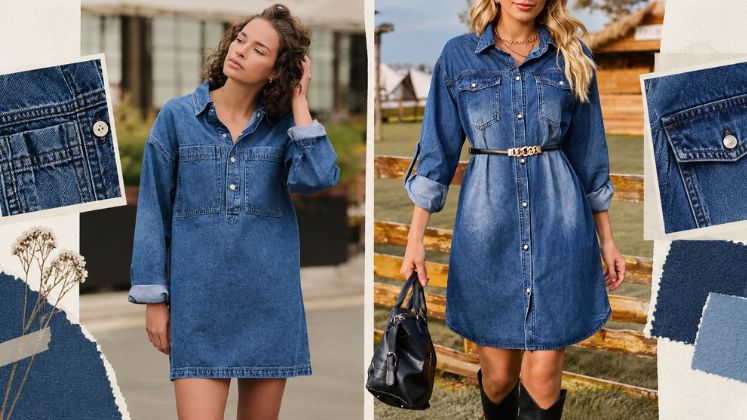
The wash shift is one part of the story. The article stresses that dark denim is not just about jeans, pointing to contrast-stitched jackets with a western edge and skirts in every length from mini to maxi. It then narrows to the dress as the easiest way into the trend, a one-and-done piece that works across seasons. Its example is Marks & Spencer’s Funnel Neck Midi Column Dress, a shirt dress in indigo denim.
The garment’s construction explains its appeal. The shirt dress is a familiar, timeless silhouette, but the denim version departs from the striped cotton styles that dominated summer. The fabric adds a subtle utility feel while the contrast stitching keeps it polished. An adjustable button front and a fabric waist tie let the wearer control the fit without cinching at the waist. The muted colour makes styling straightforward, with sheer tights and a leather-look jacket suggested once the weather cools.
Read together, the piece describes three moves that matter to the trade. The season is defined by a wash rather than a silhouette, denim is being shifted from bottoms into dresses, skirts and outerwear, and the winning product is accessible in price but detailed enough to look elevated.
Indian labels already work across this territory, and they interpret it differently from the UK high street. Where M&S sells a clean, utilitarian midi, Indian designers tend to treat denim as a surface for craft. On Pernia’s Pop-Up Shop, Payal Jain lists indigo denim embroidered shirt dresses and a tunic dress, while Kanika Goyal offers hand-embellished denim dresses in dark blue, blue and light blue. Saaj By Ankita adds crystal and pearl embroidery to blue denim mini dresses, and ZiP by Payal & Zinal shows printed and embellished denim shift and maxi dresses in pink. Shahin Mannan works the silhouette in river blue, steel blue, light blue and grey, including a mini shirt dress and a tiered dress.
At the sculpted end, Eshaani Jayaswal lists a black stretch denim tube midi dress and Graine a lime and black denim and mesh dress. The pattern suggests denim is being positioned as an occasion fabric as well as a casual one.
The design direction is moving the same way. At Lakmé Fashion Week x FDCI in March, Delhi-based designer Payal Pratap showed ‘Memories Pressed in Time’, her first all-denim collection and her menswear debut. Built on denim from Reliance’s R|Elan fabric brand, it featured jackets, skirts, gilets and dresses in relaxed, oversized forms. Botanical and cyanotype-inspired prints were pressed into indigo surfaces, and the finishing included tonal embroidery, appliqué pleats, quilting and distressed washes. Sustainability was central, with the runway tree made from repurposed denim. For the trade, the collection shows an Indian mill and a designer using indigo as a story about texture, provenance and material innovation, in contrast to the polish-led UK message.
Indigo also has a heritage meaning in India that the UK trend does not carry. Pinklay, a direct-to-consumer label, sells indigo dresses, kaftan shirt dresses, kurtas and co-ords, though these are indigo-dyed rather than denim. Its own guidance notes that indigo dye does not penetrate fibres evenly, can rub off and may run colour, an honest caution that any brand pushing the wash hard will need to communicate. Pink Wardrobe sells an indigo denim dress in a mid-thigh length, and Indigo Dreams runs a Denim Edit under its Eternal line.
The mass market is the least documented part of the picture. Spykar, the Indian denim label, lists indigo women’s jeans on Ajio, which shows depth in the wash even if it is not a dress. Tokyo Talkies says on its own site that it uses denim and chambray in shirt dresses and casual styles. Neither result confirms a current indigo dress at accessible prices, and that is where the M&S example is most relevant. A well-made indigo shirt dress at an approachable price is a gap that Indian value-fashion labels could fill.
The takeaway for Indian buyers and brands is that indigo can be sold in two ways. The first is the UK route of a clean, versatile, transseasonal shirt dress. The second is the Indian designer route of embroidery, surface treatment and sustainability, priced for occasion wear. The strongest positions may sit between the two.