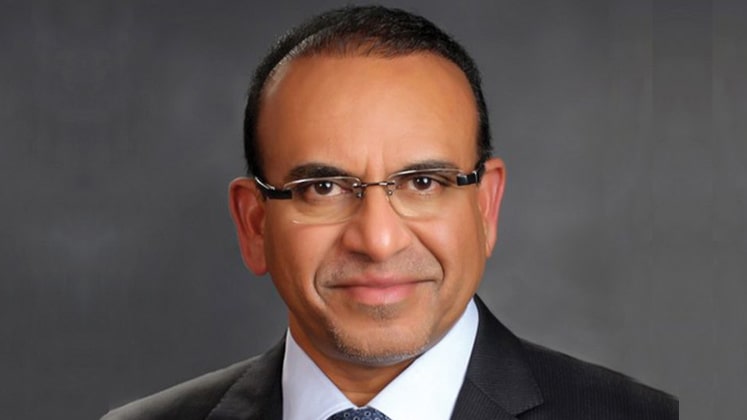
Asia has always been considered as the powerhouse of apparel manufacturing however, over the years, countries in Africa and Middle East regions have strongly marked their presence in the global manufacturing landscape. Jordan is one of these countries which is making headlines for all good reasons recently. Having an overall apparel manufacturing industry of over US $ 2 billion, Jordan is home of the largest apparel manufacturer in MENA region – Classic Fashion Apparel Industry Ltd. Co. (CFAI), which contributes a whopping 30 per cent in the total exports of the country. CFAI is extensively helping the country in its endeavors of making apparel manufacturing a mainstream industry for the global apparel buyers. Apparel Resources recently reached out to Sanal Kumar, Chairman and Managing Director, CFAI to know his thoughts on the global as well as Jordan apparel industry; his vision to take his technologically-advanced group to new horizons; and his passion to socially contribute towards wellbeing of underprivileged human beings. Below are the excerpts…
What changes have you personally witnessed in your business operations over the last 2 decades?
Sanal Kumar: It has been an amazing journey as we have worked with some of the best professionals and also not the best ones! I am a “never say die” type of person; so, it is all about moving forward from one milestone to another. We, at Classic, have gone through many challenges at every phase of our growth and managed to conquer each of them by giving in our 100 per cent. Glad that all the efforts have paid off and brought us at a place where we stand today. We still have a long way to go and we are progressing.
Do you feel evolution of garment industry in Jordan is different from evolution in other Asian counterparts?
Sanal Kumar: Garment manufacturing contributes to almost 29 per cent of Jordan’s GDP and growth of the industry was a steady 15-20 per cent annually, pre-COVID. The garment industry in Jordan today is a US $ 2 billion industry till COVID-19 hit the country, providing employment opportunities for almost 100,000 people.
Jordan enjoys a Free Trade Agreement with USA and Canada. This allows clothing brands and retailers based in these regions to have tax free import of garments made in Jordan. Garment exports to the EU have also been relaxed under the “Country of Origin Program” although this was from the perspective of encouraging the industry to hire Syrian refugees who reside in several refugee camps in Jordan.
About the strengths of the garment industry here in Jordan, there are many aspects. Government is supportive; the industry has proven its ability to produce high quality apparel and ship them on time, while being competitive with other markets as well.
How has the situation been over the last 6 months for CFAI? How have you been financially managing the huge workforce amid massive economic distress due to COVID-19?
Sanal Kumar: Jordan and Classic Fashion were not spared from the turmoil of COVID-19. The first impact of the pandemic was in December ’19-January ’20, when there were major issues to get our fabric and accessories from China. Later, the impact became severe when this outbreak disease spread across the globe, majorly in USA. Due to the shutting down of stores in USA between March, April and May, there were many cancellations and pushbacks from our customers and there was no clarity in how to move forward. We were in a fix when we had to handle both the panic situation at our customer end and also ensure the wellbeing of our workforce. We were quick to take stock of the situation, we worked out a solid SOP to keep all our employees safe and motivated even in this pandemic panic situation.
Later, we rose up to the occasion and immediately got into the new line of business of making all sort of personal protection equipment like masks, protection gowns etc. This way, we managed to engage our employees and were able to provide them with work to continue. Although in terms of growth, we see a flat year in 2020, but we see light in moving forward better and stronger.
Over the years, CFAI has expanded its operations in countries like China (including Hong Kong and Taiwan), Turkey, UAE, India and USA. What do these expansions mean to you?
Sanal Kumar: Our secret to success is to be able to structure the business on both horizontal and vertical horizons, thereby striking a balanced growth. Keeping this as our goal, we have set up our workstations in China, Taiwan and Turkey for sourcing the best materials at the best prices possible. We also have an office in UAE to arrange funds for our working capital needs at the best cost. The office in USA is aimed at supporting our customers on a real time basis.
Also Read: Have you digitalised garment measurement process? If not, the time is NOW!
CFAI has employed people from different countries. What’s the idea behind having workforce from so many countries? What are the advantages and challenges of having such a diverse team?
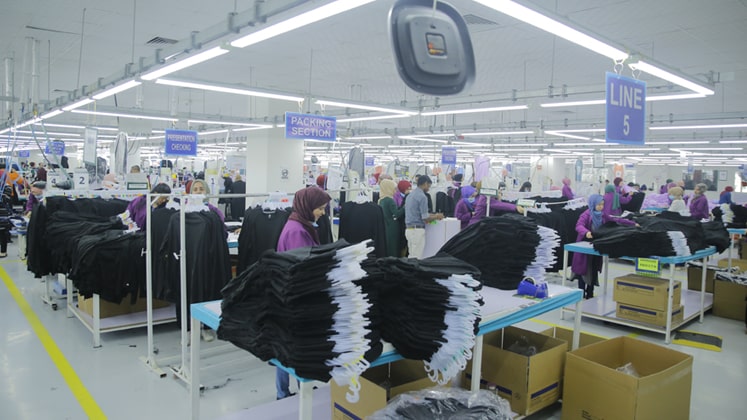
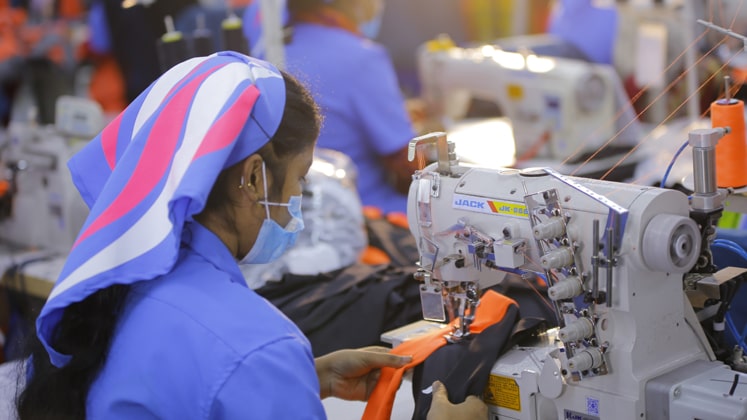
Sanal Kumar: 75 per cent of the workforce in the industry is migrant here. Classic Fashion itself is a home to 24,000 people from Bangladesh, India, Sri Lanka, Nepal and Syria as well. Our recruitment plan is based on inherent skills available in these Countries; for example, most of our Tailors are from Bangladesh, the Quality & IE people from Sri Lanka, Machine Mechanics & ironers from India and so on.
We have till date trained and hired over 350 Syrian refugees who are residents of the Zaatri refugee camp (we provide them free transportation to & from work).
Although the Government mandates that 25 per cent of the workforce should comprise of Jordanians, the industry is always striving to increase these numbers. Classic Fashion has established four training centers exclusively for Jordanian youth. Till date we have trained and employed over 3,500 Jordanians through our training centres.
Migrant workforce management being the tough subject that it is, we are constantly upgrading our Human Resources & Welfare management capabilities. Classic Fashion is probably the only manufacturer to establish and run 02 multistakeholder roundtable groups working on strengthening management systems surrounding migrant workforce management. These 02 Roundtables are in Jordan and Bangladesh (from where the industry gets its largest supply of manpower).
Since CFAI is the technically advanced group, how do you see the role of ‘Industry 4.0’ concepts in the manufacturing process, especially in post-COVID-19 era?
Sanal Kumar: The role of Industry 4.0 becomes even more critical in the backdrop of COVID-19. Those utilising digital solutions are better positioned to weather the storm than their peers during this crisis. Acceleration is the watchword here. Accelerated adoption of digital solutions such as – face scan attendance, digital work instructions, automation in the lines, etc. would help combat the shortages in resources across the supply chain.
Please tell us about new developments (completed and pipeline projects) of yours which have been a result of a more advanced manufacturing process.
Sanal Kumar: Our advanced manufacturing process is something we can be proud of. These projects include:
- 3D Virtual Sampling
- Conveyor System – For Unit Production System
- Shop floor Digitalisation – Using RFID bundle tracking system
- Traffic Light System and Roaming QA
- Electronic Data Interface
- Beautiful Audit
- Automatic Fabric Defect Detections
As automation is gradually taking over the manual operations, can this be an issue in future, in terms of manpower disruption?
Sanal Kumar: Contrary to common belief, automation will not over shadow the human intervention in our industry. It will only help us to increase the efficiency and quality of the individual’s task. Having said this, it may take away some very low skilled jobs but such workforce could be trained to deliver high skilled jobs over time, thereby only enhancing their capabilities. We have a system by which unskilled employees are trained for skills and redeployed. This is an ongoing process.
What does the concept of sustainability mean for CFAI, and in the new world, how important is sustainability?
Sanal Kumar: Classic Fashion initiated various projects on the Sustainable Development Goals in the year 2015 itself. We are constantly looking at opportunities to optimize resources like energy, water and waste management. In fact over 40 per cent of our energy is derived out of our own solar park. We recycle/reuse most of the water that we consume at our garment washing units. Classic Fashion is committed to be a Responsible Business and we take sustainability seriously!
CFAI has seven satellite units as well. How do these satellite units contribute in your business operations?
Sanal Kumar: We were the first to establish Satellite Units in 2013, at the behest of His Majesty the King of Jordan. The concept behind such satellite units is to provide employment opportunities to people living in rural pockets of the Kingdom. Considering the fact that most of these people working in satellite units had never been employed before, we had to start from the very beginning, train them and it gives me immense happiness to say that almost all our Satellite Units are almost at break-even; and improving by the day. Almost 90 per cent of the workforce in our satellite units are women.
Moving forward, what are the biggest changes/challenges that you envisage in the fashion value chain, including the apparel retail industry?
Sanal Kumar: We can see how the emergence of fast fashion is taking over the industry. The biggest challenge I foresee today is the lead time consumed in delivering goods. We are looking ahead to mitigate such challenges by having a fabric mill locally (expected completion of phase 1 by 2021), to reduce dependency on long lead time countries to acquire the raw materials. Also, another potential challenge is the growing online business of brands and retailers. To accommodate the fast growing online business the factories must have the flexibility to produce small volume in compact time frames. Looking forward to bring flexibility into our production by incorporating cluster and modular lines together with existing traditional lines.
What are CFAI’s plans to assist Jordan’s Vision 2025 and support the country in the long-term economic growth?
Sanal Kumar: As we know, Jordan’s Vision 2025 is to march toward self-sufficiency and to have the economic and industrial growth to support that vision. Keeping this in mind, Classic Fashion is definitely aligning itself in creating job opportunities for Jordanians in the different rural areas in Jordan, setting up a business model to double its sales by 2024 and vertically integrating itself with a state of art mill. All these will create more job opportunities for Jordanians directly or indirectly.
Overview of CFAI, Jordan:
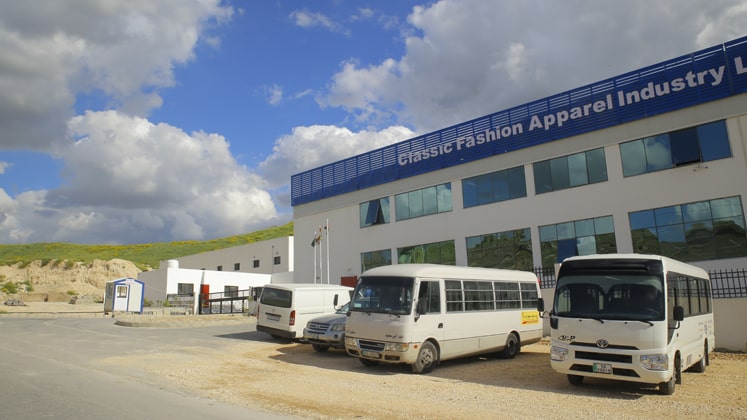
CFAI is the largest apparel manufacturer in the MENA (Middle East and North Africa) region, with a turnover of US $ 610 million. The company incepted in 2003 when it started manufacturing operations with just 300 workers and 150 sewing machines. The transformation of CFAI has been exemplary over the years as today it is a home of well-satisfied 30,000 workers from various countries who work on around 16,000 sewing machine to churn out garments day in and day out in 12 factories and 7 satellite units. The group has production capacity of around 15 million garments per month, with an average monthly run of 200 styles and contributes over 30 per cent of all the garment exports of Jordan. According to the production data of 2019, CFAI produced about 100 million garments in the year.
Also Read: Indian garment factories bet on technology post-COVID-19





 Bharat Tex Special Report 2026