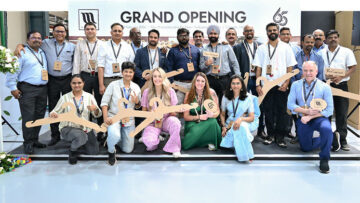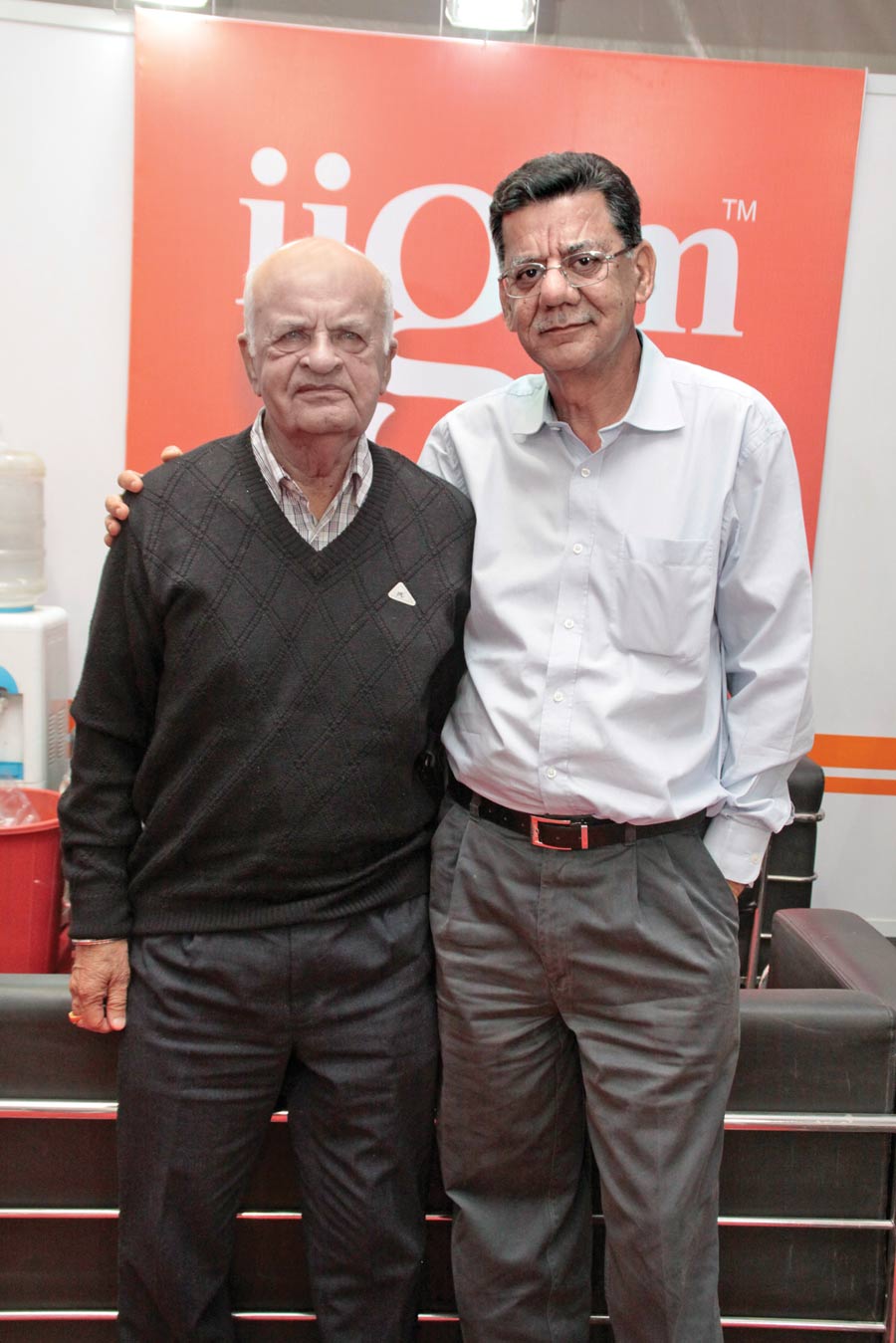
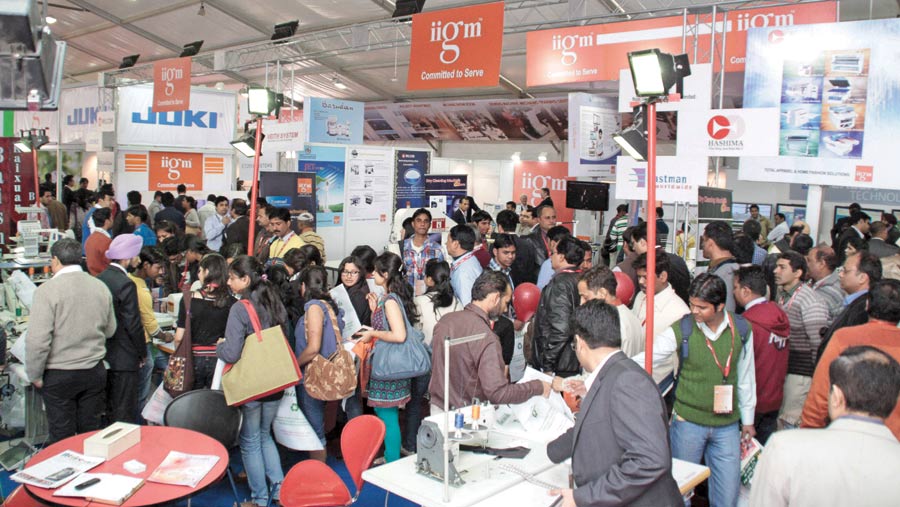
With a core philosophy of ‘value-added services’, IIGM has over the last three decades established a reputation as one of India’s foremost technology and services provider with a network of 35 world leaders in home textiles and apparel technology spread across many continents. Representing companies like Juki, Gerber, Eton, Barudan, Eastman, Yamato, Rotondi to name a few, IIGM has 12 offices across the country employing over 300 professionals who work diligently to satisfy over 5000 customers with a wide range of ‘end-to-end’ solutions. “If you associate yourself with good brands you automatically develop the same image for your company and the same has been reflected back by other technology manufacturers, as the good ones now want to work with us, so it is a win-win situation,” says a very satisfied Pavan Kapoor, MD, IIGM in a freewheeling interaction with Team SW. PK Khanna, Chairman of the company also shares his thoughts.
SW: People are not willing to invest in new technologies…
Pavan Kapoor: I completely disagree with this thought; actually the head-strong in the industry have invested in newer and better technologies during these tough times, and hence they would be the guys producing better quality products much more efficiently and in the end would be the ones who would survive in these times. The relevance of advanced technologies is more in hard times than anytime else.
If we look historically, India has never been into mass production. While countries like China, Bangladesh and Indonesia have always been the mass-producers, India has occupied a rather strategic position in manufacturing value-added garments, which makes good technology all the more important for India.
SW: High-end technology is the only way forward…
Pavan Kapoor: You can’t look at technology and processes in isolation. Let’s look at a company like JUKI for example; the machines made by them are also basic machines that can do various types of operations and a factory can always get good quality with just a JUKI line.
If that is all one is looking for, then he need not invest in high-end systems like GSD and Eton.
So there are always solutions, it is really the end result you are looking for and what kind of technology is needed to achieve the desired result, which matters.
PK Khanna: At IIGM we don’t ask you to come to us when you want to buy a high-end product like Gerber or an Eton System, we advice our customers to buy a good product, which can consistently deliver basic minimum results expected from it.
SW: Market for automated machines in India…
Pavan Kapoor: Firstly, a garment manufacturer must understand its positioning when talking about technology.
Let’s look at a product like shirts or trousers; there is a certain limit to which you can automate the operations.
[bleft]“Gerber has been with IIGM since 28 years and the kind of passion and dedication instilled in the people by Pavan Kapoor is exemplary.” [/bleft]
The fashion is changing really fast and if you automate yourselves too much, the system would become rigid to accommodate any kind of change which might come, in the near future.
And for drawing the line somewhere you need to know your business well, being responsible technology providers it’s not about what we can provide but what do you actually need.
SW: Support the industry with the right mix of solutions, which are both automated and flexible…

Pavan Kapoor: One of the things which we teach our sales guys is never to oversell. You have to first understand your customer and put yourself in his place. Then give him the product that his process deserves, irrespective of whether it is available with IIGM or not. And honestly the worst thing you can do to a customer is sell him a machine which he doesn’t require. Many technology providers in the anxiety to sell high-end solutions end up selling a machine which they cannot support, which tarnishes the image of the whole industry.
SW: Training of support staff and the ones at the user’s end…
Pavan Kapoor: Right from the beginning our service division has two elements; one is basic maintenance and the second aspect is the application, i.e. learning to use the machines in the right manner and which is the most critical of the two. The Eton system is a good example of how application service is critical. We consider the Eton an idiot proof system as it doesn’t breakdown and we personally have never done the AMC of any Eton product. However, this would not be possible if you don’t impart the right kind of knowledge to the end user and that too in a continuous manner. Our role doesn’t end after we have setup the product, given the initial application training, people change along with the products to be made, making the training necessary after a certain time interval.
SW: Predictions for the industry…
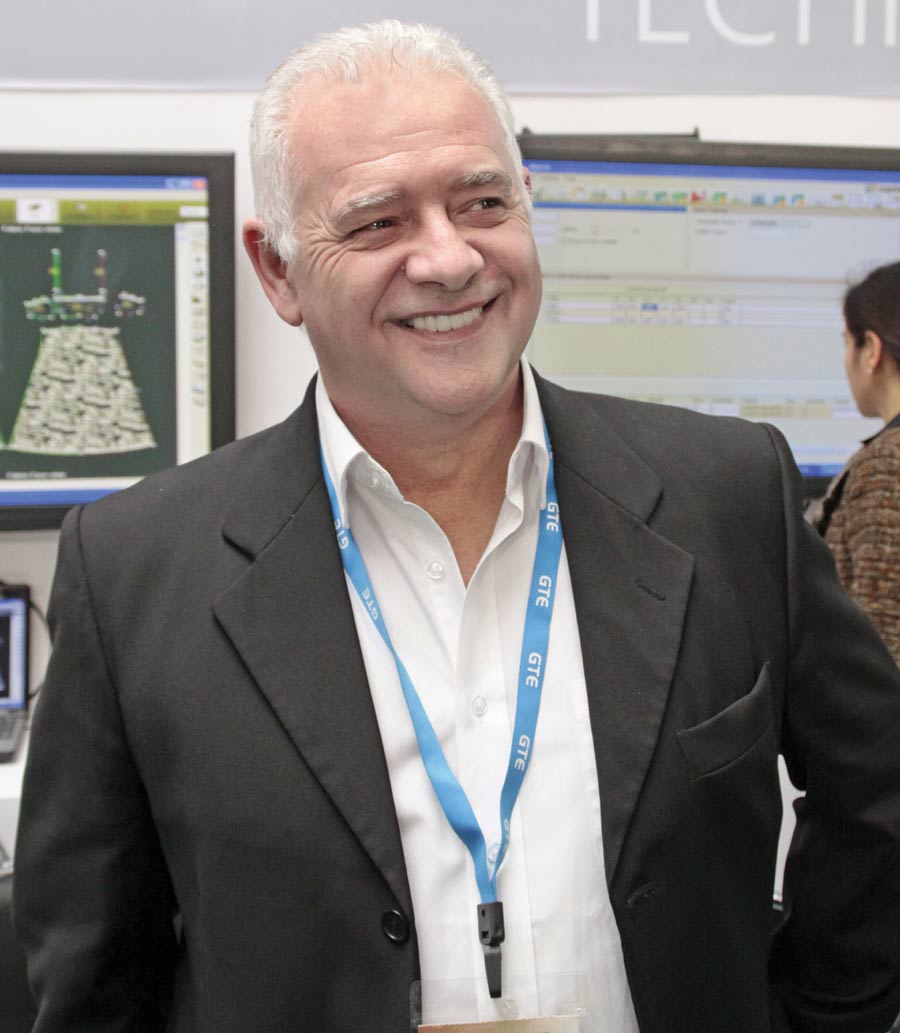
[bleft]”We are proud to have IIGM as our agents in India as their service is second to none and for them it is not just about sales its about backup service.” [/bleft]
PK Khanna: The nature of this industry has always been migratory and buyers constantly flock to the cheapest destination. There is no buyer loyalty and if you keep that in mind, either the industry should move indoors (to the interiors) like China moved from coastal areas towards the mainland or you move out of the country to get better prices.
Pavan Kapoor: I’m a firm believer that this industry will never disappear and now the question is how do you handle the hard times? It’s the same as in any other business where you have to become smarter, more cost-effective, get more from the same resource that is where the right mix of technology comes in.