Wearable devices are fast becoming the future of technology and the day is not far when ‘smart wearables’ are going to conquer the whole world. Yes, smart wearables will define the new future. In this context, ‘Smart Textiles’ is today fast gaining popularity and there are reasons. People, who used to find it difficult or awkward wearing smart watches or smart equipment, no longer have any qualms wearing smart apparels. There’s a demand now! In fact, the wearable technology market size is expected to reach US $ 57 billion by the end of 2022 at a compounded annual growth (CAG) rate of 16.2 per cent. As reported in Mordor Intelligence, the smart wearable market was valued at 216.18 million units in 2019 and is expected to touch 648.40 million units by the year 2025, at a CAG rate of 19.4 per cent. Substantiating further on the same, technology research firm Gartner says ‘wearable devices will drive half of all app interactions in the coming years.”
If what Gartner has said comes true, then iOS and Android are soon going to be flooded with apps on wearable devices – much to the liking of consumers, who are now also developing a fast growth of interest for smart apparels. And why not! Even those who aren’t too techno savvy, wouldn’t mind wearing shirts or trousers that have technology devices and can be networked easily. These actually comprise variety of sensors that can collect and store data and also pass on the information to other devices – all this while you are wearing them. A recent survey by the World Economic Forum (WEF) reveals that 92.1 per cent of corporate leaders believe 10 per cent of people will wear clothes that are internet-connected by the year 2025, and 85.5 per cent believe 105 per cent of eyewear will be internet-connected. Anything that consumers start loving and seeking, defines the market of the future. Isn’t it?
Fascination growing amongst consumers…
Whether the consumers are digitally literate or not, there’s a growing liking for wearable apparels amongst consumers. So, now the wearer can monitor his/her blood pressure or heart rate by just wearing smart wearables. With chronic diseases such as diabetes, cancer and respiratory disorders surging rapidly across the world over the last decade, the demand for smart wearables too has been on the rise.
In fact, very recently The Massachusetts Institute of Technology or MIT came up with a COVID-19 sensor that can be easily embedded into the garment of the wearer. These waterproof sensors help monitoring the vital signs of the body like respiratory rate, heart rate and body temperature. Besides, these are too thin thereby helping protect the aesthetics of the garment design.
Also Read: Sri Lanka playing smart with smart wearables
Also Read: Manufacturing athleisure: An attempt towards a model factory
It’s not just about monitoring one’s blood pressure or heart ailment. The same technology is also used to make clothes that can change colours on command, and that’s why such apparels are fast gaining popularity among youth and old alike. Moreover, lots of apparels have built-in piezo-electric cells that help charge their cell phones anytime and anywhere. In today’s times, when work from home (WFH) has become an integral part of our life, sitting in front of a computer has become a big health hazard. So how would one feel if there’s a gentle vibration on one’s shirt or trouser that will remind one to get up or take a walk or even start yoga sessions. Yes, that too is happening!
Here it is imperative to state that wearable technology includes different types of body-mounted technologies like functional apparels and smart apparels. While functional apparels – worn for special functional requirements – can be classified into several groups that are protective-functional, medical-functional, sports-functional, cross-functional assemblies or apparels for special needs, smart apparels aesthetically integrate the designs of functional apparels with portable technology.
Smart wearables in sportswear are growing in popularity and needs a mention…
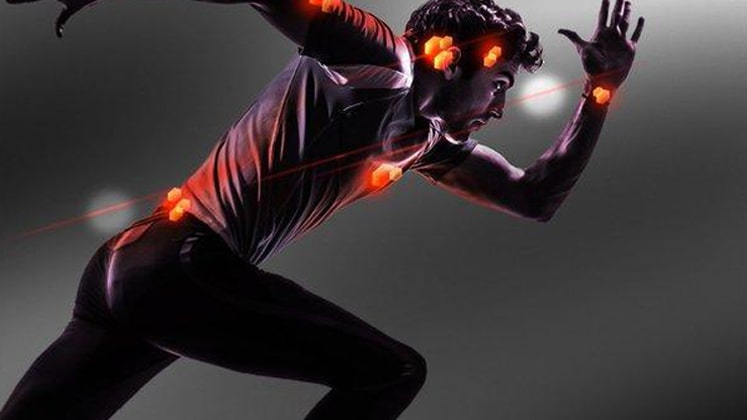
The introduction of technological innovations in every facet of our life, including sports, has actually helped resolve some of the problems with the aid of devices and specialised clothing. In fact, ‘smart apparels’ is an innovative take on monitoring the health and fitness levels of athletes.
One of the biggest benefits of using smart wearables in sportswear is remote monitoring. The sportsmen and women, who are often busy in training sessions, workouts, don’t need physical presence of a medical person to check his/her health status. So, his/her health condition can be monitored from anywhere and anytime. Besides, smart apparels help identifying violations in the systems of organs and determine the factors that affect the results in sports – an important pre-requisite in today’s times when competition is at its zenith in sports.
Wearables are a unique way of timely diagnosis of functional disorders in athletes, whereas stationary periodic examinations are not always that informative, accurate and easy. Besides, screening-evaluation of the functional state of the body is also possible especially at times of stress and, importantly, it is comfortable too. Smart apparels, almost always, are not visually very different from the usual apparels, and athletes hardly face any discomfort.
So which athlete or a sports team would mind wearing smart sportswear, when it gives them the flexibility to train at full strength. Like sportswear, shoes with built-in trackers too have been gaining popularity amongst sports athletes. Thanks to the use of intelligent fabric with integrated and printed sensors, smart wearables in sportswear independently receive the required biometric information and then easily send it to an external receiver be it Internet or Internet-enabled computers and phones
And health sector isn’t far behind…

Another emerging market for smart clothing is the health sector. Well, you can now integrate electronics into a shirt, a trouser or a bed sheet or maybe a blanket to ensure specific patient care functions are taken care of.
Smart apparels, as we discussed before, are definitely picking up, but one must also understand that the applications that are generally used in hospitals or medical units are few and far between. Having said that, things have picked up lately and healthcare sector isn’t far behind in using smart apparels. Many hospitals and also firms making medical equipment are closely supervising and guiding several smart apparel pilot projects in latest e-textiles technology.
It might still take some time, but if experts and analysts are to believed then this decade (2020-2030) should see smart wearables getting integrated into health sector. Tractica predicts smart apparels in healthcare sector to reach US $ 1.2 billion by the end of this year. If it happens, it would mean smart apparels are in maximum use and there isn’t anything better than that as it would bring down the dependence on costly machines. And importantly, it will enhance the treatment facility in the hospitals and medical centres, thereby boosting health insights in addition to lessening the cost. Till then, one can take solace from the fact that several firms are still working hard towards mass commercialisation of smart apparels to be used for healthcare sector.
Events too adding to the popularity of smart wearables….
Events or conferences that talk wearable technology and smart fashion raise awareness about the opportunities and innovations in the market and that’s why their roles too cannot be undermined. As the interest is fast growing amongst consumers, many technology events are playing a key role in further enhancing these smart wearables. The recently concluded 38th WT | Wearable Technologies Conference 2020, which was held virtually from 10 to 12 December 2020, focussed on emerging technologies and latest developments from the wearable tech industry and guided everyone through important topics in healthcare, sports and industry.
ISPO too has been consistently displaying major innovations, over the years, and remains one of the most eagerly awaited events for not only business leaders, but for all those who have some liking for smart apparels. The ISPO Beijing 2021 (14 to 16 January 2021) is already being talked about. ISPO Munich event, as of now, is expected to be held from 28 to 31 January next year and has always been at the forefront in creating buzz amongst smart wearable users and lovers.
A week after the ISPO Beijing event, Tokyo hosted ‘Wearable Expo’ – world’s largest exhibition (20 to 22 January 2021) for wearable devices and smart technologies. So for all those fascinated with smart apparels, IoT and AR/VR technology, this is the place to be. The annual South Asian Apparel Leadership Forum is one of the most significant discussion platforms that the Sri Lankan apparel industry – which is fast growing as leading ‘smart wearables’ market – participates every year.
Sri Lanka taking leadership role in the region…

Organised as a joint initiative between fashion academia, major clothing manufacturers and value chain partners of the industry, the South Asian Apparel Leadership Forum has been a futuristic curation of the most up-to-date business intel, all geared towards preparing Sri Lankan apparel industry for the future of wearables and smart apparels. The country has invested in R&D for wearable products in a big way and all the major apparel manufacturing companies are playing an important role in preparing the manufacturing destination for a leadership position in the segment. After all, the companies know that to be leaders in the market, R&D will have to play a huge role. Some such Sri Lankan firms who have managed to stand out in the ‘smart wearable’ industry not only for their quality but also for the innovative capabilities and state-of-the-art R&D centres are MAS Holdings, Hela Clothing and Brandix to name a few.
The innovation labs that have come up are truly world class and the latest developments coming from these centres are eagerly waited for at various new development forums including the South Asian Apparel Leadership Forum, which sees participation from Sri Lankan apparel bigwigs like Brandix, Hela, Hirdaramani Group and MAS Holdings. It will be interesting to see what these stalwarts have to offer in 2021 shows.
India still has some lessons to learn ….
While Sri Lanka keeps growing in smart clothing category, its neighbour India, somehow, has been struggling despite being a booming market for fashion retail. Corroborating on this Mohan Kumar, Director, Digital Fashion Factory, India, has his own take on less adoption of smart garments especially in India which is a booming market for fashion retail but has seen almost negligible development in smart clothing category. As not many domestic brands are foraying into smart apparels commercially in India, it becomes even more important to find out why it is so. Mohan adds that the fault lies in the manufacturing side and there is a huge disconnect between traditional textile manufacturers and conventional electronics manufacturers. The design process and business cycles are quite different and it is compounded by the lack of integrated standards. He further says “Standards that need to be there for large scale manufacturing and certification are not yet available, especially smart garments that are meant for healthcare use cases.”
But there is optimism! With a huge textile manufacturing base that exports apparels across the globe in addition to being highly advanced in software, India has all the potential to compete with the likes of Sri Lanka in smart wearable sector. There are some companies like Broadcast Wearables Pvt. Ltd. (Sygnal brand), Ducere Technologies Pvt. Ltd. (Lechal brand) and Arvind Ltd. (Arrow brand) that have put efforts in promoting smart apparels, but then they are few and far between and there’s still a long way for Indian companies to make a mark in smart wearables.
Till then let’s hope India too manages to create a rich space for itself in the smart wearables sector soon! As South African theologian Desmond Tutu once said “Hope is being able to see that there is light despite all of the darkness.