New York is undoubtedly the first fashion capital on the womenswear calendar. The city’s Fashion Week was set ablaze with several veteran designers leaving the city in the last few seasons. Proenza Schouler, Rodarte and Altuzarra all decamped for Paris last year itself. And this season’s goodbyes were from Carolina Herrera, who stepped down from the Creative Director post of her own brand. Jason Wu, Creative Chief of Hugo Boss also parted ways with the brand to focus on his own label.
Another ace designer Alexander Wang will now showcase off-schedule to align his show with the sales calendar. This is a smart business move by Wang, one of America’s most-prized creatives who was heavily scrutinised for his ‘diva’ behaviour last season.
Moreover, Jenny Packham and Victoria Beckham will now head to London to mark their 30th and 10th anniversaries next season. Opening Ceremony too announced the replacement of their runway presentation with a show at Disneyland on March 7, 2018.
With all this talent drain encapsulating the week, there were several questions being raised as to the relevance of fashion weeks in a business-first city like New York. Even so, the charade lasted 8 days, right till the closing day of men’s fashion week. This obviously creates a huge argument against the extravagant big-budget spending on the exclusive shows that anyone can now see from the comfort of their couch.
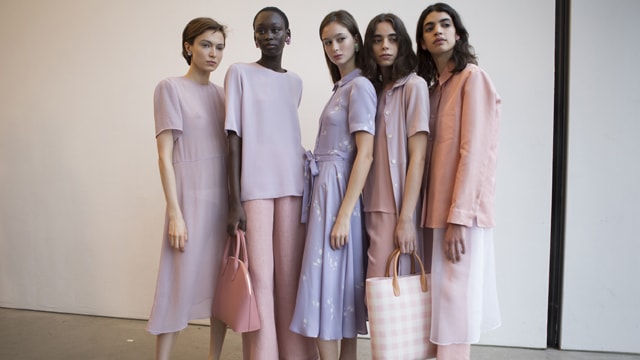
Nevertheless, younger names like Rosie Assoulin, Maryam Nassir Zadeh, Eckhaus Latta, Mansur Gavriel and Sies Marjan all kept NYC’s name afloat even in the midst of this turmoil.
Fashion week in its traditional sense might be outdated for the Gen-Z audience who is accustomed to accessibility and demands for hyper honesty and transparent production. Nonetheless, it is still an important platform for a young brand to get global press coverage and meet international buyers. This is truer for New York than any other city because of their openness to embrace foreign designers.
At NYFW, there was an eclectic mix of independent emerging brands like Nanushka (Budapest), Marina Moscone (Vancouver) and Saks Potts (Copenhagen). This would be hard to find in a city like Milan or Paris, where established designers have more control over everything.
Fashion weeks are just as important for heritage houses as well because it is the only place to collectively present new ideas with a guaranteed audience and let the power of social media carry your message all the way to the end consumer.
However, in the ‘phy-gital’ age, brands must rethink the way they hold these shows which is not limited to combining your men’s and women’s presentations.
For example, Italian mega-retailer Diesel used a creative marketing gimmick to gain a widespread attention even without a runway show this month. Diesel put up a mock counterfeit pop-up shop selling ironic knock-off t-shirts and other branded insignia for two days that went viral so to speak.
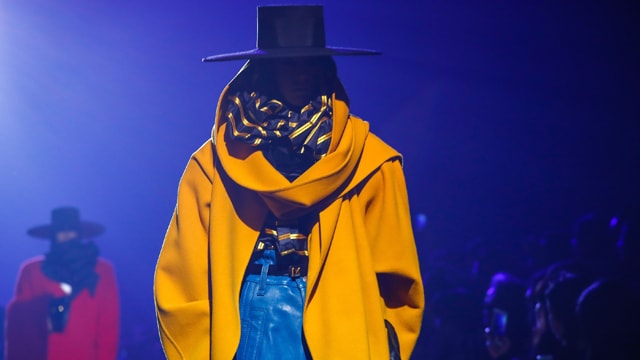
The Marc Jacobs show is also shaking things up in a surprising turn. Inspired by Haute Couture in the 80s, the F/W ’18 line-up was boldly coloured and hyper-exaggerated but very unlike Jacobs’ commercial intelligence that we have come to expect. The clothes showed almost no skin, perhaps a culmination of the conservative fashion trend that appeared all through the season. It is obvious that the American capital’s favourite star is also showing strains of a changing epoch in fashion.
On a brighter side, diversity in all its forms was at an all-time high at the fashion weeks. Falling in line with the industry’s wider adoption of inclusivity which cannot be done without anymore.
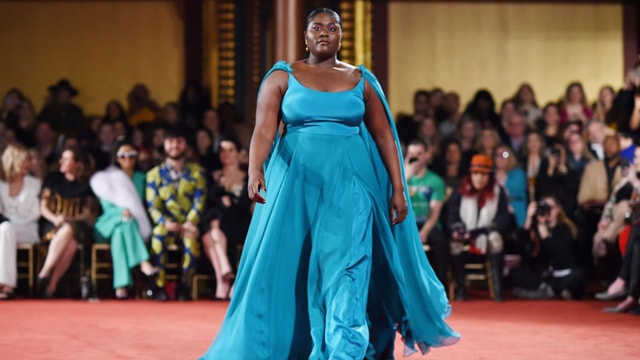
Who better to exemplify diversity than Christian Siriano, who celebrated his 10th year this season? A grand red carpet set for a diverse plus-size-friendly show, Siriano’s work has always been all about the real woman and is naturally adored by celebrities. Meg Ryan, Cardi B and Laverne Cox attended while Selma Blair, Ashley Graham and OITNB star Danielle Brooks walked the runway. Siriano’s assortment was rich in body flattering silhouettes that have made his work a red carpet hallmark.
All said and done, there may be several arguments against the circus of fashion weeks and NYFW in particular but no other place can give business exposure to a young designer the way New York can.
Calling out the industry on its confused dialogue against NYFW, Gary Wassner took to Twitter, passionately defending NYFW, writing: “There is validity to claims from both sides. But NYFW is unique. We need to view it through a different lens, not in comparison to other cities. Our runways are full of new ideas and POVs. If you’re only interested in mega shows and multi-million dollar extravaganzas then don’t come to NYFW.”