Heritage, culture and craftsmanship are the cornerstones of India’s long history. Embroidery, the embodiment of India’s art history, meets the summit of commercial solicitation in the country’s financial capital: Mumbai. The city plays host to the biggest hand-embroidery firms in the country who meet touchstone quality standards and export to the biggest names in the Haute Couture and luxury Ready-to-Wear business.
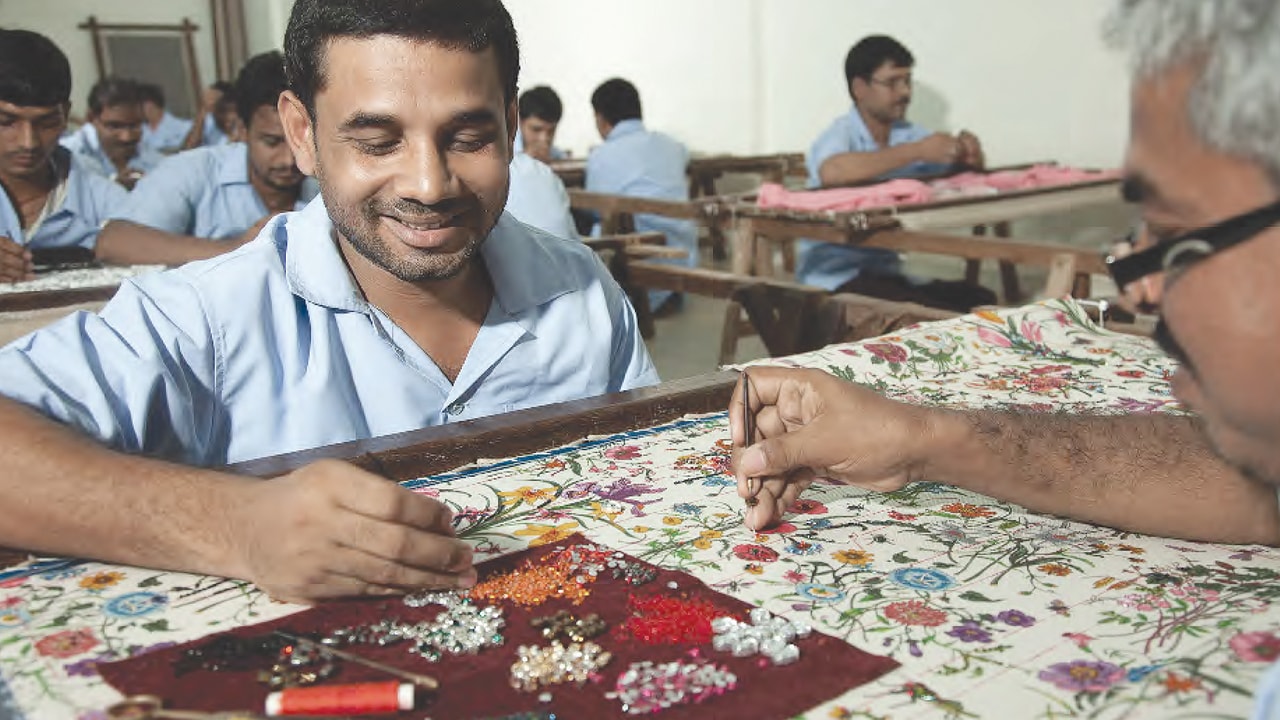
In the last issue, we threw light on how these companies initially acquired clients, either through personal contacts or just by being really hands-on in approaching the right people, and how they really assessed the client’s technical needs to make time-bound deliveries. So, while we are done with all the fashion forward aspects like design development and curating the right raw materials, how the manufacturers actually put the labour force and quality compliances together in a timely fashion is what makes or breaks this industry.
Working with practically the leaders of fashion like Christian Dior, Gucci and Givenchy, it comes as a little surprise to see that state-of-the-art infrastructure and robust management is a norm of this world. Subsequently, since people and processes are irrefutable here more than anywhere else, the companies are constantly working on intensive training programmes to keep workers in tune with the client’s changing requirements. Their hand-embroidery and garment finishing factories are designed and trained by international technicians who truly uplift the already highly-skilled workforce. Combining this best in class know-how that forms a solid backbone with efficient checks and compliances is basically the entire recipe to make it in this business.
Here is the second part of our story breaking down the recipe of exactly how Mumbai became the silent but proud crown-bearer of the finest and most innovative luxury hand-embroideries in the country.
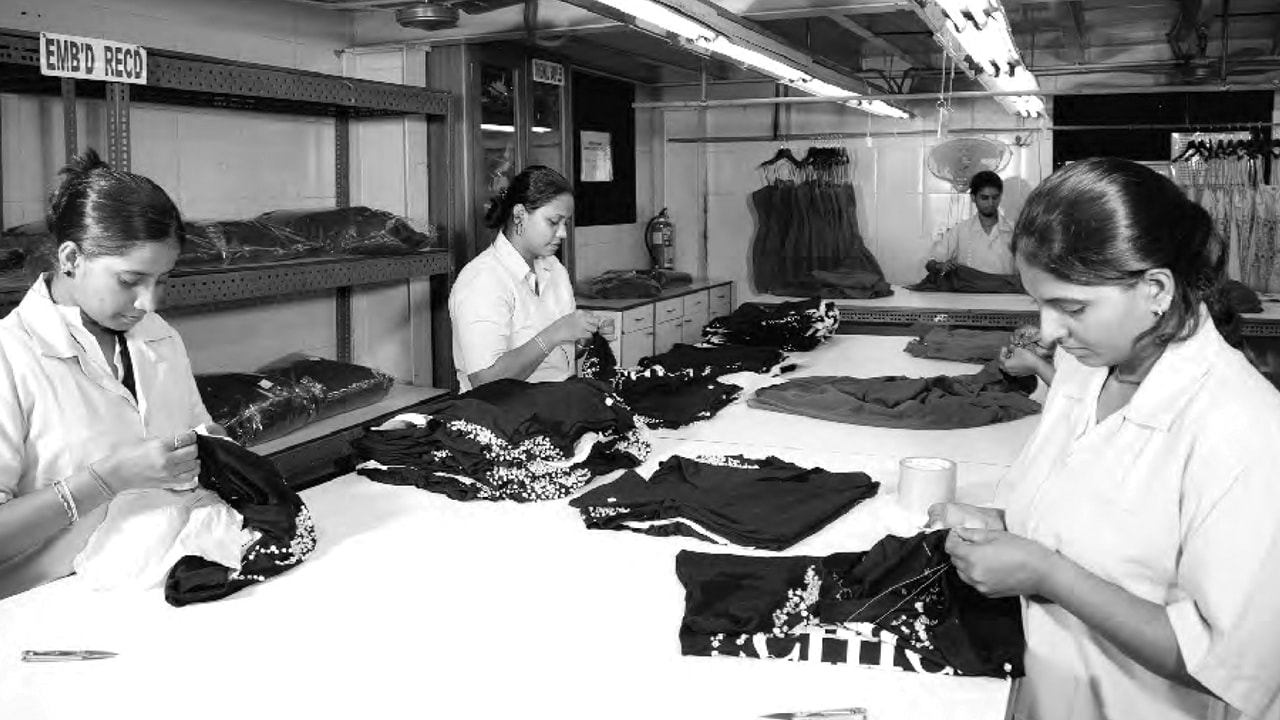
QUALITY CHECKS AT EVERY STAGE
Being an industry where the number of pieces you produce per style could go as low as only one piece, there is no tolerance for misplacing any quality parameters. Quality checks are the biggest charge added on the hefty price tag of luxury. There are meticulous processes at every level that take care of everything – from fabric defects, colour matching, motif adherence, broken or missed stitches and other design details – to make sure that the product being shipped is in the best shape. Even when the shipment is being processed, they have to make sure that important embroidery panels are packed without making any creases and only a certain number of folds are allowed depending on the intricacy of the work done on that particular panel. The packages are also monitored with the highest precision to make sure products reach the brand in impeccable condition along with repair kits and extra materials.
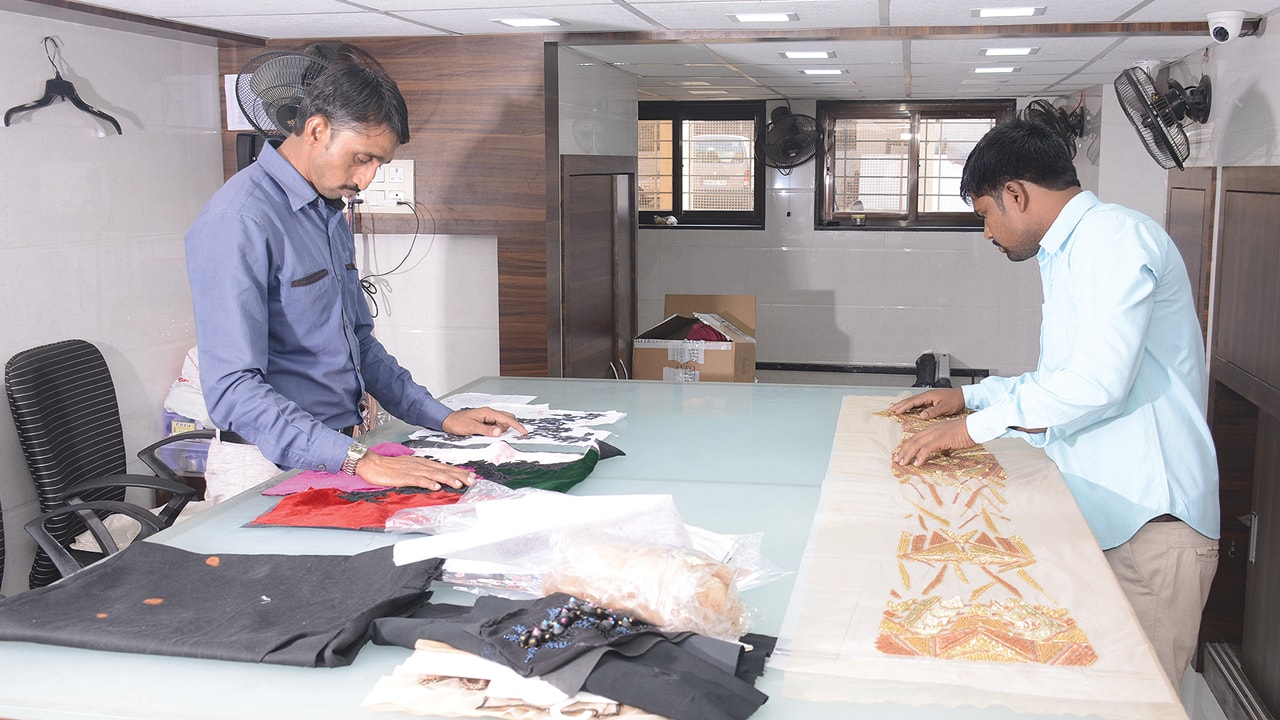
A part and parcel of the process, quality checks form a major chunk of the time, cost and effort invested in creating luxury. It is probably the one factor that would make it very hard for a newcomer to enter this arena. When most of the current industry frontrunners began, the market was still very free and you could get away with a lot as long as the final product looked good. Now, it is entirely impossible to work with that freedom, only companies that are looking to cut corners might work without these compliances.
Nehal Shah, Managing Director, Chanakya International affirms, “We spend about Rs. 8 to 10 lakhs every year just to ensure that all of our products, processes and instruments conform to the numerous compliance demands from our clients. Our quality management system has been awarded the QEC certification ISO 9001:2015 and the quality control and assurance audit teams always test and analyse raw materials as per REACH norms. Further, we have an effective ERP system in place to monitor and control production as well as the latest software customized to engineer special embroidery needs and garment grading mechanisms.”
REACH, which is a regulation of the European Union, adopted to improve the protection of human health and the environment from harmful chemicals, is the primal quality buzzword of the industry and everyone is now familiar with the basic compliance requirements from the international market. Since, all the firms have been coping with them for a long time now, they can ascertain that the main QC level is checking the materials before you sew it onto the fabric and beyond that, you just routinely make sure that everything is immaculately executed according to plan.
Archana Odiya, Design Head, Vashishtha Exports adds, “There are a lot of rules and regulations on what we can and cannot use – like the material has to be azo-free, lead-free and colour fast etc., but not every client is super strict about it. We test all our materials to ensure that no harmful materials are there; but there are times when we have more freedom and the compliances are not that stringent.”
HOW DO THEY RETAIN THE INFAMOUSLY MOBILE ARTISANS?
Skilled artisans form the backbone of this industry that will always be heavily dependent on manual labour and this business would cease to exist without them. Gayatri Khanna, Founder, Milaaya Embroideries explains, “Only karigars extremely proficient in the task come to Mumbai because even they know that their skills are best utilized in this city and hence, the income is also very high. The mediocre ones are more spread out because it may not seem worth the value for them to leave their villages, making them opt for locations closer to home such as Delhi or Hyderabad. The cost of living conditions in Mumbai is also far more expensive; so the craftsmen who come here come for a reason. They know they have the skill in their hand and are aware that it would be paid accordingly.”
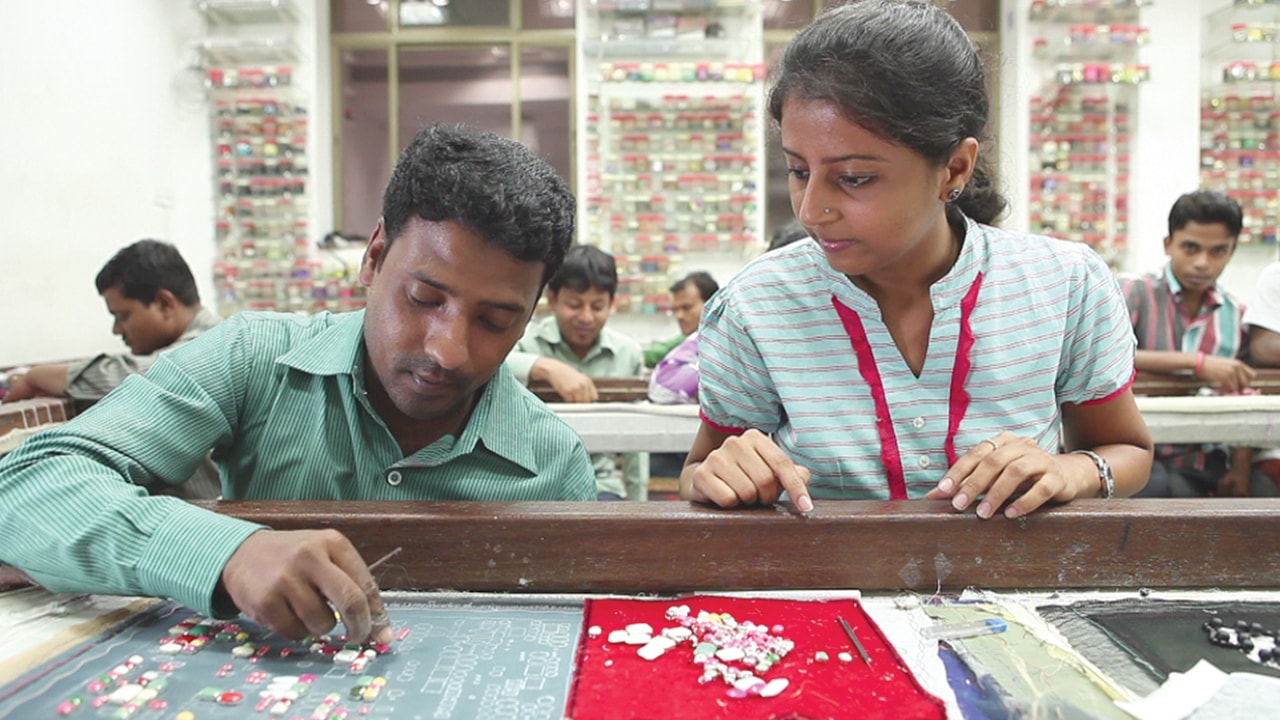
Perhaps, the only reason that Mumbai has become a hand-embroidery hub of highly skilled craft persons is because even artisans know that their diligent work will get its deserved value only in this city and all the firms here work categorically hard to maintain that belief.
The firms take immense pride in their craftsmen and are privileged to have many of them stick around since the very inception of their businesses. Hired on the basis of weeklong tests, they constantly work with even the most skilled karigars by training them, which enables the future generations of current artisans to cultivate the skill, which in turn allows them to rise to a senior level within their trade at a rapid pace. At Chanakya, it is norm to spot many father-son duos working together and the company boasts of over 400 expert artisans in-house. In addition to that, they have 20 captive ateliers with a capacity of 40-50 artisans per unit that goes to show the high level of job satisfaction of the craft folk with them.
Renuka Advani, Marsil Exports adds, “Initially the industry used to operate on a very different level where we had the karigars working in karkhanas or these sub-contracting workshops and they used to come for their daily wages, work a set number of hours and leave with their daily pay. There was no real stability to their lifestyle. Now that we have 5 factories of our own in Mumbai, we really want to change that and we have collaborated with a UK-based initiative called IMPACT. It is a very simple training programme that aims to improve the lifestyle and living conditions of beaders with the smallest changes that we would normally just take for granted. Further to this, we are always trying to make the artisans’ lives better because they really are the treasure trove of this industry and we really believe in getting them the respect they deserve.”
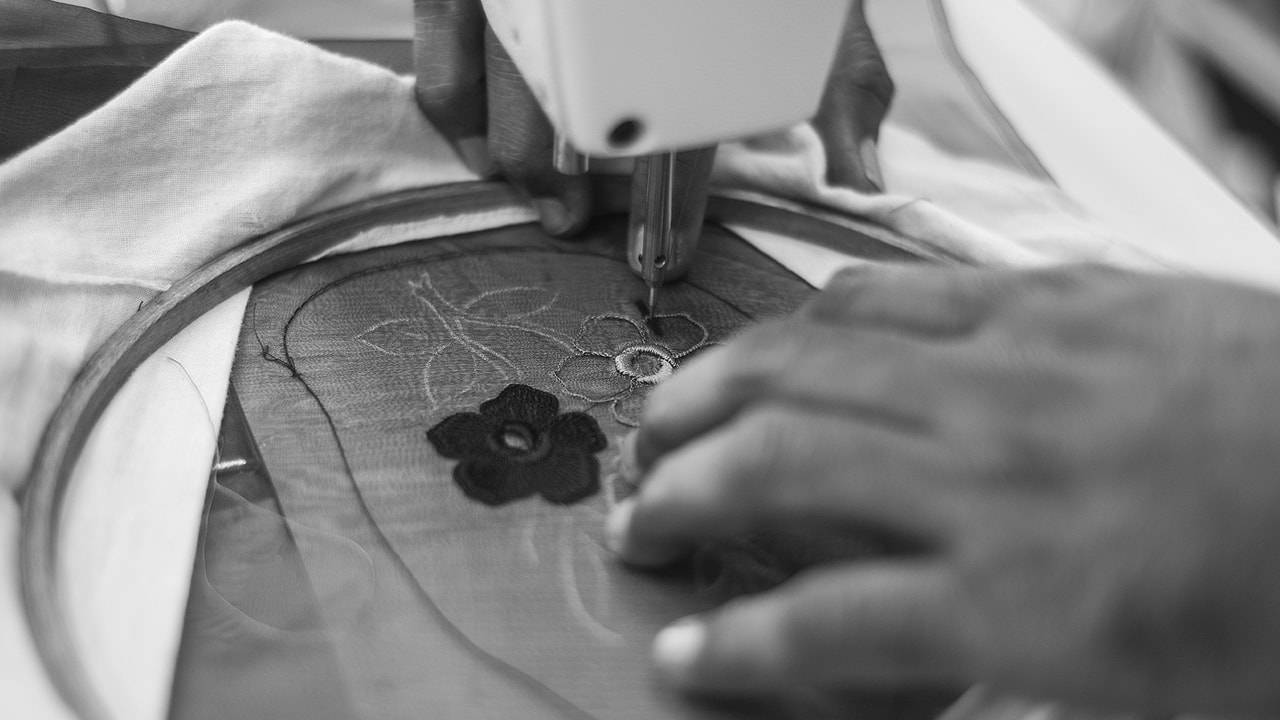
Adding to the same, even the Government is trying to find ways of bringing esteem to the life of our karigars that flock to the city in thousands every month. So while rehabilitation plans are currently still harder to execute, the Government is taking baby steps by introducing a programme where these craft-workers will get Government approved ‘Artisan Cards’ that will really give a sort of certification to their talent and make them feel important that their work is as important as any white collar job.
With all these efforts, the job retention rate is not a problem when the artisans are paid well and get to work in a positive and healthy environment. However, changing times bring with them a change in perspective…; with the rise of awareness and need for proper formal education, the upcoming generations want to get educated for better suited job prospects which will adversely impact the trade. So even though the effects will not be seen in this lifetime because shortage of jobs within our country still encourages people to get into this industry, but going forward it will continue to get tougher to find good karigars as more and more of their kids start getting educated and hence, moving away from the trade.
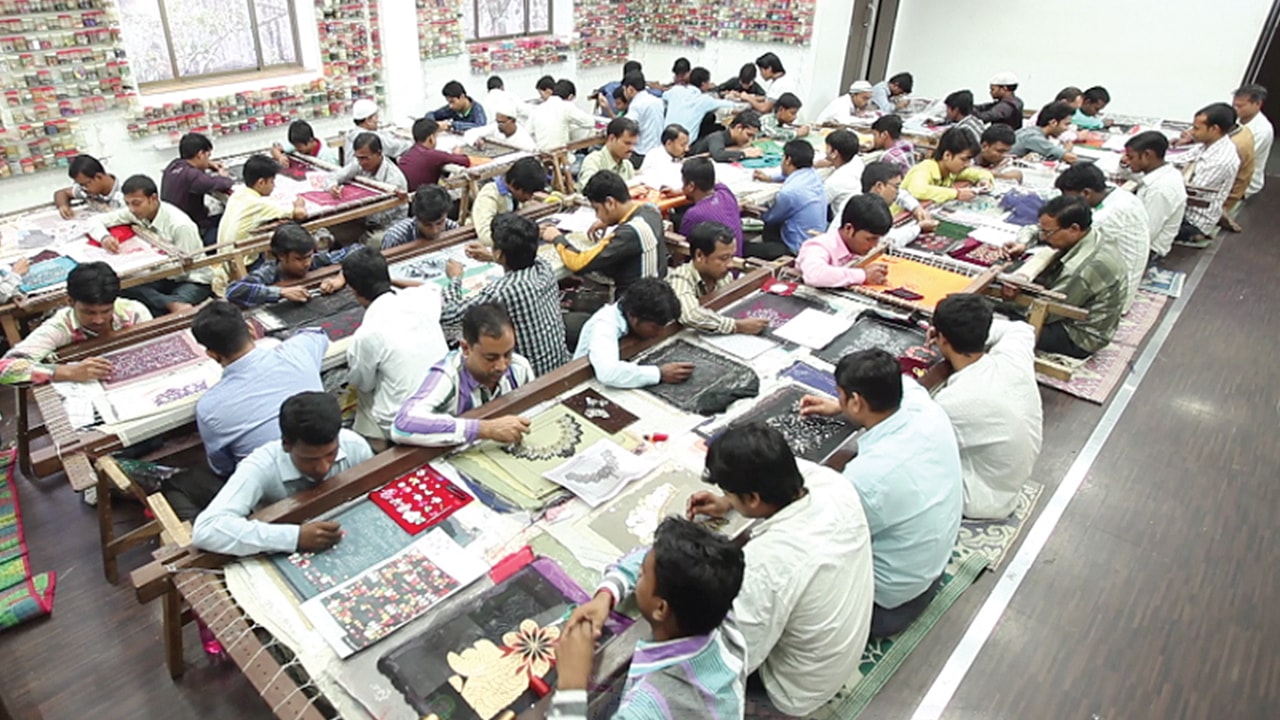
To combat the same, everyone would like an embroidery school to be installed in the country. This would enable anyone interested to gain the required skill set because at the moment, they don’t have the luxury to go to a vocational school and avail a formal education in the field. It would be a game changer if the Government can allocate some kind of space where such workshops can be set up, perhaps an entire zone, where they could bring their families and raise their children on the side.
The marketplace for luxury embroidery manufacturing is a hugely booming trade and has been growing through the last few decades. As a country, whose heritage and history really lies in this work, anyone entering this industry is not only sure of creating a highly profitable business out of this world, but also uplifting our economy with the Government’s full support to do the same.





 Bharat Tex Special Report 2026