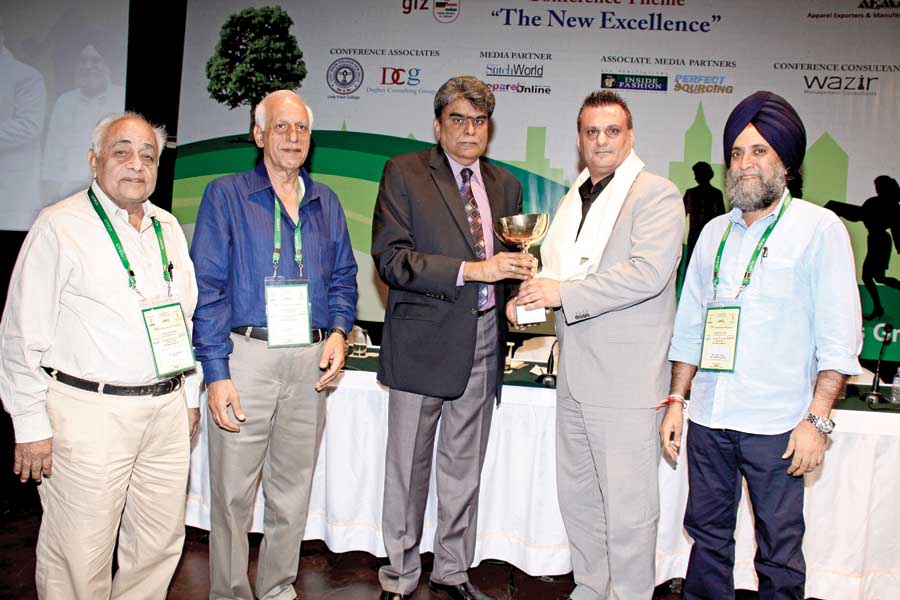
The eighth edition of the OGTC annual conference ICAHT-12 saw many industry informed participants and speakers debate key issues that are of importance to the industry today over the two days of presentations and workshops. The forum has grown with time and has pulled many regular participants year after year to use the platform for exchanging ideas and meeting new experts from around the world. Though the theme of this year’s conference was ‘The New Excellence’, it would not be wrong to say that the focus of many of the presentations was on ‘People’ and how the management needs to change their mind-set to redefine the priorities to grow in a competitive global business environment. Many well-known consultants and names from the industry shared their experiences and left the participants with many thoughts and perspectives to ponder on.
Among the many speakers, Apparel Online columnist, Bruce Berton, Executive V-P and COO of Roochi Traders, USA was well applauded for talking about ground realities of retail in the US and the urgent need to aggressively market the industry with a more direct approach. “I rarely see offices of Indian exporters in the US, whereas in California alone there are over 700 offices of Chinese companies who regularly interact with the retailers and service them upfront,” he pointed out. He emphasized that getting the business was the biggest challenge today and Indian exporters were not making enough effort. Reiterating his two favourite thoughts ‘relationships, relationships and relationships’ and ‘Nothing is as permanent as change’, Bruce urged the industry to improve upon their services to the buyers and change with time to meet all the requirements that were driving business today, while also strengthening the ties they enjoyed with their regular buyers to grow bigger.
[bleft]Charles Dagher shared with the industry few key results of the work his organization is doing in Bangladesh with UK-based retailor ASDA. About 10 factories, including Lenny Fashions, KDS Garments, Jamuna Group, Hoplun, Ananta and Adury, registered an average reduction in the unit cost (only manufacturing) by 18%.[/bleft]
Sharing his experience of working in Bangladesh for more than six years, Virender Goyal, MD & Country Manager Epic Designers, Bangladesh a division of the Hong Kong based Epic Group, felt that the importance of low wages in Bangladesh was overhyped and what really set the country apart was the commitment and determination of the industry heads to grab business and make things happen. “Change is a way of life in Bangladesh and owners are responding quickly to needs, investing in capacities, technology and process to satisfy buyers…there is a need for Indian manufacturers to listen more carefully to the buyers,” he said. When questioned why the Epic Group was not looking at India for manufacturing, Goyal was honest in admitting that the policies of the Government did not really encourage huge set-ups like the Epic Group had in Bangladesh. “The day things become more positive and responsive to global business, Epic will not hesitate to open a factory here,” he assured.
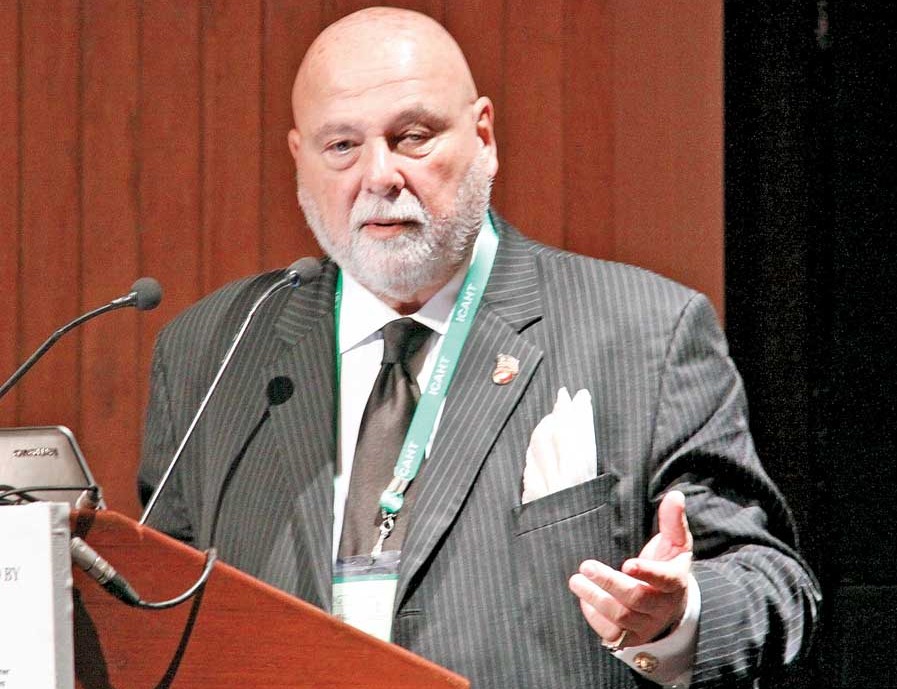
Underlining the need to change mind-sets, Charles Dagher, CEO, DCG in his presentation on ‘Shaping KPIs to short-and long-term profit goals’, emphasized that the thrust for change had to come from the top. “When any change is needed people look at the operators, but until the change happens at the management level, no change can be long-term,” he said. Adding, “One of the most difficult tasks when undertaking a project in India is aligning the visions and deliverables of everyone in the organization, from the chairman to the operator.” Taking reference from Berton’s presentation, Charles added that only through proactive strategy and market-driven costing system, can ‘relationships’ be built. “A market-driven costing system is based on three types of costs – planning, target and operational. Understanding and careful measurement of each can help an apparel manufacturer remain cost-effective in terms of operations,” he said.
[bleft]I rarely see offices of Indian exporters in the US, whereas in California alone there are over 700 offices of Chinese companies who regularly interact with the retailers and service them upfront.” – Bruce Berton Executive V-P and COO, Roochi Traders, USA[/bleft]
Speaking on ‘Managing Uncertainty’, Anand Rao of Infinite Possibilities an HR management company stressed upon the importance of retaining key talents in uncertain times. “It is most critical to keep the key people motivated during uncertain times because they are the ones who are assets and who are most likely to be picked up by competitors if they leave,” he said. Opening the house for discussion he questioned the role of HR in garment industry and urged the employers in the audience to redefine the traditional role and move closer to the people. “Companies that take good care of their people during uncertain times win the respect and loyalty of their workers that goes a long way to grow the company when things become more ‘certain’,” reasoned Rao. He added, “15% of the employees don’t know what their companies goals are, and 19% don’t identify the companies’ goals as theirs. It is important that the front line should be commuted with the goals because it is the frontline which achieves the bottom-line for the company.”
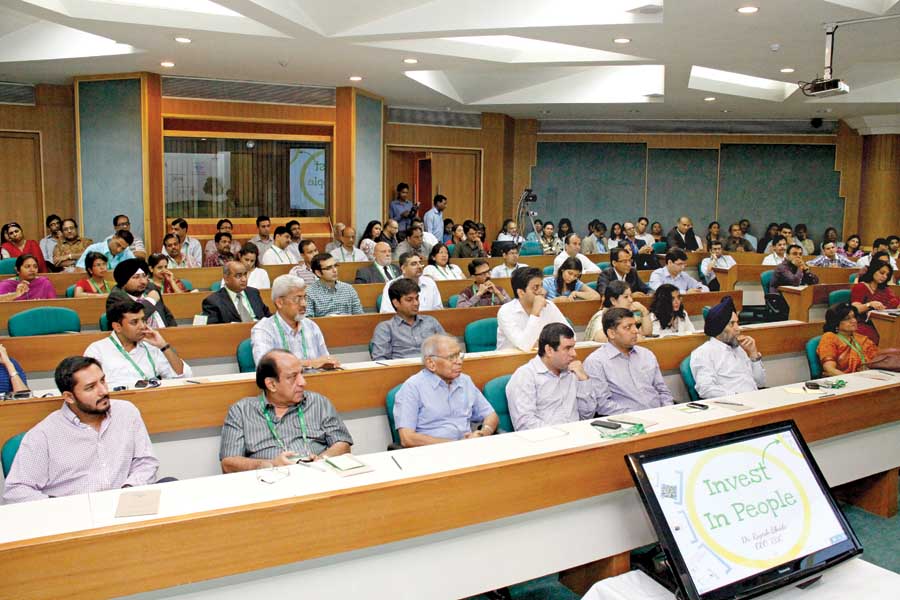
In a session that kept the audience involved Rajesh Bheda, MD, RBC declared that even above the buyers…people come first. This statement sparked off heated discussions on the topic of just how important employees were. While some exporters felt that keeping communication doors open and paying workers on time was the key to keep them happy, Vinod Kapur, MD, Radnik Exports admitted that till a few years ago these factors were enough, but now it was also imperative to let the worker know that he is important to the organization and to share the vision with him. “No doubt, if there is no buyer there is no business, but if we do not have the right motivated employee strength to deliver, then having business is of no significance, so people who are the pillars on which every organization stands need to be acknowledged for their contribution,” reasoned Bheda.
[bleft]Always being the ambassador of ‘People-driven Change’, Dr. Rajesh Bheda highlighted results of the work done under the RAGS project in the Delhi-NCR, accounting for 10.3% increase in efficiency, 46.8% reduction in defects per hundred units and 46.8% reduction in the absenteeism.[/bleft]
Bheda advocated that it should be regularly checked that the gap between what the employees want and what they get shall not become too wide. “Aman knitting, Bangladesh, has developed a concept of zero defect operators, i.e. these certain set of operators are so efficient that operation passed through their hands doesn’t require rework. This was achieved by participation of the entire management where every policy maker took under them 5 operators and personally supervised their progress throughout the training period. The operators were assured of an environment where there success was theirs and their failure was that of the company.”
Setting an example, Lal Sudhakaran V-P Manufacturing, Madura Garments enthralled the audience with a case study of what they as a company have done to become a benchmarked company for manufacturing excellence including employee engagement initiatives, yet unheard of in the garment industry. “By the end of 2012, we are over with our consolidation and strategy implementation phase, our vision, goals and KPIs are well defined. From 2013 onwards, the focus is going to shift to building an organization that can stand the test of time,” he said.
[bleft]Change is a way of life in Bangladesh and owners are responding quickly to the needs of the buyers… there is a need for Indian manufacturers to do the same.” – Virender Goyal MD & Country Manager, Epic Designers[/bleft]
The importance of social and environment compliances was also stressed upon during the two-day conference and while Vijay Mathur, Acting Secretary General, AEPC gave a detailed run down on the DISHA project and the need for such an initiative, Philip Chamberlain, Head of Sustainable Business Development at C&A talked about the buyer’s perspective on sustainability. Introducing Chamberlain as his ‘social guru’ Praveen Nayyar, MD, Dimple Creations recalled the way C&A had actually taught exporters in India how to be compliant, as they were among the first buyers to implement compliance norms for vendors in the 90s. In his presentation, Chamberlain revisited the long journey of sustainability in India, pointing out that exporters today were very upfront in adapting to new regulations and buyers too had changed their attitude from a ‘policing’ approach to a partner approach to bring in social and environmental changes.
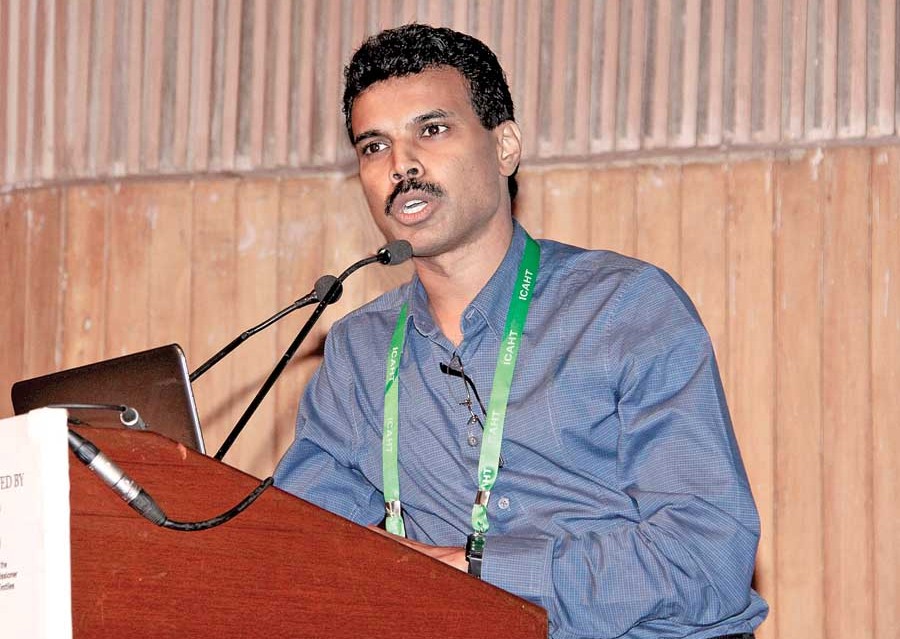
Among the interesting workshops, the one on ‘Managing finance and cost’ was well appreciated, Parveen Nayyar and Kamal Sidhu, Neetee Clothing shared their experiences on problem areas and also suggested tips on how to be more profitable. Nayyar emphasized seven areas that need deep evaluation and improvement for better profits. These include new work study techniques, efficient monitoring system for cutting and dispatch, fabric reconciliation and cutting room improvement, reorganization of finishing flow and packing department, quality system review and restructuring, properly structured management targets and judicious task allocations. He also advised the exporters to look deeply into how the banks were taking interest, whether procedures were being followed and also keep an eye on any benefits the Government announced to take advantage. “There are many ways to cut cost or save cost even within the factory and exporters need to be more upfront and aware to get the benefit,” said Nayyar.
[bleft]By the end of 2012 we are over with our consolidation and strategy implementation phase. From 2013 onwards the focus is going to shift to building an organization that can stand the test of time.” – Lal Sudhakaran V-P Manufacturing, Madura Garments[/bleft]
The inaugural session graced by Dr A Sakthivel, Chairman, AEPC acknowledged the contribution of Charles Dagher for working closely with the industry in the sub-continent to develop lean manufacturing concepts suitable to the individual needs of different factories. Addressing the gathering Tony Uppal, President OGTC urged the exporters not to compete with Bangladesh and Cambodia, but with China. He was in praise for the entrepreneurial skills of the exporters and advised them to continue with their efforts to improve systems, and become more productive and sustainable, as buyers are looking at India as an emerging force in fashion and when the situation improves, the best would survive and grow. While RC Kesar, DG OGTC and Conference Chairman updated the audience on OGTC activities over the year including the carbon footprint measurement project, Dr Sakhtivel assured the exporters that as chairman of AEPC, he and his team were looking into all options to promote exports from the country.