Management (Processing), Birla Cellulose
At the 10th edition of the Fibers and Yarns 2015 Expo held in Mumbai recently, 51 exhibitors showcased their offerings to the textile industry. While some companies preferred to present their bestsellers yet again, a few displayed new developments and revealed expansion plans. Meher Castelino, Special Correspondent, Apparel Online, interacted with many of the participants to unveil new offerings from industry leaders.
One of the largest exhibitors at the event with a huge booth was Reliance Industries Ltd., which displayed its regular staple and filament fibres. The company’s best seller Recron Green Gold, claimed to be the greenest fibre in the world used for both knits and woven products by all the big brands, attracted a lot of attention. Recron is available in 11 speciality versions like – MCX, Linen, Sapan, Slub, Lnlyk, Sparkle, Mélange Vxxx, Salsa, CTS Diamond and Worstlene – which are ideal for suiting, shirting, dress materials, furnishings, bottomwear and knits. Other showstoppers at the booth included Recrobulk, an advanced staple fibre good for hosiery and scarves; Supermicro, a 0.6 denier, Recron LP having a low pill tow, Recron Feel Fresh with anti-microbial properties, Recron FR flame retardant and Recron UV for ultraviolet protection.
Management (Processing), Birla Cellulose
The Cotton Council International, India had a stall for Supima, the promotional and marketing organization for the American Pima Cotton Industry. Supima is extra-long staple cotton grown exclusively in California, Arizona, New Mexico and El Paso region of Texas. Supima’s unique fibre characteristic enables it to be spun into longer, stronger and more luxurious yarns and fabrics. “The growth has been good for the Indian market,” says Peush Narang, Representative, India and Sri Lanka, Cotton Council International. Nearly one-third of the world’s consumption is cotton while two-thirds of the cotton consumption is in India. For Indians cotton is still a favoured fabric.
Birla Cotsyn India Ltd., started in 1932 is the flagship company of the Birla Group and makers of ring, rotor spun and organic compact yarns for suitings, shirtings, denim workwear, dress materials, saris and a long list of other apparel and products. The capabilities of the company are in ring spinning 100 per cent cotton grey yarn, open end 100 per cent cotton grey yarn and ring spinning synthetic dyed yarn to produce 100 per cent cotton, polyester, viscose, acrylic blends and fancy yarns. “Our main markets are Maharashtra, China, Bangladesh, Europe and Egypt. Business has been better this year compared to 2014 and going forward we are planning for expansions in dyed and open end yarns,” informs Prakhar Bagrodia, Deputy General Manager, Marketing, Birla Cotsyn India Ltd.
Specialising in cotton yarns, GTN Industries Ltd. is sourcing the best cotton fibre globally and converted it into fine count high-end grey, gassed, organic, mercerized and dyed yarns for knitted fabrics and lifestyle garments. The Rs. 500 crore turnover company which has been in business for five decades, introduced socks as the new product offering at the exhibition. The company’s grey yarn brands, Aura, Nile, Ganges, and Natura are in demand globally for fabrics and garments. “The business has been steady since the last year and our exports are to Turkey, Portugal, Spain, Columbia and China. Our domestic sales are 30 per cent, while exports account for 70 per cent of our sales. Our expansion plans are targeted towards exports, for which we are looking to tap new markets,” reveals T Bhaskara Rao, Asst. General Manager, (Marketing), GTN Industries Ltd.

Started in Hyderabad in 1962, Rajvir Industries Ltd. core products are fashion yarn, super specialty blends, technical textiles, eco-friendly yarns and 100 per cent cotton yarns. With 1,25,000 spindles, the latest product on display was flutter yarn, which has a direct treatment that gives a burnout effect in the fabric. There is also a hint of shimmer, which the company calls the Fairy effect. “It is similar to Lurex yarn, which would cost Rs. 800 per kg but this Fairy yarn will cost only Rs. 300-350 per kg but with a similar appearance. It also has a lofty linen look which is slightly see-through,” states Santosh Kulkarni, Domestic Marketing Executive, Rajvir Industries Ltd. The company’s buyers are international brands like Mango, H&M and Tesco with exports totalling more than 50 per cent of the business. Kulkarni admits that 2014 was a better year for the textile business and shares that future plans are to work with more Indian brands and set up a depot in Tirupur.
The event was scheduled at a time when the industry is planning its production prorgammes for the coming seasons ahead and Expo gave them an opportunity, not only to see the yarns but also have the fabric samples of the displayed yarns and fibres.
From Indian Rayon, a unit of the Aditya Birla Nuvo Ltd. Group, with US $ 4.5 billion turnover, Raysil Viscose Filament Yarn is the new fashion offering. Manufactured at Veraval, Gujarat, Raysil is a 100 per cent natural product from the best imported pulp from Domsjo Fabrikar Sweden, which is also an Aditya Birla Group company. The 30-1200 denier yarn is ideal for superfine georgettes, crepes, chiffons, fine Brasso, satin, velvet, ties and knitwear. “The viscose market is critical and business in general is static with Europe still in recession; however, exports to the Middle East and Saudi Arabia are good,” informs Pratik Pandya, Asst. Manager, CTSS, Indian Rayon. With exports at 40 per cent and domestic business at 60 per cent, the company is planning to expand production to 200 tonnes per month by end of 2015.
Taking part in the Fibers and Yarns Expo for the second time, Lily Chen, Director, Huzhou Axiang Import and Export Trading Co. Ltd., part of the Zhejiang Axing Flax Textile Co. Ltd., was happy with the business in India. “We took part in 2014 and now 40 per cent of our business is from India. Our main market is Europe but linen is more suitable for India. We export to Korea, Japan, Italy, USA and our business breakup is 50/50 for domestic and exports,” informs Lily. The company, which was started by Lily’s father in 2003, has an annual turnover of RMB 1.2 billion. Lily also shares that since labour costs in China are increasing, the company may consider moving manufacturing to India. “While the textile business is steady, the yarn business is growing,” feels Lily. The annual production of the company is 6,000 tonnes from a factory of hundred thousand sq. m. having 40,000 spindles and 1,500 workers.
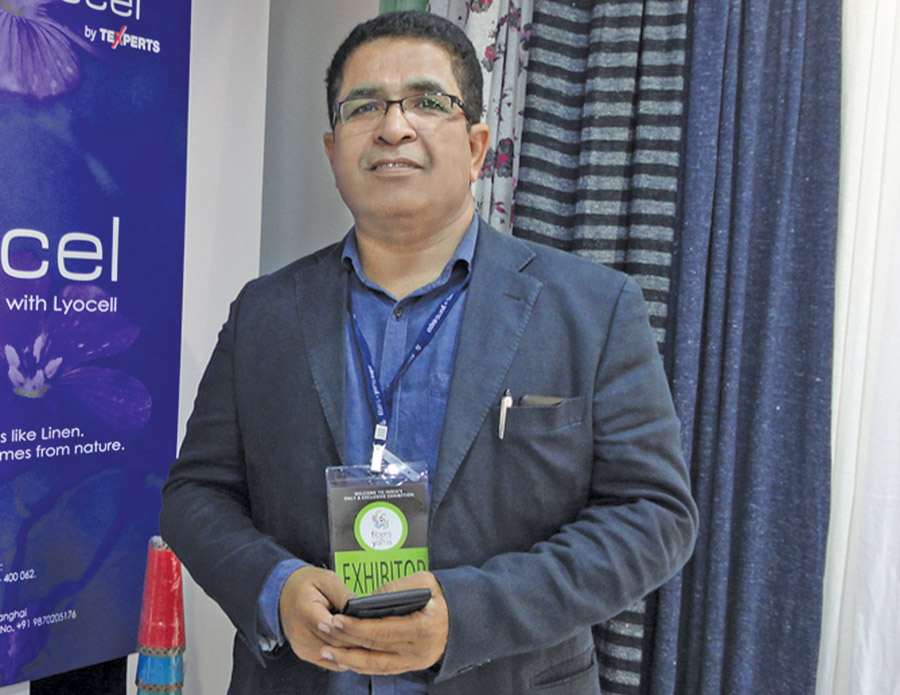
Manish Mehta, Director, Texperts was very busy as the large stall was filled with visitors inquiring about Linocel, a mix of Lyocel and linen, which is a recent development from the company. The high-quality linen used is sourced from Kingdom China, popular in linen that is marketed in 65 countries. “We are doing business in the subcontinent and have hardly any competition. Business is definitely better than last year and India gives us 20 per cent of our business,” says Manish.
Texperts is an international textile sourcing, marketing and garments buying house started in 2002. It facilitates international trade of about 10,000 tonnes per month of fibres, yarns, fabrics and garments. The brands handled by Texperts include Linocel, Linocel Ultra, Linocel Fusion, Action Sportswear, Conforto, Festa, Di Classe, Fitz, Solemio, Volte, Zero and Fitz Studio. The company’s portfolio includes products that range from flax, hemp, wool to regenerated viscose, bamboo, charcoal, Modal and Lyocel.
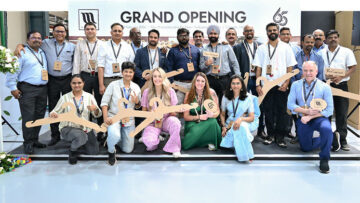
The core products of Birla Cellulose (part of the Grasim Industries Ltd. group) are Viscose, Modal, Micro Modal and Excel in spun shades as well as dyed fabrics with 1,365 tonnes per day production in India and 2,000 tonnes per day at other locations globally. The Spring/Summer 2016 collection of its newly launched Liva brand is a colourful offering in natural fluid fashion created from the company’s natural cellulosic fibres. Its soft, fluid, drape is ideal for all garments. “The manmade business is better this year as there has been an 8 per cent increase since last year for viscose. Globally, fibre exports have not been affected,” says Vinay Phadtare, Asst. Manager, Supply Chain Management (Processing), Birla Cellulose. The company is also planning new capacity of 350 tonnes per day in its plant near Bharuch. “We are exporting all over the world and the Liva tag is seen on top Indian fashion brands like Chemistry, Allen Solly, Crimsoune Club, Fusion Beats, 109 F, Global Desi, Pantaloons, Park Avenue People, Reliance Trends, Lifestyle Retail and Van Heusen,” reveals Dayal Mahara, Hub Development Manager, Birla Cellulose.
From the Pallavaa Group it’s the Long Lasst Rainbo viscose dope dyed spun shade yarn that was attracting buyers. “The advantages of Long Lasst Rainbo are lower water and carbon foot print, very high colour fastness, eco-friendly low pilling, no dyeing and perfect shade uniformity, ideal for leggings and knits. In the last two months, business has been slow but earlier it was good,” informs Naveen Kumar D, VP Marketing and Business Development, Pallavaa Group. Exports are mainly to USA and Africa since Europe is in recession and 70-80 per cent is domestic business. With Rs. 1,000 crore turnover, some of the foreign brands that Pallavaa deals with are M&S, Next and Victoria Secret. With a production of 80 tonnes per day in yarn, the production of woven fabric is 2½ lakh metres per day.
Leading specialty fibres and yarns manufacturers, from India and abroad, displayed a wide variety of products that included Lycra Yarn; Silver Yarn; Soyabean, Milk and Bamboo Fibres (From China); Nylon Micro fibres; Modal and Tencel Fibres; Fire Retardant Viscose; Hi-tech Polyester fibres and filaments for functional fabrics; Pure Silk, Linen, Jute and Fancy Yarns.
As always, the Invista stall was one of the largest with popular brands on display. There was Thermolite Fleece, ideal for light weight warmth for outdoor activities as well as performance denim. Cool Max, the performance brand for moisture management, Lycra Dual FX perfect for denim jeans; Lycra T-400 the multi component yarn, which can be used for any fabric and Lycra Beauty that is ideal for women’s innerwear. The highlight was the new Lycra Sport Fabric. “India is a growing market where fashion is changing rapidly; we can see tights replacing churidars and salwars for women. China is the best market, but now Pakistan, Sri Lanka, Bangladesh and India are also growing for us. The Indian denim market is booming and India is now moving from just sourcing and consumption to manufacturing,” observes Sasi Kumar, Commercial Leader, Invista Sales and Services India Pvt. Ltd.
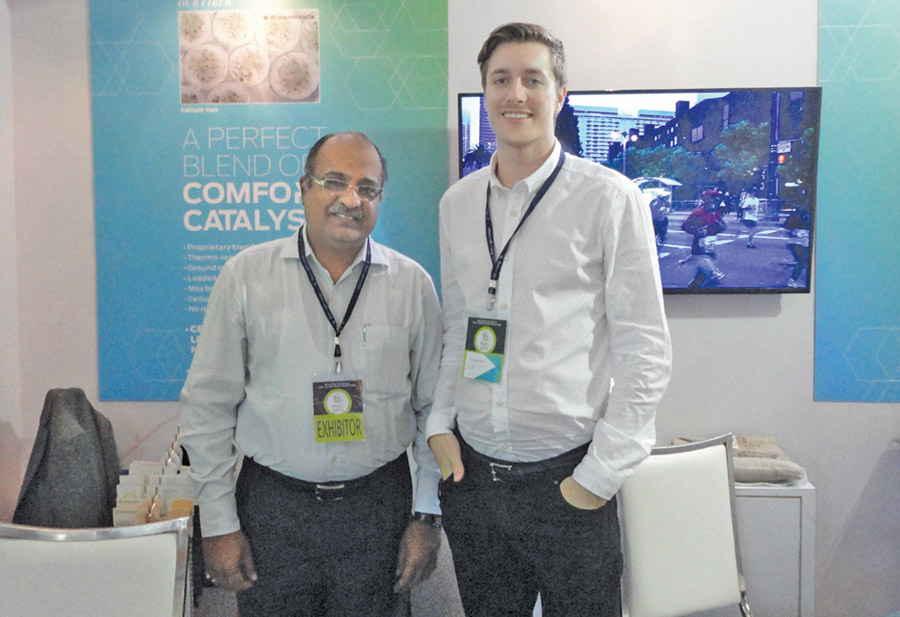
For Stuti Exports, the journey with Celliant fibre since it was introduced last year has been positive. “The Indian market is slow but there is no competition for our brand. The FD approval in the US will be a big boost for the brand, which is already doing well in Europe and Asia. Our business breakup is 50/50 in domestic and international markets. Right now Celliant is used for trousers, shirts, tees, jackets and socks, and our future plans are to break into the Indian army for clothing, bedding and bed sheets,” reveals Pradeep Roongta, MD, Stuti Exports. Celliant aids in health benefits associated with an increase in circulation and blood flow. “The core of the fibre has minerals to make the body produce energy. This is very important for dailywear as well as effective sleepwear. This is a life-long process, has no allergic reactions to skin and is not diminished by washing,” informs Trenton Rae Horinek, Business Development of Celliant, a US-based company.
Indorama Industries Ltd., part of the Indorama Corporation – a Singapore venture, had a crowded stall. Indorama Industries Ltd. started in 2012 to cater to the increasing demand for Spandex, is the first indigenous company offering not only 30, 70, and 90 denier but also 35-75 options in Spandex. The INVIYA I-300 brand of the company in blends of polyester, nylon, cotton and viscose in various counts is the star attraction. “Business has been better than last year since ours is a value-added product. Catering to the Indian subcontinent (India, Pakistan, Bangladesh and Sri Lanka) besides Egypt, Latin America, Europe, Turkey and Italy, the business is 80 per cent domestic and 20 per cent exports,” informs Shalendra Vasudeva, Chief Marketing Officer, Indorama Industries Ltd. Expansion for the Rs. 250 crore turnover company, depends on the demand.
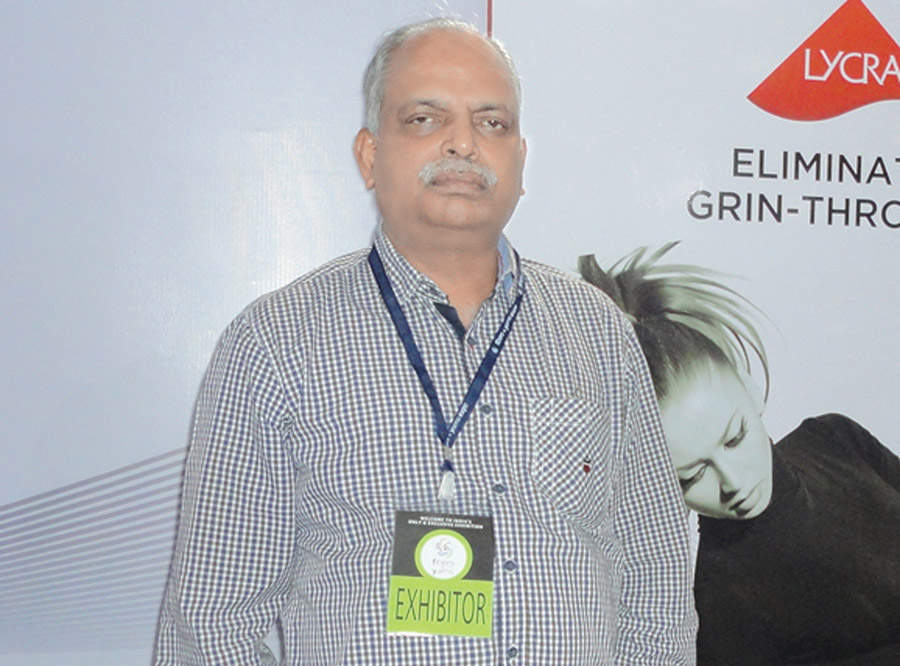
Murugan Thenkondar, GM, Sales and Marketing Business Unit Textile Fibers, Lenzing was very excited about the company’s products, Viscose, Micro Modal and Tencel. “We have new Micro Modal Air, which is very fine super soft fibre for innerwear that touches the skin. We also have coloured Modal in red, green and yellow and colours for Autumn/Winter 2016-17. Tencel’s Austrian plant with the largest single jumbo line has the latest patented technology. It was commissioned in June 2014 and is completely sold out,” said Thenkondar, who has noticed a 5 per cent growth in India. “The biggest market is China followed by Turkey, India, Indonesia, Korea, Bangladesh, South America and Japan.” The various plants of Lenzing in Austria and UK cater to a 90:10 export/domestic ratio. The Chinese plant is 100 per cent domestic usage, while in Indonesia it is 50:50 for domestic/exports. “We are earning US $ 150 million from India but the country is still a commodity market and not tapped properly. Our future plans are to push Tencel up the ladder and if there is a question of a plant in India it would be for viscose,” reasons Thenkondar.
C B Kataria, Group President, Winsome Yarns Ltd., has a lot to share about the Rs. 600 crore company of which Rs. 575 crore is in yarns and Rs. 25 crore is in garments that will be expanded to Rs. 100 crore in two years. First to introduce mélange yarn in the country in 1952, the production today is of 25 metric tonnes per day. The 100 per cent cotton mélange can be blended and the latest offering is with slubs and radiance. The yarn is used 75 per cent for knits and 25 per cent for wovens. Licensees for the Italian men’s knitwear brand Portobello with 5,000 pieces per day production, the company makes cotton viscose, modal, acrylic yarns and also has the Old Berry knitwear in-house brand. “We are concerned about the cotton prices as it impacts orders. Our delivery is 45-50 days but then we are not a commodity, but a specialty product for high-fashion garments with Micro Modal and cashmere,” says Kataria. While sales ration are 30:70 for domestic/exports, by June 2015 the colour forecast for Spring/Summer 2016 will be released by Winsome. “We are planning to go in for more specialty and performance fibres for skin/wash care and are finalizing an MoU with companies in Denmark and USA,” concludes Kataria.