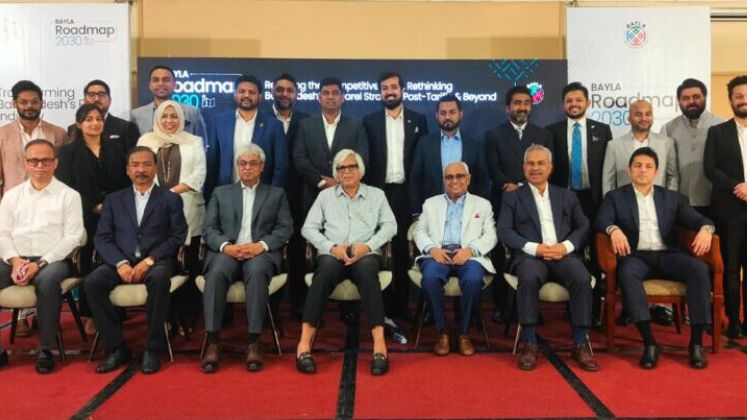
The Bangladesh garment Youth executives Alliance (BAYLA) recently hosted an event in Dhaka where industry executives emphasised the critical need for Government policy support to solve the persistent issues affecting the garment industry, especially in light of rising tariffs and tensions in international trade. The discussions highlighted the necessity for efficiency improvements, diversification of exports, and additional incentives to mitigate the high costs of importing cotton from the United States.
Moderated by BAYLA President Abrar H Sayem, the event featured the presentation of the BAYLA Roadmap 2030, which aims to reset the competitive edge of Bangladesh’s apparel industry amid evolving global dynamics. Key speakers included Anwar-Ul-Alam Chowdhury, President of the Bangladesh Chamber of Industries (BCI), and Mohammad Hatem, President of the Bangladesh Knitwear Manufacturers and Exporters Association (BKMEA).
Chowdhury emphasised the importance of Government support for young entrepreneurs and called for political negotiations to navigate the current global trade war. He urged the National Board of Revenue (NBR) to curb unnecessary harassment and streamline customs processes, while also advocating for improvements in the bureaucratic system to foster a better business environment.
Hatem echoed these sentiments, warning of impending pressures following Bangladesh’s graduation from Least Developed Country (LDC) status and the continued impact of high duties on imported man-made fibres. He called for a tariff structure that addresses future challenges rather than past norms.
Former BGMEA President Faruque Hassan pointed out the potential reduction in US market consumption due to tariffs imposed by the previous US administration, highlighting the need for strategic negotiations and policy support to maintain Bangladesh’s competitive position. He emphasised that while Bangladesh may currently have advantages, consistent policy backing is essential for sustained growth.
Kutubuddin Ahmed, Chairman of Envoy Textiles Ltd, advocated for additional subsidies specifically for importing US cotton, suggesting that aligning support with actual sourcing costs could bolster bilateral trade. He also criticized high air freight costs, which force exporters to consider alternative shipping routes through neighboring countries.
Participants collectively called for lower freight costs, reduced bank interest rates, improved logistics, and the removal of trade barriers to enhance competitiveness in the US market. They underscored the importance of adopting advanced technologies to boost productivity and the need for stable governance to navigate the ongoing geo-economic turbulence.
The event, which included insights from BGMEA Administrator Mohammad Anwar Hossain and Sharif Zahir, Managing Director of Ananta Group, served as a platform for industry leaders to unify their voices in advocating for necessary policy changes. As the apparel sector faces unprecedented challenges, the BAYLA Roadmap 2030 aims to chart a sustainable future for one of Bangladesh’s most vital industries.