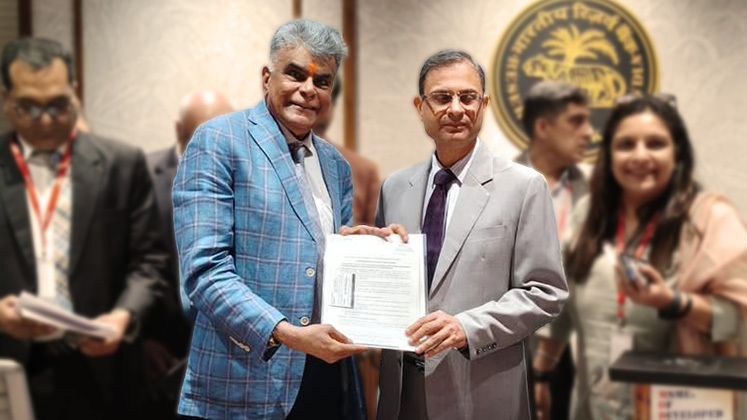
Dr A. Sakthivel, Chairman of the Apparel Export Promotion Council (AEPC), met Sanjay Malhotra, Governor of the Reserve Bank of India, in Mumbai to press for a separate export policy framework for the MSME sector and enhanced financial support mechanisms.
During the meeting, Dr Sakthivel proposed the introduction of a dedicated Special Interest Package Scheme for MSMEs, stating that current lending practices — determined by banks’ internal policies and balance sheet considerations — have resulted in inconsistencies and elevated borrowing costs.
The meeting assumes significance at a time when India has signed free trade agreements with 37 countries, positioning the textile and apparel sector for potential export gains over the coming decade. In his representation, Dr Sakthivel stated that a large number of apparel exporters, predominantly MSMEs, face operational and regulatory challenges in their interactions with Authorised Dealer banks, export finance systems and compliance frameworks.
He highlighted key concerns, including high interest rates on MSME loans, lending rates closely linked to CIBIL scores that disadvantage small enterprises and first-time exporters, and prolonged turnaround times for loan processing and sanctioning, which affect working capital cycles. He further noted limited digitalisation in MSME lending processes, leading to procedural delays and lack of transparency.
Dr Sakthivel proposed that the Reserve Bank of India issue regulatory guidelines to ensure fair, transparent and uniform lending practices for MSMEs. He suggested that a Special Interest Package Scheme should incorporate end-to-end digital loan processing and real-time tracking to improve credit accessibility and support sustainable sectoral growth.
To address export finance constraints, he requested that the Interest Equalisation Scheme be increased from the existing 2.75% to 5% for manufacturing exporters. He also urged the RBI to remove the current cap of Rs. 50 lakh (US $ 55,000) and to enhance eligibility limits under the scheme in a graded manner based on turnover and export performance.
Among other recommendations, the AEPC Chairman suggested that external credit ratings be made mandatory only for MSMEs with total banking exposure exceeding Rs. 100 crore (US $ 11.03 million). He also proposed replacing Credit Information Reports with CRILC (Central Repository of Information on Large Credits) reports for regulatory and monitoring purposes where applicable.
Dr Sakthivel further called for waiving or significantly reducing processing charges on renewal of existing bank limits where there is no enhancement or restructuring, and for the implementation of a standardised banking charge structure across institutions. He requested that the RBI regulate foreign exchange conversion and general bank service charges to ensure greater transparency and uniformity.
On export risk coverage, he noted that exporters already obtain post-shipment risk protection through active buyer policies from the Export Credit Guarantee Corporation of India. However, for pre-shipment packing credit facilities, banks secure separate coverage and pass on the premium costs to exporters, increasing financing expenses and compliance burdens.
He also recommended integration and seamless transmission of foreign bank charge data from the RBI’s EDPMS system to the Customs ICEGATE platform to prevent unnecessary short realisation notices from Customs authorities.
Dr Sakthivel stated that MSME exporters play a critical role in India’s export growth and employment generation, but procedural delays, banking constraints and regulatory complexities are undermining their operational efficiency and competitiveness. He observed that MSMEs contribute nearly 30% to India’s GDP, 45% to exports and provide employment to over 11 crore people, yet persistent structural, financial and procedural challenges continue to affect their export performance.