Business keyboard_arrow_right Sourcing keyboard_arrow_right News

Ulster acquires technical textiles machinery manufacturer Griffith

Acquisition
Image Courtesy: casertasolutions.com

North Ireland-based Carpet manufacturer Ulster Carpets has acquired Griffith Textile Machines (GTM), a UK-based manufacturer of technical textiles machinery. Ulster reports that the purchase of Griffith consolidates a long-standing relationship between the two companies.

In the first phase of the acquisition, Ulster completed a £ 8 million dye house and energy centre project, which is expected to increase manufacturing efficiency as well as bring in significant environmental benefits.

According to Ulster, the second phase of the acquisition will get £ 35 million as an investment in regenerating all woven manufacturing facilities at Ulster’s site in Portadown. The second phase is also said to be a step of securing employment for the local area.

Also ReadTaipei textile manufacturer to start garment plant in Vietnam

David Acheson, Head of Strategic Operations at Ulster Carpets, commented, “Our ethos and future plans very much revolve around quality, design excellence and technical innovation, and Griffith Textile Machines fits this perfectly. We are delighted to have secured this purchase and are excited about the future prospects as the two businesses combine their skills.”

The acquisition is being funded from cash reserves and reflects Ulster’s vision to continue to broaden the Group by selectively adding outstanding businesses when and where the appropriate opportunity arises. Combining GTM’s unique skills with Ulster’s weaving experience will lead to further significant improvements in carpet weaving technology.

Dave Watson, GTM’s Managing Director, underlined, “With our shared strategic objectives and being such a clear fit, joining the Ulster Group was an obvious next step for both parties. We are thrilled with the rare opportunity to focus on developing innovative solutions based on our joint peerless technology.”
 

Business keyboard_arrow_right Sourcing keyboard_arrow_right News

Nenagh textile company bags award at Showcase 2017

John Hanly & Co. Ltd. Award
Image Courtesy: nenaghguardian.ie

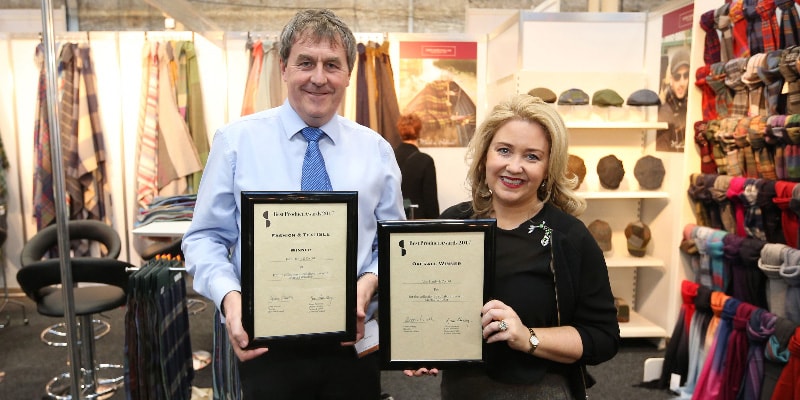
Nenagh textile manufacturer John Hanly & Co. Ltd. has bagged top award at the annual creative trade show “Showcase” which took place recently in Ireland. ‘Overall Winner of the Best Product Award’ was handed over to Brian Hanly, Managing Director, John Hanly & Co. Ltd. and Karen Hennessy, Chief Executive of the Design & Crafts Council of Ireland. Their recent collaboration with top Irish designer Mariad Whisker was also recognized at the show.

“We are very proud of these awards but it’s down to each member of staff that we have been able to remain in business. The textile industry is used to a certain amount of volatility but we have a very good group of people working for us,” said Brian.

Also ReadUnifi bags 2016 Fibre Producer of the Year Award

Founded in 1893, John Hanly is claimed to be one of the oldest weaving companies in Ireland that has been producing its own fabric at its Ballyartella mill since its inception. The textile mill produces a wide range of scarves, capes, throws, blankets and caps while also counting the likes of Dubarry Ireland and DH Fashion among some of the many clients of its Hanly fabrics.

Brian equates the company’s success to its “bricks and mortar” approach to production: “Being able to say everything is produced, from start to finish, in our factory floors in Nenagh has been central to our longevity.”


Business keyboard_arrow_right Retail keyboard_arrow_right News

GAP reports rise in Irish profit

Gap Denims
Image Courtesy: businessinsider.com

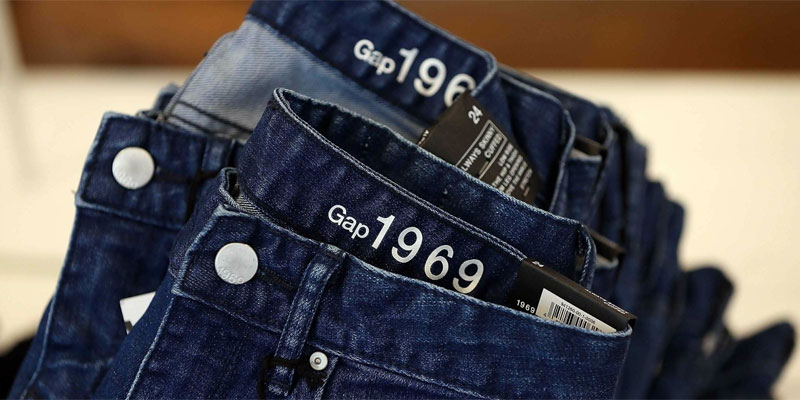
US apparel retailer, GAP has recently reported rise in its Irish arm – GAP Stores (Ireland) Ltd. Its pre-tax profits grew from Euro 831,194 (£ 706,525) to € 863,215 (£ 733,441). However, in the 12 months period ending on January 2016, GAP’s global sales dropped impacting revenues to cascade down slightly from Euro 11.63 million (£ 9.89 million) to Euro 11.59 million (£ 9.85 million). GAP opened its first store in Ireland in 2006, and currently employs 96 people in the country.

Also ReadGAP posts third quarter results

Founded in 1969 by Donald Fisher and Doris E Fisher and headquartered in San Francisco California, the apparel brand operates five primary divisions: the namesake banner, Banana Republic, Old Navy, Intermix, and Athleta. GAP is the largest specialty retailer in the United States, and is 3rd in total international locations, behind Inditex Group and H&M.


Fashion brands report surge in sales in Ireland

Apparel Shopping
Image Courtesy: abc24.al

Three of the world’s top apparel brands – Tommy Hilfiger, Hugo Boss and Calvin Klein enjoyed rise in sales in Ireland last year but their profits however showed a mixed response as the clothing retail sector continued to be sluggish in the country.

Also ReadHugo Boss aims for better performance in China

Latest figures filed at Hilfiger Stores Ireland Ltd. show that in 2015 revenues increased by 19 per cent to Euro 21.9 million. However, its pre-tax profits declined by 33 per cent to Euro 449,000 in the same period.

Similarly, last year’s sales at Hugo Boss Ireland Ltd., which opened up its first store on Dublin’s Grafton Street, showed a surge of 15 per cent to Euro 10.8 million. The fashion label met the same fate as Tommy Hilfiger in the pre-tax profits. It sustained a decline of 38 per cent from Euro 578,507 to Euro 357,849.

Also ReadCalvin Klein to enhance its e-commerce visibility

However, Calvin Klein Stores Ireland Ltd. reveal that its revenues increased by 41 per cent, up from Euro 2.77 million to Euro 3.92 million. It also recorded a 41 per cent increase in pre-tax profits to Euro 78,403 during the period under review.


Business keyboard_arrow_right Retail keyboard_arrow_right News

Primark to open three new stores in USA

Primark
Image Courtesy: sophielamodeuse.com

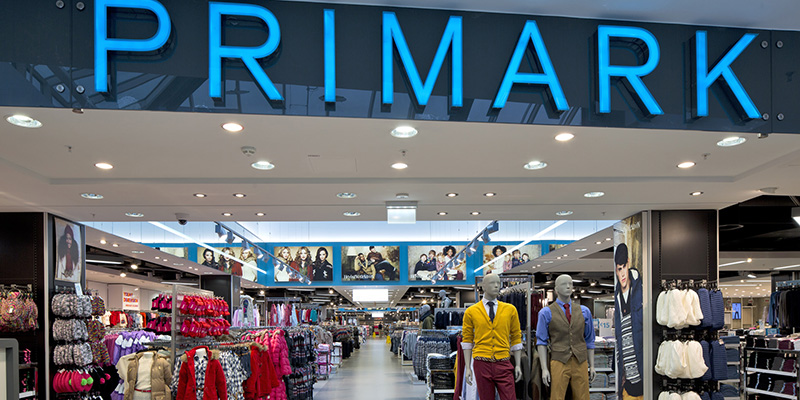
Fashion retailer Primark is planning to open three new stores in Burlington, Massachusetts, Braintree, Massachusetts and New York’s Staten Island borough. The company has already opened five stores in US. It will also expand its Boston store by 31 per cent to 92,400 sq. ft.

Primark strategizes to open a further 1.3 million sq. ft. of space in fiscal 2017, an acceleration from last year, when it opened 1.2 million square feet. It may be mentioned that the company now has stores in nine countries outside the UK and Ireland and doesn’t sell clothing online.

Also Read – Primark to open a 100,000-square-foot store in US

“The new store openings are still greeted with enthusiasm by our customers says much for the capability of our buyers and merchandisers, who ensure that Primark remains at the forefront of fashion, but is also the result of our store designers making Primark an attractive and fun place to shop,” said Charles Sinclair, Chairman, Associated British Foods (parent company of Primark).

The company also posted that its sales jumped 9 per cent at constant currency, driven by store openings for the 53 weeks ended 17th September, 2016. In the reporting period, same-store sales declined 2 per cent due to unseasonable weather and cautious consumer sentiment in key markets like the UK and Germany. Its adjusted operating profit totalled £ 689 million compared to last year’s £ 673 million.

However, following the pound’s slide in the wake of Brexit, Primark’s operating margins will be squeezed because the company pays for much of the clothing it sources from Asia in dollars.


Global smart textiles for wearable technology market to grow at rapid pace

Wearona
Image Courtesy: Wearona.com

Research and Markets, a market research firm, in a recent report – “Global Smart Textiles for Wearable Technology Market: Trends Analysis and Forecast to 2021” states that the wearable smart technology market will grow at a CAGR greater than 30 per cent by the year 2021.

The report asserts that manufacturing of smart textiles was done focusing mainly on the woven or knitting technologies, which has in the recent times expanded in textile printing too, case in point being the conductive ink invented by Dupont.

Also ReadGlobal Smart Textiles Market to touch US $ 7.73 billion by 2023

The current growth of wearable smart textiles can be attributed to the spike in growing wearable electronics market, the popularity of smart gadgets with advanced features and the demand for low cost smart sensors. Although the current market for smart textiles for wearable technology is expected to grow at a rapid pace, the high cost of its production and compatibility issues may act as a damper to its steady growth, but as demand is on the rise and advancements going on, it is expected to grow further in the future as well.

As per the study, a major chunk of revenue for the global smart textiles for wearable technology comes from its military and safety applications, followed closely by the home and architectural applications.

The Asia Pacific region is predicted to grow at the highest CAGR over the period under consideration.

Global Golf Apparel Market to grow at a CAGR of 4.33%

Golf ApparelAccording to an Irish market research firm Research and Markets, the global golf apparel market will grow at a CAGR (Compound Annual Growth Rate) of 4.33 per cent (in revenue) in 2014-2019 period.

Golf apparel includes clothing, footwear, and other accessories, which are worn while playing the sport to provide the wearer comfort and style. The apparels are designed to be lightweight via using advanced fabrics, which remove the wearer’s sweat away from the body to the outer surface of the clothing so that it can evaporate. The crossover between fashion and exercise has boosted the demand for golf apparel among men and women, thus driving growth in the segment, the report mentions.

Also ReadApparel Online A&E Golf Day: Inaugural event gets huge response in Dhaka… Next round to be bigger

Besides, the growing popularity of the sport world over is also pushing sales of golf apparel and equipment further. North America, APAC, Europe, and the ROW are the key markets in this segment.

While sportswear retailers like Adidas, Nike, Under Armour and Callaway have emerged as the top vendors of golf apparels, Ralph Lauren, Puma, Escada, ASICS, Mizuno, Ping, Umbro, Acushnet Company, and Amer Sports have also made it to the list of key retailers in the segment.

The report also reveals that introduction of high-tech fabrics will also lead to surge in sales in the category.


Fashion, accessories & hard luxury segment to dominate Global Duty-Free Retailing Market in 2015-19

Luxury Fashion
Image Courtesy: bloomingdales.com

Ireland-based Research and Markets forecasts that the global duty-free retailing market will grow at a CAGR of around 9 per cent during 2015-19. Surge in international travellers is the main growth-driver for the growth of this market. The number of foreign travellers during 2014 was around 1 billion, with Europe emerging as the most popular destination, the report mentions.

Also ReadGlobal Luggage Market to grow by 6% in 2016-20

The Asia-Pacific region accounted for 38 per cent of the market share during 2014 and is likely to grow at a CAGR of 11 per cent during the forecast period. South Korea, China, Hong Kong, Singapore and Thailand are the key countries that are driving the sales in this market. South Korea and China contribute around 20 per cent of the global revenue from duty-free retailing, the report adds.

However, it is also being observed that limitations on the baggage weight might daunt the growth of this market. The report also states that fashion, accessories, and hard luxury segment dominated the duty-free retailing market during 2014 with a market share of around 32 per cent, and the same is expected to continue in 2015-19 period.

Also ReadGlobal personal luxury-goods market surges by 3% in 2014

The section is predicted to hold its market supremacy until the end of 2019, growing at a rate of 11 per cent. Costly jewellery, briefcases, handbags, and shoes will be the growth-driving products in this segment.


Global Textile Machinery Market to grow at a CAGR of 11% in 2016-20

Textile MachineryIrish market research firm Research and Markets in its report has mentioned that Global Textile Machinery Market will grow at an expected CAGR of 11 per cent in 2016-20.

Growth in the market will be driven by the soaring demand for nonwoven fabric which is a web structure of the individual fibres that are neither woven nor knitted. The textile manufacturing process comprises web formation, web bonding, and finishing, thus require textile machinery at each and every step of production.

Also ReadNonwovens market to touch US $ 47.7 billion-mark by 2020

Another factor which will boost sales of textile machinery in the global market is the demand for textiles from industries like automotive, construction among others. These technical textiles have increased conductivity, filtration, flexibility, lightweight, reinforcement, resistance, and strength. The manufacturing of these textiles needs precision, compelling OEMs to design machines that are effective in terms of precision operation and ensure low wastage of textile, the analyst mentions.

The Market researcher has also projected that Asian region will account for a market share of more than 90 per cent of the total market share by 2020. The forecasts for growth in this market are driven by the domestic demand and exports to countries like the US and Europe.

Also ReadTechnical textiles market will be of US $ 193.7 billion by 2020

Additionally, the upsurge in manufacturing activities and infrastructure developments across the globe will lead to extensive growth of textile machinery market in the coming years.