Cambodia seeks FTA with UK

Cambodia meets Britain
Image Courtesy: khmertimeskh.com

At a recently held meeting between Cambodia and Britain, the sole topic on the table was the much-anticipated Free Trade Agreement (FTA) between the two countries following ‘Brexit’.  The Cambodian Commerce Minister Pan Sorasak pushed for a speedy deal in a bid to strengthen their bilateral trade and economic ties during the meet.

British Ambassador to Cambodia Bill Longhurst has advised the Minister to wait until the end of 2016 or early next year to get a confirmation on whether Cambodia needs to sign the FTA with Britain or whether the current tariff-free agreement with the EU under the ‘Everything but Arms’ agreement will be sufficient in terms of trade between the two countries.

Also ReadEU remains largest importer of Cambodia’s garment & footwear

Kaing Monika, Deputy Secretary General of Garment Manufacturers Association in Cambodia (GMAC) is of the opinion that Cambodia will not feel a direct impact of Brexit, for the time being, despite it being one of the main destinations for the country’s garment exports as it accounts for about 45 per cent of Cambodia’s total garment exports.

It may be mentioned here that bilateral trade between Cambodia and Britain rose from about US $ 749.01 million in 2013 to US $ 807 million in 2014, according to the Ministry of Commerce, Cambodia.


Cambodian factory ceiling collapse injures 3

Cambodian Garment Industry
Image Courtesy: globalpost.com

In an unpredictable event, a part of ceiling collapsed in a Cambodian garment factory, named M&V, a garment supplier for international fashion brands such as H&M.

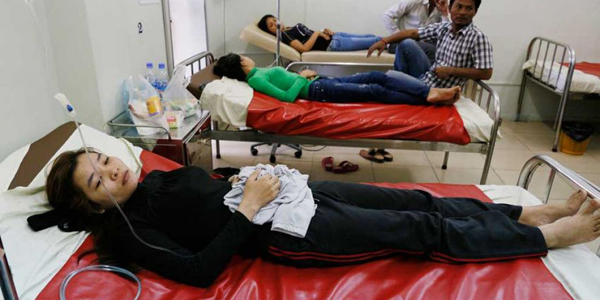
A provincial police officer reports that three garment workers got injured due to the accident that took place at the unit. However, reasons behind the collapse are yet to be determined. A Labour Ministry Official from the provincial National Social Security Fund (NSSF) mentioned that one of the workers was knocked unconscious while officials on the site reported that the workers were rushed to the hospital for immediate treatment.

Also ReadStudy shows improvement in Cambodian garment factories

According to the provincial NSSF, the incident is the first workplace accident since the beginning of the year. Pao Sitha, Director of the Provincial Labour Department averred that workplace safety had dramatically improved across the province, however accidents like the one at M&V is completely unfortunate.

In a recent study by Better Factories Cambodia, an initiative by ILO, the working conditions of Cambodian factories were reported to be improving, while mentioning that nearly half of the companies are compliant to the ILO standards. The improvement is notable as in the year 2014, only 28 per cent of companies were found to be compliant.

Automation to cause unemployment in Cambodia: ILO Report

Cambodian Garment Industry
Image Courtesy: thanhniennews.com

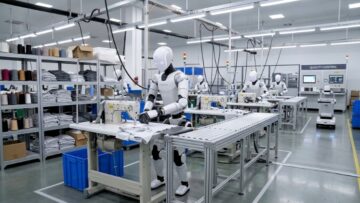
According to the recent study conducted by International Labour Organisation (ILO), 88 per cent of Cambodia’s salaried textile, clothing and footwear (TCF) workers are at high risk of unemployment due to possible automation in the industries in the coming two decades.

Industry experts warn countries like Cambodia, which rely heavily on the garment sector to provide employment to large numbers of low-skilled workers, on the consequences of the upcoming advances in automation and innovative technologies which will replace low-skilled workers and allow multinational producers to move their operations closer to market.

Also Read Study shows improvement in Cambodian garment factories

Chief among the automation threats, according to the ILO report, is the growing prevalence of automated cutting machines and the expected rise of robots capable of sewing, known as “sewbots”. While sewbots are unlikely to displace current workers in ASEAN garment factories, they are expected to be deployed in destination markets such China, Europe and the United States.

“For some countries like Cambodia, where TCF production dominates an undiversified manufacturing sector and makes up around 60 per cent of manufacturing employment, the impact will be felt more strongly than others,” the report said.


Study shows improvement in Cambodian garment factories

Cambodian Garment Factory
Image Courtesy: visionaireworld.com

Better Factories Cambodia, the initiative by ILO for the improvement of working conditions in the Cambodian garment industry has recently released a report – The 33rd Synthesis Report, assessing 381 factories for ILO standards of compliance, out of which 47 per cent were found to be compliant.

The study prior to the report was done in the period of May 2015 to April 2016, where 318 garment factories were evaluated for their compliance against eight broad categories including occupational safety and health, compensation and worker contracts – which were further divided into 33 sub-categories.

Also ReadBetter Work Vietnam launches ‘Labour Law App’

Esther Germans, Program Manager, ILO-BFC, mentioned in a recent press release, “While an increase of some compliance levels is a positive signal for the garment industry and their workers, there is also a need for further improvement in common areas of non-compliance that are indicated in the report.” The top 10 areas on non-compliance did not see much change, and are the reason for more than 60 per cent of the companies failing.

Part of the non-compliances mentioned is due to the expansion of the criteria for assessment, added to be more in line with the Global Better Work programme, mentioned , Ken Loo, Secretary-General, Garment Manufacturers Association of Cambodia (GMAC), while adding that there cannot be 100 per cent compliance.

The report shows an improvement form the last study conducted in 2014, where just 28 per cent of the factories were found to be compliant.


Cambodian factory owner goes missing; workers demand compensation

Cambodian Garment Workers Protest
Image Courtesy: ruom.net

The owner of RCI garment factory in Preah Sihanouk Province of Cambodia has been reported ‘missing’, leaving the garment workers of the unit unpaid, and that too without any prior notification. The facility has stopped the production processes, and around 600 garment workers reportedly protested outside the garment factory, demanding settlement of their wages.

An Rama, an official for the Coalition of Cambodian Apparel Workers’ Democratic Union, said that production at the facility, which is set up in the Sihanoukville Special Economic Zone, stopped abruptly last month, with no announcement of the factory’s closure.

Also ReadCambodian garment workers protest over wage issue

Yov Khemara, Director – Provincial Labour Department, said that authorities are looking to find a solution and have asked workers to keep calm. On the other side, workers are looking for quick solutions and informed that the company had started reducing its production activities since April. Reports further state that factory has not been able to acquire orders since the beginning of this year, quoted to be one of the reasons that the owner ran away and the factory stopped production.

Ken Loo, Secretary General for the Garment Manufacturers Association in Cambodia (GMAC), states that the next step would be to dissolve the factory’s assets and pay off the creditors and workers.

EU remains largest importer of Cambodia’s garment & footwear

Cambodian Garment Factory
Image Courtesy: industriall-union.org

Cambodia’s Ministry of Commerce recently unveiled latest export statistics pf the country which state that the European Union (EU) is the largest market for Cambodia’s garment and footwear exports. The total value of exports to the EU in first quarter of the year was about US $ 717.8 million, followed by US $ 419.2 million to the United States, US $ 41.7 million to Canada and US $ 34.6 million to Japan. Exports to other global markets amounted to US $ 65.9 million.

Also ReadCambodian Government schedules discussions on Minimum Wage

Seung Sophari, spokesperson for the Ministry of Commerce, told a Cambodian daily that the increase of exports to the EU was due to the low tariffs in the EBA (Everything But Arms) agreement.

On further strengthening the working of T&C sector, Seung averred, “The garment sector is a competitive sector where factories will have to invest in productive systems and where industry partners have to work on a conducive business environment to ensure that the sector remains attractive.” She added that it will be important for industry partners in the country to be pro-active in the continuously changing context including trade agreements in the region that will offer opportunities to Cambodia and the way in which garment factories operate.

Cambodian garment workers combatting anaemia

Cambodian Garment Unit
Image Courtesy: photoshelter.com

ILO’s Better Factories Cambodia in collaboration with Agence Française de Développement (AFD) and Angkor Research and Consulting conducted a study – Garment Workers’ Health, Socio-Economic Status and Food Provision in Factories, which states that the Cambodian garment workers are battling with a disease called anaemia in large numbers. The report also informs that being affected by anaemia is causing chronic fatigue to the garment workers, and thereby hampering production.

Among the 3,302 workers who were randomly selected for the study, one-third of the male garment workers were found to be anaemic. Of the female workers, nearly two-thirds of the pregnant workers were classified as anaemic, while 18 per cent of non-pregnant workers had moderate of severe anaemia. Cases of mass fainting have also gone up at garment factories in the country, rising from 1,686 in 2012 to 1,806 last year.

Also Read100+ RMG workers faint at Cambodian garment factory

Nutritional deficiency of iron, folate, vitamin B12 or other nutrients can cause anaemia. The labour productivity in Cambodia’s garment and footwear sector witnessed a drop of around 14 per cent in the past four years and the trend has continued in 2016 as well. The disease could be among the reasons that are causing low productivity at Cambodian garment factories.

Cambodian Government schedules discussions on Minimum Wage

Minimum WageThe Cambodian Government has scheduled discussions on setting the minimum wage for the country’s garment workers. Discussions are to start primarily within the Labour Ministry from August, followed by negotiations with the GMAC (Garment Manufacturers Association in Cambodia), and finally with the Trade Union of Cambodia in September… The outcome of which will be announced by early next year.

The changes made last year were marked at US $ 140 per month as the minimum wage, a hike from the earlier number of US $ 128 per month. But still there were issues in the industry, thus to encourage hassle-free production at garment units, the Government has decided to take a final call on the matter.

Also ReadASEAN ‘wage standard’ gets backing from Vietnam, Cambodia

The aim of the discussions is to settle for at least US $ 160 as the minimum wage, subject on the scientific formula, devised from the social and economic criteria’s as well as the poverty line. Ken Loo, Secretary General of GMAC said factory owners were struggling with the current minimum wage. “The industry is definitely not ready for a significant increase,” he explained.

There are researches in progress to evaluate workers’ cost of living, before the talks on minimum wage begin. In case the researches yield no clear figure, the CATU demands the end figure be US $ 207 per month. Since 2012, there has been a 100 per cent hike in the wages, right from US $ 66 to US $ 140.

Yang Sophorn, President of Cambodian Alliance Trade Unions (CATU) states that the wages of workers in 2017 must be higher than the previous years due to inflation and other economic factors, such as rising cost of living.

Malaysian RMG factory in Cambodia shuts down

Cambodian RMG factory
Image Courtesy: pccsgroup.net

Global Apparels Limited, a Malaysian-owned readymade garment (RMG) factory in Phnom Penh, Cambodia, has announced its formal closure, following lack of orders and a year of losses faced by the company.

The factory, which would close down completely by October 2016, would not be able to pay its workers if it continues to operate beyond that, as it has a dearth of orders and fierce regional competition that has higher levels of output. Productivity issues have been the foremost concern for a lot of factories in Cambodia, as strong competitor countries like Vietnam and Bangladesh are showcasing higher productivity at lower costs.

Also ReadGMAC urges garment workers to increase productivity

However, an official from the Collective Union of Movement of Workers believes otherwise, and claims that bankruptcy is an excuse which the company is putting up to avoid fulfilling back pay and tax obligations, and simply move to a new location. “The company might have a new name or want to change its location. Although that is not the easy way,” he added.

Global Apparels (Cambodia) was incorporated in October 2003, built on a land of 80,000 sq. ft. The company, which manufactures knits and woven apparels, has monthly production capacity is 600,000 pieces. It currently employs approximately 2,000 employees and exports to US, Europe, and Japan primarily (as per company’s website).

100+ RMG workers faint at Cambodian garment factory

RMG workers faint
Image Courtesy: phnompenhpost.com

In a recent happening, more than a hundred readymade garment (RMG) workers at a garment manufacturing factory located in Kampong Speu province, fainted due to pesticide sprayed in the factory premises a night ago, as reported by the local police.

Although, the factory officials at Orient International Enterprise, the factory where the incident took place, informed that all the windows and doors at the factory were left open post the spraying, the workers however started fainting at around 10:30 a.m. onwards. The workers reportedly started feeling uneasy while breathing but did not report anything until 10:00 a.m.

“About 100 factory workers, not sure how many, were unconscious because some of them came to work early in the morning and they did not have any breakfast. That’s what made them feel uncomfortable in the factory,” speculated Liu Wenjing, a factory representative. The workers were soon rushed to a hospital and provided all the required treatment, which was taken care of by the company.

Also ReadCambodian Labour Ministry directs factory owners to ensure ventilation, safety

The factory workers who fainted were offered rest for a few days, but a lot of them insisted on getting back to work the next day or the same day even, added Liu.

GMAC urges garment workers to increase productivity

Cambodia Garment Workers
Image Courtesy: phnompenhpost.com

Just a few days after the RMG (readymade garment) factory workers of Cambodia expressed their concern over low wages, poor standard of living, and forced overtime, the Garment Manufacturers Association in Cambodia (GMAC) has asked the garment workers to increase their productivity. A decline of 14 per cent was observed in the productivity levels in the garment and footwear sector, between 2011 and 2014.

According to GMAC, the increased expenses, combined with poor productivity are a major hurdle to Cambodia in the field of garment manufacturing on a global scale, as compared to countries like Vietnam, Bangladesh, and Myanmar.

“We must contribute in a manner that the garment sector can stand in today’s strongly competitive atmosphere in the world market. As employers, we need to try to contribute as much as possible in building up the skills of the workers,” said Ken Loo, Secretary-General of GMAC.

Also ReadH&M aims to improve labour conditions in Cambodia and India

In reaction to these statements issued by GMAC, workers’ representatives complained about short-term contracts issued by employers, and firing of pregnant women workers in contravention of the labour law. Mak Chansitha, Director of the Workers’ Information Center informed a local daily that the employers should consider change in the production chain and the health of the workers in order to adjust the declining productivity.

On the other hand, President of the Cambodia Labour Confederation, Ath Thorn expressed optimism regarding investment in Cambodia. “In Burma, there’s requirement of nearly 60 percent of investment capital unlike Cambodia,” he said.

To bring a change in the scenario of the current productivity levels, GMAC is in talks with the Ministry of Labour and Vocational Training to launch a campaign, which will employ approximately 700,000 workers of Cambodia.

‘US is still our main market’, says Cambodian Labour Minister

Cambodia Garment Unit
Image Courtesy: aljazeera.com

Cambodia’s Labour Minister Sam Heng, who recently had a meeting with the US Ambassador William Heidt regarding trade relations between the two countries, said that US is the key market for Cambodia’s garment and textile industry, reports Khmer Times.

While informing that despite increasing competition in the market, US is still the main buyer of Cambodian garments, Heng said, “The US market is very important for us. Although it is now the second biggest importing market after the European market, it is still big and worth billions of dollars. So we are still trying to work well with buyers from the US and get them to place more orders to us.”

Also ReadCambodia’s garment export soars

According to Office of the US Trade Representative, Cambodia is US’ 70th largest goods trading partner with US $ 3 billion worth business in total between the two countries in the year 2013. However, total exports to the US plunged 3 per cent in the first quarter of the year to more than US $ 705 million compared with US $ 725 million in the corresponding period last year.

Overall exports of garment and footwear from Cambodia have zoomed 13 per cent year-on-year to US $ 1.55 billion in the first quarter of the current fiscal year, Cambodia’s Ministry of Industry informs.