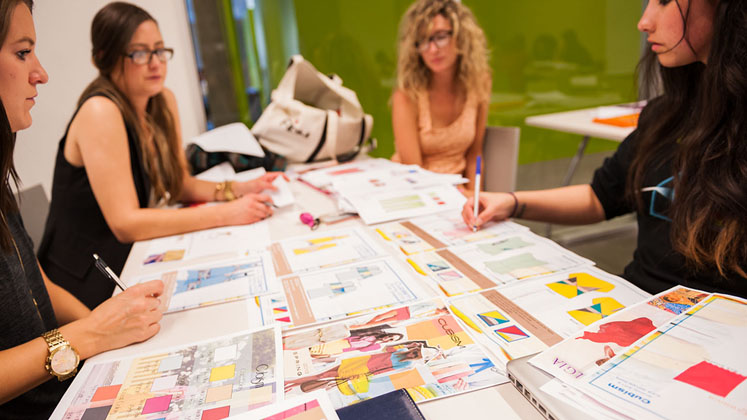
Still considered one of the biggest manufacturing industries for mass basics, Bangladesh is but adapting fast to the changing milieu, where on one hand, fast fashion has led to an increase in the number of styles and collections, while on the other, the pandemic-induced economic downturn has also led to a growing demand for innovation in basics at a lesser price, subsequent to which product development and innovations have become paramount. From an industry that has risen and survived on the traditional cut and sew approach, emerging today are a growing number of entities that are strong on the concept of in-house design and product development.
So, in the present global scenario and fast fashion era where product development has become the business strategy for the whole supply chain and more and more buyers are now trying to shift product design and development to the suppliers to cut cost, more so amid the pandemic-induced New Normal, leading manufacturers are embracing product development in the right earnest.
Also, to be considered in this direction, is the fledgling price points, which over the years have taken such a tumble that there’s hardly anything left now for a basic garment maker to look up to and, it is only through value additions, can one hope of commanding better price points so as to survive and sustain.
“Price points have always been a major concern area for the garment makers in Bangladesh! From the industry’s profile, it is pretty much evident that it is primarily a volume-driven sector where basic items (produced in mass scale) play a major role. But, as is well known, profit margins in such products are also wafer thin,” underlined Md. Imranur Rahman, BGMEA Director and Managing Director of Laila Group, while speaking to Apparel Resources.
Considering all these aspects, it is but natural that more and more garment makers are getting into the product development exercise with over 100 apparel exporters now reportedly boasting of their own design and innovation centres, as per reports, many of which are said to be of global standards.
However, considering the fact that like brands and retailers, garment makers are also going through a tough time on account of the pandemic while also not losing sight of the fact that a decent design studio also needs decent investment, dividends have to be commensurate to lead a garment maker to invest in a design studio. So, what is the existing scenario?
Also Read: COVID-19 and Bangladesh’s increasing popularity in home textiles
If industry insiders are to be believed, a garment designed by a manufacturer if liked by a buyer or brand can make its price go up by as high as 20 per cent even as for the supplier concerned, it also opens up the door to bag additional work orders. Also, many manufacturers are using PD as a tool towards becoming more competitive so as to stay a preferred and a full package supplier even as speaking to the media, Mostafiz Uddin of the Chittagong-based Denim Expert Limited reportedly underlined that garment exporters sometimes fetch up to 50 per cent extra price on own-designed products, which undoubtedly is a big motivation to embrace product development.
Located at the Karnaphuli EPZ in the port city of Chittagong, Denim Expert Limited boasts of its own design centre for several years now even if the company has also been marketing its own brand of denim bottoms called ‘BlueXonly’ in the European market.
I visit various parts of the globe and try to analyse the fashion trends there, maintained Mostafiz interacting with a news daily, while adding that he tries to find out what kind of cotton, fabric or wash the buyers prefer, and what are the designs they may like in the next season.
It is not necessary that a company must have design studios in countries that they export their products to, reportedly claimed Mostafiz, who has gained global recognition for working on designs, even as he added, “I need to know the design or fashion trends in the market where my buyers live. That is why I try to know the design trend in my export markets.”
Denim Expert Limited reportedly has designers in Europe as well.
Even as the reports claim that the garment makers’ bodies (the Bangladesh Garment Manufacturers and Exporters Association-BGMEA or the Bangladesh Knitwear Manufacturers and Exporters Association-BKMEA) do not have exact figures as to how many exporters have their own design centres or what percentage of exports are their own designs, nor do the Government agencies concerned have any such information either, a survey carried out by the Centre for Policy Dialogue (CPD) in 2018, reportedly found that 21 per cent of Bangladesh’s export-oriented garment units have design and development centres. In fact around 83 per cent large-scale factories have their own design centres, 23 per cent medium-sized units have their in-house design centres while 16 per cent smaller players too boast of design development centres.
Established in 1993 by Rehman Sobhan, its founder Chairman, Centre for Policy Dialogue or CPD, over more than two decades, has emerged as Bangladesh’s premier civil society think-tank, and has established its credibility as one of the very few platforms in Bangladesh where civil society organisations, stakeholder groups and political parties, often with diverse views and perspectives, are agreeable to sit around a table, and conduct an informed discussion about key issues of developmental concern and interest even as CPD seeks to address this felt-need from the perspectives of marginalised stakeholders, by way of organising multistakeholder consultations, by conducting research on issues of critical national, regional and global interests, through dissemination of knowledge and information on key developmental issues, and by influencing the concerned policy making processes.
Meanwhile, interacting with the media, Research Director of the CPD, Khondaker Golam Moazzem, maintained the CPD survey was based on samples from 220 factories even as he added that if 3,500 garment factories in the country are taken into account, the number of design and development centres in the garment industry will stand at more than 700, which is not a negligible number, to say the least.
As per reports, among the prominent apparel manufacturers in Bangladesh, Ananta Group; Sparrow Group; Urmy Group; Meghna Knit; Snowtex Group; Team Group; Denim Expert Limited; Pacific Jeans; KDS Group; Epyllion Group; Viyellatex; Interstoff Apparels Limited; Sharmin Group; Fakir Fashion; Sonia Garments; SQ Group; SM Knitwear; Square Fashion; Vintage Denim Studio and TAD Group have modern and large design centres even as a decade or so ago, only a very few companies thought of coming up with their very own design development centres. One of them has been Chittagong’s Pacific Jeans Limited, while many big names in the industry today reportedly have their overseas design studious and designers as well.
Another name which set up its very own design studio and that too way back in 2014 is Sparrow Group, which is considered one of the largest woven apparel exporters in Bangladesh even as a team of more than 400 people, including three foreigners, work in Sparrow Group’s design studio to come up with new and innovative designs keeping with the existing and research-based future fashion trends that are expected to be in demand amongst the buyers in next couple of years or so.
If our design is liked by a buyer or if it becomes popular in the market, we get the opportunity to make the product for that buyer for the next two seasons, reportedly claimed the Managing Director of Sparrow Group, Shovon Islam.
Shovon further added this not only helps instil confidence in the buyers’ mind as to the capabilities of the supplier but also paves the way to bag long-term and substantial work orders in the future while also fetching one up to 20 per cent more in terms of product pricing.
Given the benefits of design and development, one is given to understand, notwithstanding the investment or other challenges if any, dividends that one might expect from the same are rather high and considering the prevailing conditions, on account of the pandemic and even otherwise, product development is the most feasible way forward towards business sustainability and future growth.