
Preferential trade agreements such as Free Trade Agreements (FTAs) and Comprehensive Economic Partnership Agreement (CEPA)have always been in the wish list of the garment exporters as these agreements provide the much required level playing field to be at par with the competitors. India has been long discussing FTAs with trade blocs like EU and countries like UAE, Australia etc. And finally, after a decade of long negotiations,India has recently been able to seal a CEPA with UAE that is an important trade partner for the country. Overall India-UAE bilateral trade was about US $60 billion before the pandemic, and now, in next five years, both countries aim to take their bilateral trade to US $100 billion with this historic deal!
The Indian apparel industry has also welcomed this move and is enthusiastic that it will boost apparel exports, employment. This CEPA,possibly coming into force during April or May this year,would eliminate the 5 per cent tariff disadvantage which was being faced by the Indian textile and apparel industry in the UAE market. If seen in totality and holistically, it’s more than just an advantage of 5 per cent. Apparel Resources (AR) explores how this CEPAis going to benefit our industry…Before that, let’s explore how strong India is in its apparel exports to UAE.
UAE has been the second top apparel export destination for India for years…
Despite the direct disadvantage of 5 per cent, India is the top apparel exporter to UAE as shipment from India contributes a significant share of 43 per cent in UAE’s total apparel import. On the other hand, after USA, UAE is the second top export destination for India, particularly in the garment category! And when this 5 per cent duty will become obsolete now, it is safe to say India’s apparel shipment to UAE will only grow.
The Indian Government believes that benefit of this agreement to the textile sector will fetch another US $ 2 billion in another 5 years, from the current value US $ 1,609.4 million in 2020-21 (HS code 61, 62 combined) and US $ 1,436.64 million in 9 months of 2021-22.
Top 5 knitted products India exports to UAE

Top 5 woven products India exports to UAE
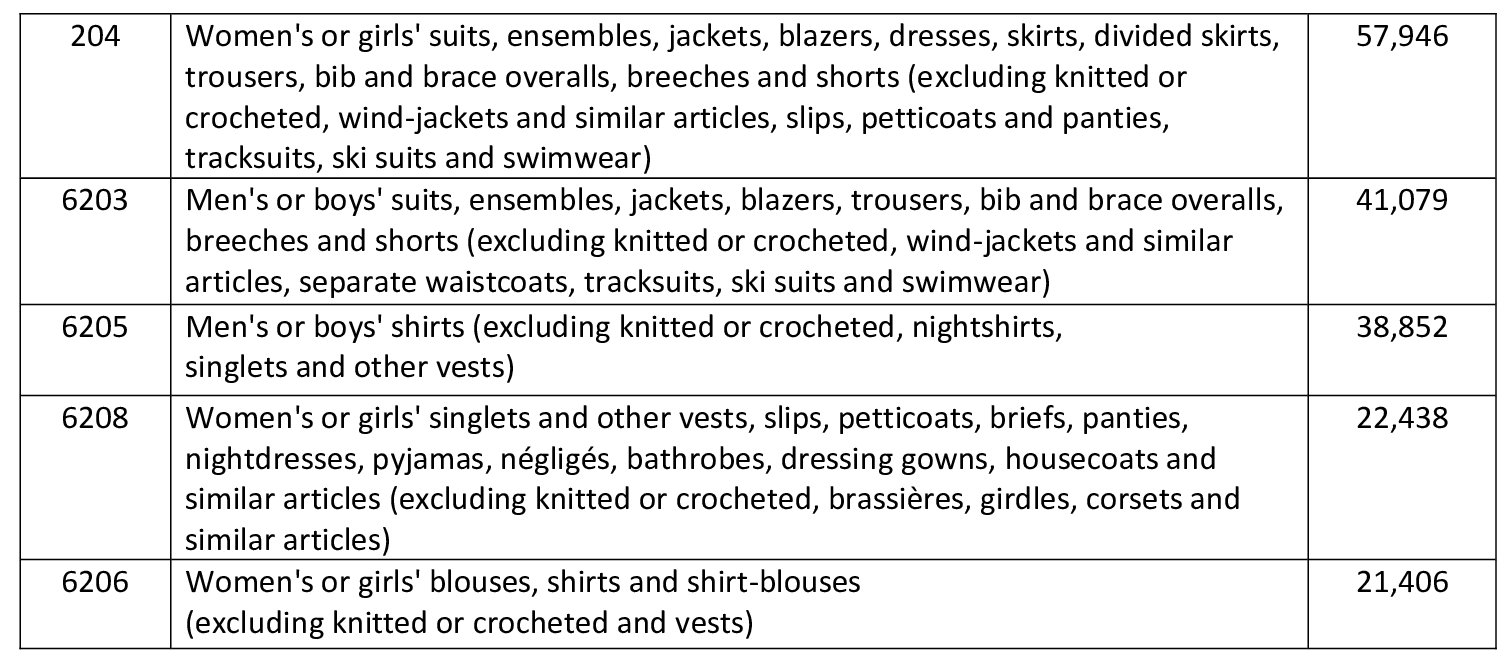
Data: Trademap.org Value: US $ thousand
Since the UAE is also an important retail destination with players across the value chain including major Western fashion chains, wholesale buyers from North Africa and the Middle East, the export potential is seemingly high at the moment.
How it is beyond the advantage of 5%
This CEPA with the UAE is also a morale booster as it got sealed in a record time of 88 days. It will now give India a lot more confidence to aggressively pursue the ongoing FTA negotiations with trade partners such as the UK, the EU, Australia and Canada which are important markets for Indian apparel export fraternity. The pact with UAE will also provide wider access to Indian businesses in the much larger Arab and African markets.The Government now looks forward to concluding a similar economic partnership agreement with the Gulf Cooperation Council (GCC) countries during this year itself. GCC includes Saudi Arabia, Qatar, Kuwait, Oman and Bahrain.
Knitwear hubs to gain much!
As data shows that knitted garment is dominating India’s apparel export to UAE and that too majorly in T-shirts. Therefore it is definitely going to benefit Tirupur, India’s top knitting apparel exporting hub. Raja M. Shanmugham, President, Tirupur Exporters’ Association (TEA)does agree with this and expects that Tirupur’s apparel export will double in the next five years to UAE. Currently, Tirupur’s apparel export to UAE stands at Rs. 3,500 crore (nearly US $ 520 million).
It’s worth noting here that after US and EU, UAE is the third-largest market for the Indian knitted products.
Narendra Goenka, Chairman, Apparel Export Promotion Council (AEPC) also believes that the CEPA is likely to generate additional demand for several apparel items from India.He adds that not all products that are high on import demand in the UAE are core export strengths of India. The key factors that would determine the extent of benefit from CEPA are the import demand of specific RMG products in UAE, production strength/export capability of Indian companies in these products and acceptance of Indian products into UAE.
At the same, it is also important to see that comparing UAE’s apparel import from India and rest of the world (pre-pandemic years) neither there was much growth in UAE’s overall apparel import as well as India’s share in the same (see table).
also believes that the CEPA is likely to generate additional demand for several apparel items from India.He adds that not all products that are high on import demand in the UAE are core export strengths of India. The key factors that would determine the extent of benefit from CEPA are the import demand of specific RMG products in UAE, production strength/export capability of Indian companies in these products and acceptance of Indian products into UAE.
At the same, it is also important to see that comparing UAE’s apparel import from India and rest of the world (pre-pandemic years) neither there was much growth in UAE’s overall apparel import as well as India’s share in the same (see table).

Small exporters will also gain
Not only well-known export hubs like Tirupur, medium and top-level exporters will also gain through this CEPA. Even small-level firms doing little and indirect export are also enthusiastic. Indore is a major hub for domestic market and there are 12-15 apparel manufacturers doing an annual export of Rs. 1-2 crore to UAE.
“To export in UAE, on an average we have seen the growth of 20 per cent in last few years and, after this pact, we have received positive signs from our buyers and agents. Hence, I am very optimistic that orders will grow due to this initiative also,” says Yash Bothra of Bothra Creation, Indore who is mainly into kidswear.
What more can be done?
To grab more orders, India can use Dubai as a hub to keep the inventory to enable buyers from other countries like Africa and Eastern Europe to pick up the stock just-in-time. Endorsing this DM Kumar, CEO, Eastern Global Clothing, Tirupur adds that few of the buyers from Romania, Poland, Ukraine, Latvia and Bulgaria regularly visit Dubai to procure their requirements. China has been using Dubai as a hub and has been supplying them. Indian exporters can now compete strongly with China and increase their business with the Eastern European and African markets.
Textiles segment will get also push
Along with apparels, all major items in textile segment like cotton, man-made filaments, man-made staple fibres, carpets and other textile floor coverings, special woven fabrics; tufted textile fabrics; lace; tapestries; trimmings; embroidery, other made up textile articles; sets; worn clothing and worn textile articles; rags are also has a good share in India’s export to Dubai. And good thing is that these segments are also covered in this trade agreement. India’s export to UAE of such product categories is more than US $ 500 million per year.

Data: Government of India US $ Million