The second largest apparel exporter globally, Bangladesh reportedly continues to suffer from what can be called ‘poor responsibility’ of buyers, claimed a recent global study.
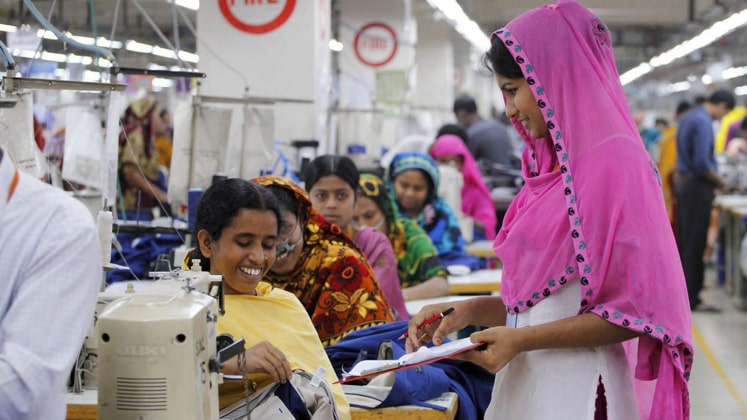
The study conducted by Germany-based Garment Supply Chain Governance Project titled ‘Changes in the Governance of Garment Global Production Networks: Lead Firm, Supplier and Institutional Responses to the Rana Plaza Disaster’, which surveyed 152 managers and 1,500 workers of export-oriented RMG factories in Bangladesh, maintained that Bangladesh readymade garment supply chain still suffers from lack of ‘shared responsibility’ on the part of global buyers although transparency of the buyers and working condition in the country’s garment manufacturing factories have improved since the Rana Plaza building collapse in 2013.
“We observe a stronger concern for worker safety and labour standards on the one hand and continued tensions between buyers’ demands for low production costs and speed on the other,” the report stated.
“The buyers have never come forward to help me on compliance issues. They always say, ‘It is your problem, not mine’. They do not advance us loans in order to carry out the CAPs or even commit to giving us guaranteed orders.” – The report said quoting a factory manager.
It may be mentioned here that the Garment Supply Chain Governance Project carried out the survey among 1,500 workers from 250 factories in and around Dhaka and most of the units were affiliated either to the Accord or to both the Accord and the Alliance.
As per Garment Supply Chain Governance Project’s website, this unique, three year (2016-18) project combined a systematic, comparative analysis of developed country lead firm policies and practices with comprehensive, on-the-ground research among managers, workers, government and civil society organizations in Bangladesh.