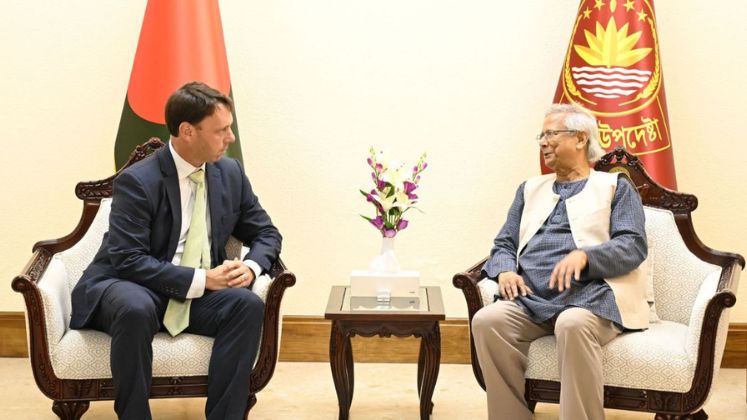
Chief Adviser of Bangladesh Muhammad Yunus announced on Monday that Bangladesh is prepared to increase its imports from the United States, expressing optimism that this move will facilitate further tariff reductions and foster a more sustainable and mutually advantageous trade relationship.
Yunus reiterated Bangladesh’s strong dedication to strengthening bilateral relations with the US, focusing on areas such as trade, investment, energy, and development cooperation.
“Thank you very much for your support. We are very pleased with what has transpired. This is crucial for our economy,” Yunus remarked during a meeting with Assistant U.S. Trade Representative Brendan Lynch at his office in Tejgaon, Dhaka.
The discussions covered strategies to address the trade imbalance between the two nations, with Bangladesh indicating its intention to boost imports of American agricultural products like cotton and soybeans.
The agenda also included topics such as enhanced energy cooperation, specifically the import of LPG from the US, procurement of civil aircraft, drug control initiatives, and ongoing efforts to address the Rohingya humanitarian crisis.
Looking forward, Yunus conveyed that Bangladesh’s interim government aims to attract increased investment and concessional credits, particularly in health and education sectors. He assured that steps would be taken to create a more favorable environment for foreign direct investment, emphasizing the government’s commitment to widening the “door” for US investors.
Assistant USTR Brendan Lynch praised the constructive manner of the Bangladeshi delegation during the trade discussions and welcomed the deepening partnership between the two countries. He noted that Bangladesh’s proactive approach, including an early initiative in February when the national security adviser offered to unilaterally reduce the US trade gap, positively influenced the negotiations.
Lynch commended Bangladesh for deploying a dedicated and effective negotiating team and stressed the importance of timely implementation of tariff agreements and purchase commitments to sustain the progress made in bilateral trade relations.