A report The Fashion Sector in Africa: Trends, Challenges and Opportunities for Growth by UNESCO (The United Nations Educational, Scientific and Cultural Organization) says that the African continent holds all the cards to become one of the next world fashion leaders.
The report argues that the continent has all it takes to become one of the next global fashion leaders, if public decision-makers offer greater support to all those who work in the sector and play a role in the fashion ecosystem
Audrey Azoulay, Director-General UNESCO unveiled the report at Lagos Fashion Week.
“Fashion is really taking off in Africa, and this report shows that it can be developed even further. In order to achieve this, designers, professionals and the entire production and distribution infrastructure need more support from public decision-makers. The potential is enormous, not only for the economy, but also for young people’s inclusion, women’s empowerment and for African culture to resonate globally”, underscored Audrey Azoulay.
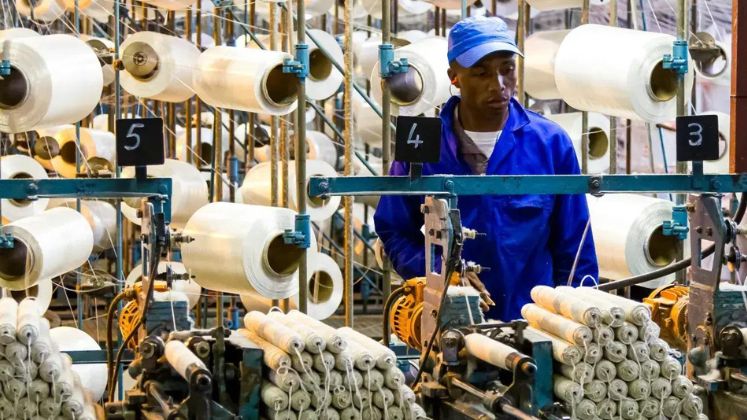
Africa is a major producer of raw materials – 37 out of 54 countries produce cotton -, an exporter of textiles to the value of US $ 15.5 billion a year, and an importer of textiles, clothing and footwear to the value of US $ 23.1 billion a year.
There is a growing consumer trend on the continent for fashion Made-in-Africa, particularly among young people – the under-25s account for 50 per cent of the continent’s total population – and among the burgeoning middle class – which already make up more than 35 per cent of the population – opening up new consumer markets. Africa is also experiencing very rapid growth in the digital sector, which is facilitating intra-African trade and the emergence of young talent.
The report also highlights 4 challenges which governments and decision-makers must tackle if they want to realise the potential of Africa’s fashion sector including legal protections for designers and professionals need to be strengthened, in terms of intellectual property rights, remuneration levels, working conditions and the ability to organise into professional unions and social rights.
Investment must be made in small and medium-sized enterprises, environmental standards need to be set, both the transmission of savoir-faire, and formal training need to be improved.





 Bharat Tex Special Report 2026