Senior officials from the US administration under President Donald Trump have held separate virtual meetings with leaders of Bangladesh’s major political parties to discuss tariffs, bilateral trade relations and future economic cooperation.
United States Trade Representative Jamieson Greer led a virtual meeting with Bangladesh Nationalist Party (BNP) Chairman Tarique Rahman to review the interim government’s negotiated tariff agreement with the United States and explore avenues for strengthening bilateral trade ties. The 30-minute meeting was held between Washington, DC and London, where Rahman joined the discussion from his residence.
From the BNP side, Humaiun Kabir, joint secretary general and foreign affairs adviser to the BNP chairman, also participated in the talks. The US delegation included Assistant US Trade Representative for South and Central Asia Emily Ashby, Deputy Assistant US Trade Representative Rick Switzer, USTR chief of staff Sam Mulopolous, and senior policy adviser to the deputy USTR D R Seckinger.
Rahman underscored the importance of deepening trade engagement between the two countries and expanding cooperation in areas of mutual economic interest to further strengthen Bangladesh–US relations.
In a separate virtual meeting, Ambassador Greer also held talks with Bangladesh Jamaat-e-Islami Ameer Dr Shafiqur Rahman, focusing on bilateral trade, reciprocal tariffs and prospects for future economic cooperation. The discussion covered tariff structures, trade imbalances and opportunities to expand collaboration in sectors including apparel, agriculture and industry.
The meeting was attended by Assistant US Trade Representative for South and Central Asia Brendan Lynch, Director for South and Central Asia Emily Ashby, and Jamaat-e-Islami’s US spokesperson Prof Mohammad Nakibur Rahman.
During the talks, Shafiqur Rahman expressed appreciation for the initiation of the dialogue and for US engagement on tariff-related issues affecting Bangladesh. He said Ambassador Greer had informed him of a recent meeting with President Donald Trump, during which the issue of lowering reciprocal tariffs for Bangladesh was discussed, and welcomed the move to raise the matter at the highest level.
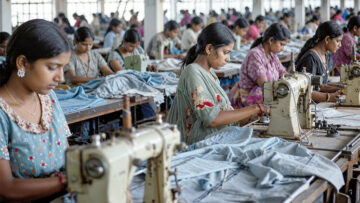
Shafiqur also welcomed a US proposal to offer preferential tariff facilities for Bangladeshi garments manufactured using 100% US cotton or US-produced man-made fibre, describing it as a mutually beneficial initiative that could support Bangladesh’s garment exports while boosting US agriculture and industry.
He said the reciprocal tariff framework had laid a strong foundation for improving bilateral trade and economic relations, noting that Bangladesh had already begun implementing key elements of the agreement and had taken steps to reduce the trade deficit with the United States.
He also welcomed Ambassador Greer’s support for Bangladesh’s access to financing from the US Development Finance Corporation, noting that DFC funding for private investment could play a significant role in expanding bilateral trade and investment.
The twin engagements reflect Washington’s continued outreach to key political stakeholders in Bangladesh as it seeks to advance trade cooperation and implement the recently negotiated tariff framework.


 Bharat Tex Special Report 2026