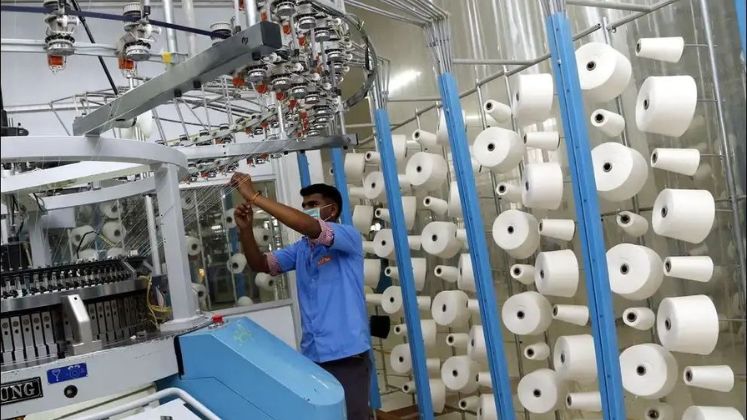
Textile manufacturers in Surat and South Gujarat region have welcomed the Central Government’s decision to refrain from imposing anti-dumping duties on imports of Nylon Filament Yarn (NFY), Viscose Filament Yarn (VFY), and Spandex Yarn.
Industry stakeholders stated that it will help maintain stable raw material costs and support textile production at a time when global market uncertainties continue to impact the sector.
The Southern Gujarat Chamber of Commerce and Industry (SGCCI) also welcomed the decision, and mentioned that it would benefit the textile sectors across Surat, South Gujarat and the overall value chain.
Earlier, the Directorate General of Trade Remedies (DGTR) had recommended anti-dumping duties on NFY and VFY in its final findings issued on 19th March 2026, while a similar recommendation for Spandex Yarn was released on 18th March 2026.
However, the Ministry of Finance chose not to act on these recommendations, and no notification was issued to levy the proposed duties.
SGCCI had previously submitted representations to both the Ministry of Textiles and the Ministry of Finance, highlighting concerns that additional duties would increase raw material costs and adversely affect textile manufacturers.
Industry bodies further emphasised that NFY, VFY, and Spandex Yarn are widely used in the production of sarees, dress materials, fabrics, stretch garments, and technical textiles and they argued that higher input costs would weaken competitiveness, affect exports, and potentially impact employment across the labour-intensive textile sector.
Under the applicable customs framework, the government is required to take a final decision within a specified period following DGTR’s recommendations. As no notification was issued before the 19th June deadline, industry stakeholders interpreted the lapse as confirmation that the proposed duties would not be imposed.
SGCCI President Ashok Jirawala stated that the decision would ensure the availability of raw materials at competitive prices, help keep production costs under control, and strengthen export prospects for the textile industry.




 Bharat Tex Special Report 2026