In spite of a well-publicised promise of “No-Deforestation,” a new investigative investigation, Pulping Borneo, reveals that the Royal Golden Eagle (RGE) Group, the largest viscose producer in the world and a significant paper products company, continues to rely on deforestation in its supply chain.
A new mega-scale pulp mill in North Kalimantan, Indonesia, that threatens some of the largest surviving rainforests in the world is being built under the ownership of RGE Group, according to a report co-published by five organisations, Yayasan Auriga Nusantara, Environmental Paper Network, Greenpeace International, Rainforest Action Network, and Woods & Wayside International.
“The RGE Group and its subsidiaries, APRIL, Sateri, Asia Pacific Rayon, and Asia Symbol promised that RGE companies have eliminated deforestation in their supply chains, but this report shows that promise has not been kept,” said Sergio Baffoni, the Senior Campaign Coordinator of the Environmental Paper Network.
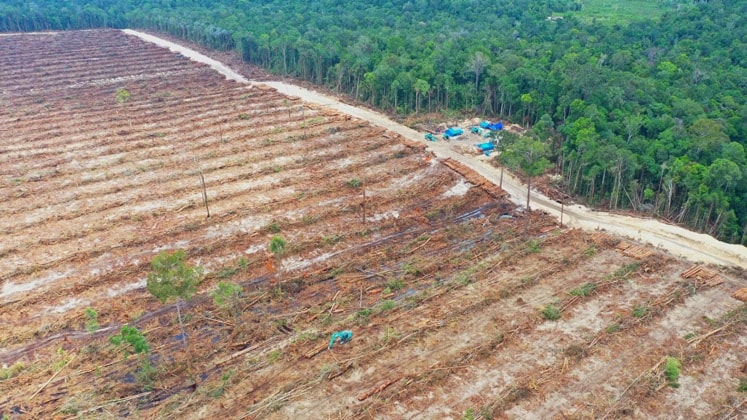
According to an investigation report, RGE’s pulp mill in China, Asia Symbol, has been using wood from businesses that have recently cut substantial areas of tropical rainforest in Kalimantan, Indonesia’s region on the island of Borneo.
According to information provided by Indonesia’s Ministry of Environment and Forestry, a significant portion of the rainforest served as a habitat for Bornean orangutans, which are a threatened species. Satellite image analysis, a review of export data, vessel tracking reports, and supplier disclosure data were used to gather the evidence included in the study.
The investigative report examined corporate records to document RGE’s links to a new mega-scale pulp mill, which PT Phoenix Resources International is currently constructing on the island of Tarakan in northeastern Kalimantan.