Sustainability continuing to gain eminence both among the end users and, brands and retailers alike, more and more entities in Bangladesh (including the fabric and apparel makers) are embracing the green concept like never before.
One such name which is walking the talk in its true essence is Shasha Denims Limited, a renowned name in the country, in the realm of denim fabric making.
Shasha also boasts of apparel-making facilities even if fabric constitutes around 98 per cent of its total business in apparel and textiles while readymade garments make up for the remaining two per cent.
However, what differentiates Shasha from many of its ilks is its earnest efforts to measure and quantify the sustainability endeavours in each and every stage not just to create its own sustainability story but also help the brands and buyers create their own!
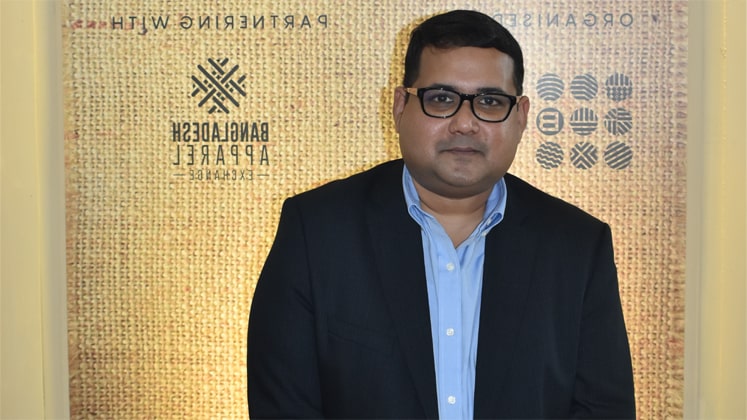
“Our focus is primarily on circularity and sustainability,” underlines Shams Mahmud, Managing Director of Shasha Denims Ltd, and Director of Shasha Garments Ltd., and EOS Textile Mills Ltd, speaking to Apparel Resources.
The biggest fabric supplier for many brands globally not to mention the scores of other brands and retailers (Esprit, H&M, Abercrombie & Fitch, Tommy Hilfiger, Calvin Klein, Ralph Lauren, Marks & Spencer, Pull & Bear, S. Oliver, Zara, Bestseller, River Island etc.) that it caters to in varying degrees, Shasha painstakingly maps and calculates the natural resources saved in each and every stage of the supply chain to help the brands and buyers get an accurate measure of the carbon footprints.
“This helps them to create their own narrative,” Shams explains.
Considered the pioneers of the ‘Blue is the New Green’ concept through extensive research, where at every level of the denim making process, Shasha thinks of the direct and indirect effect on nature its activities may lead to, which propelled it to use organic cotton, reused cotton and environmentally friendly fabrics such as Tencel.
What’s more, even if a remarkable percentage of water is lost through denim manufacturing at traditional fabric plants and factories that still rely on outdated equipment and methods to sustain their products, at Shasha; it has reduced the percentage of water loss by 60–80 per cent.
Further, to resonate its philosophy of Blue is the New Green, Shasha has incorporated branded fibres from Lenzing Modal® and TENCEL®, making its denims exceptionally comfortable to wear and sustainable, all at once.
Use of these natural fibres ensure that Shasha’s products are made without the use of cotton as much as possible (cotton is one of the most pesticide and water intensive crop) and even when cotton is used, it is 100% organic, free from chemical fertilizers and comes from organic production, spinning, dyeing and finishing of the yarn, all carried out using ecological procedures.
Part of the Better Cotton Initiative, at Shasha Denims (it currently has a production capacity of 2.10 million yards per month to produce different types of denim fabrics and has perfected the art of making all types of denim fabrics from 4.50 oz to 15.00 oz, providing its global customers with a range of colours from the lightest shades of indigo to the darkest hue and range of effects and textures such as the smooth indigo surface and the salt effect) uses recycled polyester and stretch materials.
A champion of the green efforts, Shasha unlike many, doesn’t think, sustainability adds to the cost quotient, rather the contrary.
“Honestly speaking, we found it the other way round,” says Shams on the so-called claims by many of the increased cost due to sustainability.
To give an example, the last dyeing machine Shasha bought cost it a staggering three million Euros, in which price it could have bought another one with four times the dyeing capacity, but of a different make.
Instead, it preferred to go with the European version.
“Even if you spend a little more initially, it does pay in the long run,” claims Shams, who explained the new machine additionally helped them get a better control over the products (quality) even as he added buyers that have sustainability at the core of their business model, would not mind offering fair prices provided suppliers are able to explain things to them properly.
To drive home his point, Shams cites another example in this regard, one which relates to a study by Jeanologia — Jeanologia develops innovative technologies for textile industry and apparel through eco-efficient, sustainable solutions and the best in service — as per which Shasha is best in terms of laser efficiency vis-à-vis its compatriots.
“We tell our buyers even if you pay me 15 cents extra a yard, you are more than going to make up for it given our level of efficiency in laser, which is 30 per cent more than the others, thus translating into more production,” Shams elucidates.
The new generation of entrepreneurs taking over now, the industry is breaking through the mould in terms of communicating things better than their predecessor, when it comes to deliberating with the brands and retailers, feels Shams.
However, it is the so-called dichotomy and lack of clarity amongst the brands and retailers on the issue of sustainability, which worries him.
A renowned fabric supplier, Shasha have had to face one such scenario not so long back that involved the prospect of shipping pre-consumer textile waste to a Scandinavian nation where it would be transformed into wood pulp sheets and transported to China, before being mixed with the cotton and send the yarn made with the cotton in question back to Bangladesh.
Shams nevertheless took it upon him to explain how the carbon emissions from the ships in the whole process, would go against the climate agreements, the Vienna protocol.
Vienna Convention is the first global agreement, which is dedicated to the protection of the ozone layer even as it commits all countries to take measures to protect human health and the environment resulting from modifications to the ozone layer.
“They understood the moot point,” says a proud Shams, adding discussions are now ongoing to invest locally to set up a unit within Bangladesh itself to carry out the entire process.
It may be mentioned here Shasha is amongst the first in Bangladesh to use ocean plastics as well.
Every year millions of tonnes of plastic enter the oceans, harming the marine life and delicate balance of water and Shasha through its breakthrough technology uses the ocean plastic to be broken down and mixed in with fabrics to create finished denim products.
This innovative recycling method not only sets the highest standard of responsible manufacturing but utilises an untapped resource for the greater good even as on the other hand denim leftovers from production are also salvaged and remade into exclusive products with the help of local communities.
“We are the second factory globally to work with ocean plastics,” claims Shams, who sees the next phase of sustainability coming from deep and intrinsic collaboration between the suppliers and the buyers.
Working at the back end, suppliers, thanks to the various R&D activities that they carry out, are better placed to tell the buyers more on feasibility as well as business viability of various sustainability endeavours.
This is one area, which Shams believe, will open up the next frontier of growth and development to create a win-win situation for both the stakeholders concerned.
“Our high quality denimwear are produced for people of all ages, keeping functionality, aesthetics and renewability in mind,” underlines Shams while adding when it comes to readymade garments, Shasha prefers to work with a select band of buyers as partners, transcending the traditional buyer-supplier relationship.
“Our garments division is very small and we mostly do the medium and high-end products especially for niche market,” underlines Shams, exuding hopes things would take a turn for the better for the Bangladesh apparel makers, given the volume of queries they are receiving from the global buyers lately.
As it would have been, to leverage the opportunities on offer, Shasha is planning to increase capacities while also get into new and unchartered territories apart from adding a state-of the-art commercial washing facility.
“We have already made some investments to this end in the EPZ to increase our production in twill as well as denim fabrics,” he says while adding the new washing plant from Shasha, will help it operate as a one-stop solution provider for all its existing and new buyers.
Shasha had earlier taken two plots of 4,005.12 square meters at Dhaka Export Processing Zone (DEPZ) Extension Area from the Bangladesh Export Processing Zones Authority (BEPZA) for future expansions even if on the other hand, it also has attained 98 per cent shares of EOS Textile Mills – a Bangladeshi subsidiary of BertoIndustriaTessile of Italy – for Taka 210.79 million, taking its 98% possession, thanks to which, Shasha is now able to offers wider range and high-end denim fabrics, leveraging the Italian knowhow and techniques.
“We have also started exporting fabrics to Latin America, South America, Vietnam and even Pakistan,” winds up Shams on a very positive note, underlining Shasha’s resolve to attain new milestones in the days to come.