A recent scientific discovery reframes hemp fibre as a feasible, cotton-compatible input that may be spun using conventional equipment rather than as a specialised substance needing specialised infrastructure. The results have the potential to unleash value from agricultural waste streams and drastically lower obstacles for hemp in the global textile supply chain.
Hemp by-products can be mixed with cotton and spun on open-end rotor systems after undergoing a combined mechanical-chemical cottonisation process, according to a team from the University of Zagreb’s Faculty of Textile Technology. Their research, which was published in the peer-reviewed Springer Professional journal Cellulose, tackles the main technical issue that has kept hemp out of traditional spinning for a long time: the stiffness, irregularity, and lignin content of bast fibres.
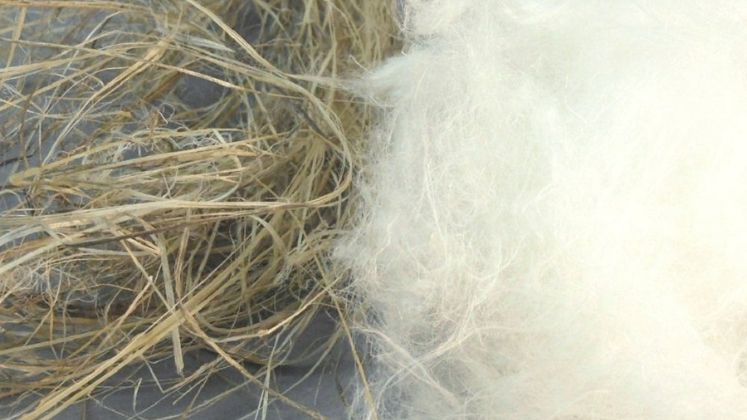
The researchers converted post-extraction hemp biomass, which is usually thrown away, into stable, short fibres with enhanced spinnability by using mechanical refinement and peroxide-based chemical treatments. The ultimate product was blended yarns that could be processed using large-scale cotton spinning machinery after passing tensile strength testing.
The majority of natural bast fibres, such as flax and traditional hemp, are processed using specialised lines for long fibre wet spinning, which require expensive equipment that is not suitable for mass-market clothing or home textiles. Because of this, hemp fibre has been mainly excluded from commodity textile channels, despite the growing demand for sustainable inputs.
The study makes it possible for mill owners and clothing companies to use hemp blends without having to replace their machinery. It represents an opportunity for hemp processors to turn fibre waste—typically the crop’s least valuable product—into a marketable raw textile input.
In response to business realities, the study focusses on cottonization, which is the process of softening and shortening bast fibres to resemble cotton’s qualities. Despite being the best raw material for textile-grade yarn, long fibre hemp is practically unobtainable due to a lack of production facilities. Conversely, cottonized fibre can be blended with regular cotton or recycled materials because it conforms to the specifications of current machinery and processes.
Given that the global textile industry is looking for more sustainable inputs, the finding is very pertinent. A circular answer is provided by cottonized hemp, which eliminates waste, stays away from artificial additives, and partially substitutes high-water, pesticide-intensive cotton.
Closing the loop in hemp processing systems—extracting THC or seed oil upstream and using fibre waste downstream to make textiles—offers producers an opportunity. It gives marketers a new tool for sustainable sourcing strategies that rely more on industrial viability and less on speciality materials.