Skill and low-level education of the majority of the workforce continue to be a big challenge for Bangladesh, constraining labour productivity and the goal of achieving high economic growth.
This was underlined in a book titled, ‘Anticipating and Preparing for Emerging Skills and Jobs’, published by the Asian Development Bank (ADB) recently, which maintained that compared with other neighbouring countries like Sri Lanka and India, low-productivity in industrial development and competitiveness continues to be a challenge for Bangladesh.
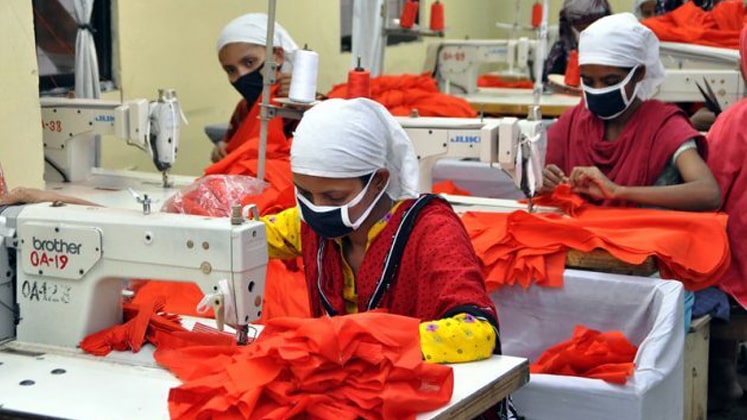
Structural transformation during the past decade had moved mostly unskilled labour to textiles and garments from rural and peri-urban areas but these unskilled workers could acquire few skills during the process, it said.
While underlining that only one-fourth of the private companies in the country (Bangladesh) conduct in-firm training to their employees, the book suggested developing education and skills together to improve the human capital necessary for Bangladesh’s economic growth.
It further advised diversifying the economic bases and moving up the value chain in the global market to sustain and accelerate the economic growth while adding that the RMG industrial growth underpinned the job expansion in the manufacturing sector, especially for women.
Ascribing low-cost production and surplus of low-skilled labour for much of the success, the book stated that Bangladesh’s high growth is often highlighted by its booming apparel industry, the share of which in total exports reached 80 per cent by 2015 from a mere 40 per cent in 1990.
To place Bangladesh into the accelerated growth path, the country needs to transform from low-productivity and low-wage development to high-productivity and high-growth models, the report maintained while adding the growing workforce needs to be equipped with education and skills that can improve their productivity and meet the emerging skill needs.