With the aim of improving the social and environmental impacts of apparel manufacturing around the world, the Sustainable Apparel Coalition (SAC) hosted its annual full-member meeting in Bangalore, which included 2017 SAC Manufacturing Forum and representatives (over 40 per cent) from the global apparel industry market. SAC is an industry wide group of more than 200 leading apparels, footwear and home textiles, brands, retailers, suppliers, and service providers, working to reduce the environmental and social influences of products around the world. The meeting expanded opportunities for dialogue among attendees against the backdrop of a nation that leads the globe in the sourcing of apparel and textiles.
“For sustainability professionals, our work has become more urgent,” said Jason Kibbey, CEO, SAC, in response to the US withdrawal from the Paris Agreement, adding, “I’m more committed than ever towards SAC’s work.” The meeting highlighted that India as a producing country faces incredible resource constraints but at the same time, it also has a rapidly emerging middle-class which dictates the consumption patterns of tomorrow. The future is coming very fast for India and what happens here will be a strong indicator of this future for both people and the country.
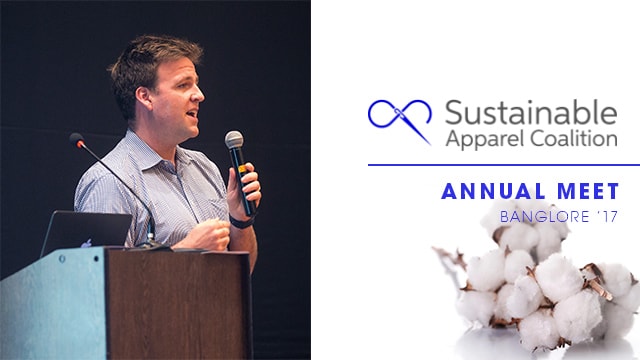
Talking about The Higg Index, the core driver of the SAC, Kibbey shared, “Through The Higg Index, we’re trying to make sustainability easier and much more scalable for the apparel and footwear supply chain. Our goal is to make tools that add value and make companies better for the manufacturers.” He further stated that implementing The Higg Index grants transparency to brands, retailers and manufacturers. Mutual benefits, including fewer audits, emerge for the entire supply chain. At SAC, striving toward increased transparency is a priority.
Kibbey also urged the industry, during the meeting, to align on standardization through the use of The Higg Index. “In future, I envision that instead of focus on assessments, there will be focus on impact,” he emphasized, and added, “There will be support for Higg as a common language and the framework we use today. Instead of noise around transparency, we will have clarity. Now, more than ever, we need to make a stronger global commitment to this.”

Referring to SAC’s futuristic vision for 2020, it was specified in the meeting that SAC’s next three years will be spent on shaping the application of sustainability for the entire apparel and footwear industry by 2020 and beyond. Its goals include creating unprecedented business value and sustainability impact, letting consumers choose products based on trusted sustainability information, developing Higg as a harmonized industry standard, achieving transparency in the value chain and having SAC as a leading platform for change. Nevertheless, it was also highlighted that reaching this goal is like climbing a mountain. However, Kibbey optimistically shared, “We’ve now been climbing to this ‘future’ for a few years, and while it may seem like we’re still getting started at the top of the mountain, our 2020 vision is within reach. If we stop climbing, we risk being stuck in a perennial CSR purgatory, always making a good effort but with insufficient tangible positive environmental and social impact.”
Members of SAC in Indian Textile & Apparel Industry Members of SAC in Indian Textile & Apparel Industry
• Aditya Birla Group
• Pratibha Syntex
• Arvind Limited
• KG Denim
• Eastman Exports Global Clothing
Kibbey also envisioned that in future, while there will be more and more apps, labelling programmes and Government transparency requirements, there will not be any common language. Transparency will be everywhere, yet clarity and reliability will be nowhere. Therefore, he believed that instead of approving new versions of The Higg, efforts to achieve perfection would lead to unnecessary delays and a loss of confidence. A worried Kibbey stated, “The Industry and its stakeholders would not come together with a common point of view towards the Government. We would not stand up for one standard, i.e. The Higg, but instead we would see a mushrooming of country-specific assessments with a global cost and little impact. For Transparency, we would not align around a common standard, timeline or method. The market would fill in the void with confusing apps, new certifications, logos and regulations. As for Equal Partnership, we would fail to recognize the shortcomings of auditing, which alone cannot solve the problem. We would not create a culture of respect, and neither let great improvement opportunities go in waste.”
On the other hand, adopting the latest versions of the Higg would let the overall industry see meaningful improvements by 2020. There will be several advantages that will follow, such as instead of focusing on ‘assessments’, there will be a focus on ‘impact’. There will be standardization and demonstration of impact improvements to give legitimacy to Governments to support The Higg as a common language and align country-specific assessments around common frameworks such as the OECD’s due diligence guidance. NGOs will continue to pressure companies to get better, but they won’t have to campaign on new issues every year. They can easily ask for impact improvement using The Higg and hold the value chain accountable. Manufacturers and brands will work closely in equal partnership to scale innovation and better performance. Success in equal partnership will be demonstrated by the fact that the financial benefits will be spread throughout the value chain to incentivize more sustainability investment. Consumers and other stakeholders will compare products and companies against one another using a common transparency language.