“I do not think we should have a legal mandate for companies to do CSR. Philanthropy or charity or contribution to society must come from within, and it cannot be mandated from outside.” – Azim Premji, Chairman, Wipro Ltd & Philanthropist
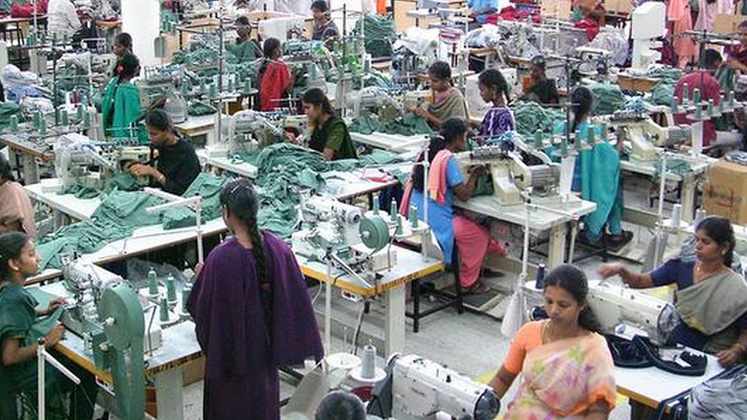
There has always been a debate on how and where the mandatory CSR allocation as laid out by law should be used. There are also many detractors who believe that companies are using this provision to promote themselves as ‘caring companies’ with no real gains. For the textile and apparel industry, the situation is no different; in fact, as an industry that employs huge number of labourers, charity could and should start at home.
With the introduction of Section 135 in the Companies Act 2013, India became the first country to have statutorily mandated CSR for specified companies. According to a report by Technopak, only 10 textile companies – Aditya Birla Nuvo; Donear Industries; Raymond Limited; Arvind Limited; Century Enka Limited; Trident Limited; Welspun India; Ambika Cotton Mills Ltd; Nandan Denim Limited; and Rupa and Company Limited were working proactively towards CSR. Others like Grasim Industries Ltd., Bombay Dyeing & Manufacturing Company ltd., Indo Rama Synthetics (India) Limited, Vardhman Textiles Ltd and Nitin Spinners Ltd., were active in their approach towards adopting CSR and another 30 companies were passive in their approach. But these 50 companies do not make the industry…or do they!
And what about garment companies… the few that make the criteria for mandatory CSR spend are mostly working for buyer-driven activities like women education, child labour, home-worker programs etc. Focus is also on Government promoted schemes like Swachh Bharat mission, Dr. Babasaheb Ambedkar Yuva Uthan Sanstha and Pradhan Mantri Ujjwala Yojana, to name a few. In fact, a lot of good work has been done in these core areas by the textile value chain, now an additional focus is on the environment. A lot of CSR avenues are now stemming from companies through reduction in the carbon footprint and prudent environmentally conscious investments.
The fact is that companies in the textile value chain, even those that do not meet the CSR spend criteria are already spending on worker welfare activities and environment-friendly initiatives, and if the Government allows the mandatory 2 per cent to also be used for such good causes, so they can get the benefit of the CSR clause, it would be a win-win situation for all. The correct thing to do would have been to do away with mandatory CSR, and instead lower corporate taxes, and if need be, introduce tax deductions for certain activities that the Government wishes to promote.
Mandatory CSR in corporates’ may not really be effective
Pushing for mandatory CSR, can in fact be counter-productive not only for textile industry but for the country also. The reality is that generally corporate executives are not equipped to decide on the best social use of CSR funds as their core job is to run companies and create wealth, so they allocate CSR funds into ‘safe’ activities. Most of the time special cells are set up with talent that can understand the implications of CSR investments. In such a scenario, would it not be more fruitful to allow the CSR budget to be directed towards worker welfare and employee engagement activities that add directly to their business?
There is no doubt that companies have a social responsibility, but it is also true that their fundamental social responsibility is to generate wealth for their stakeholders in a law-abiding, ethical and sustainable way. When they do that, they not only create wealth but also employment, purpose and dignity among workers, and strengthen the nation. To the extent that they do this, they in fact discharge their corporate social responsibility. So, the reality is that a profitable, well-run company does more for India and its people than any charity could possibly do!
A recent Crisil study found that India Inc’s cumulative corporate social responsibility (CSR) spending since 2014 has crossed the Rs. 1 lakh crore milestone. This is significant, although 40 per cent of the spending over the last two years has been on account of companies counting Covid relief measures as CSR. But the real win is that some companies have gone beyond to tackle problems of the environment and of social underdevelopment. These companies become a draw for ethical investors. This is the true endgame for the textile and apparel industry.
The Act requires companies with a net worth of Rs.500 crore or more, or turnover of Rs.1,000 crore or more, or a net profit of Rs.5 crore or more during the immediately preceding financial year, to spend 2 per cent of the average net profits of the immediately preceding three years on CSR activities.