H&M Foundation and The Hong Kong Research Institute of Textiles and Apparel Limited (HKRITA) have announced a project to address textile waste in Cambodia.
The lead role is played by the Green Machine – developed by HKRITA with the support from H&M Foundation – which is the world’s first technology that can separate and recycle polyester and cotton blend textiles at scale without any quality loss.
The announcement was made by an international consortium initiated by Deutsche Gesellschaft für Internationale Zusammenarbeit GmbH (GIZ FAB-RIC project), HKRITA, Chip Mong Insee, Dakota Industri-al, H&M Foundation and VF Corporation, one of the world’s largest apparel and footwear companies.
A feasibility study is currently being launched to deploy the Green Machine in Cambodia by 2022. The Green Machine is said to contribute to a better future for people of Cambodia and the planet.
“Our aim is to develop technologies and solutions that can have a positive impact on our planet, and the Green Machine is an excellent example of that. The continuously growing demand for this solution will drive change and generate value for the entire fashion and textile industry,” said Edwin Keh, CEO, HKRITA.
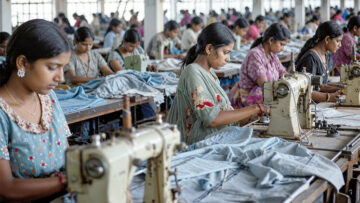
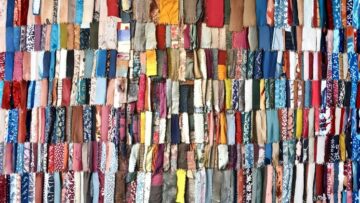
According to a press release of H&M Foundation, an estimated 10-15 per cent of the total fabric used to produce garments currently becomes waste already at the cutting stage and, today, most of it ends up in landfill or is burnt.
Therefore, taking circular practices as a core, GIZ, through its FABRIC project, brought together all key partners along the garment supply chain to assess the industrial scale development of the Green Machine in Cambodia.
With The Green Machine, the recycling process uses only heat, water and less than 15 per cent of a biodegradable chemical to separate cotton and polyester materials in a closed loop system.
GIZ Fabric will support a feasibility study of The Green Machine in Cambodia so that the private partners could take an informed decision to deploy this cutting-edge technology to start waste recycling in Cambodia for the first time ever, by 2022.
“Better waste management will have a positive impact on communities’ resources such as water, air quality and land use. This will reduce long-term stress factors and sources for conflict of different kinds. It will also create new jobs and a sense of pride,” commented Marc Beckmann, Project Director, GIZ FABRIC.




 Bharat Tex Special Report 2026