One of the most commonly used terms in the apparel industry since the last few years has been ‘green’, but when it comes to having a green factory, Indian apparel exporters are far behind their neighbours Bangladesh or even Sri Lanka, which have set new benchmarks in walking on the green path whether it is the number of green certified factories or the level of commitment in the direction. As for India, there are around 15 garment factories/offices of stakeholders in the apparel industry, which can be called ‘green’. Should it not be a reason of worry for the industry, encouraging more garment manufacturers to come forward in this regard? Apparel Online gets to the bottom of it and probes the reasons why Indian factories are not interested in green factories, and what could be the solution…
Looking at our neighbours, the record on green factories is indeed impressive. There are 35 garment factories in Bangladesh that have received Leadership in Energy and Environmental Design (LEED) certification from the United States Green Building Council (USGBC) while another 133 garment factories have applied for the certification and many more are planning or have initiated the process for this certification. Today, the top three environment-friendly garment and textile factories in the world are located in Bangladesh.
Sri Lanka is the home of the flag-bearer of sustainability in the garment manufacturing sector – Brandix. Besides, the country also has many other companies like Bodyline that are truly green. Comprising four factories, Bodyline was the first Sri Lankan apparel manufacturer to be certified as CarbonConscious, with the company’s third plant located in Pimbura, is setting a new benchmark by being the first in the group of factories to be certified CarbonNeutral. Another company Star Garment’s obsolete factory building has been transformed into a green product development centre. There are many more such examples in Sri Lanka.
A LEED certificate requires factories to meet its prerequisites, mainly use of construction materials that create less carbon emission, hi-tech machinery for production, saving electricity, preserving rainwater, having enough space for constructing other buildings and ensuring housing facilities, schools, bazaars, and bus stands for the workers within 500 square miles of the factory.
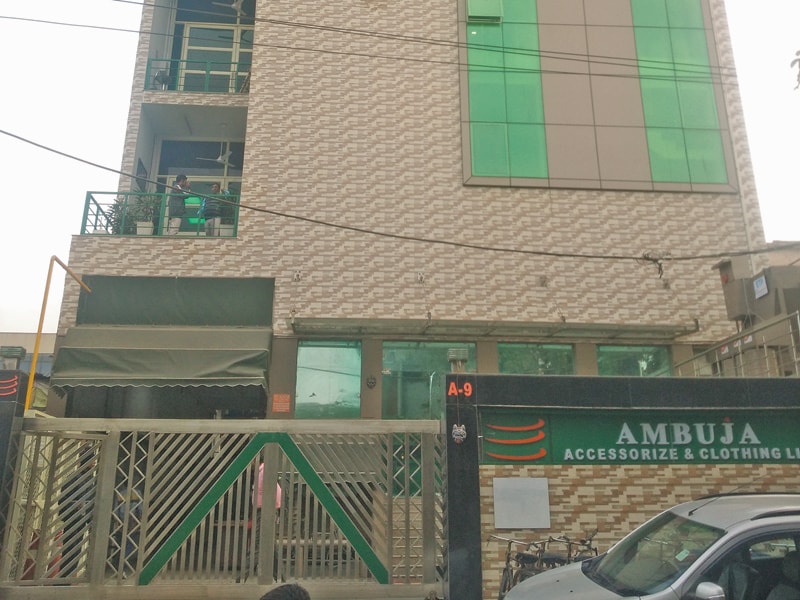
In India, companies like Orient Craft, Bhiwandi; Madura Clothing, Bangalore; Mahajan Overseas (Barhi Industrial Area), Sonepat; Genus Apparels, Faridabad; International Trading Company, Tirupur; SNQS International, Tirupur; Zodiac Clothing Company Ltd. (ZCCL), Mumbai (corporate office building); Mainetti (India), Chennai (manufacturer of garment hangers and associated products) are having green factories. Names of some other green factories in the making are Click Clothing Company, Faridabad; Fine Lines, Noida (which is being constructed with an investment of Rs. 15 crore), expected to be completed by December 2017. Another Noida company Fashion Makers Group, is also planning for a green factory. Even in Ludhiana, KG Exports is also planning to make its upcoming factory green. One can say that Indian exporters are also growing in this regard; but surprisingly among the top 20 Indian apparel export houses, not even a single has been certified as a green factory, while some of them are continuously starting new facilities too.
A commonly asked question is, “What is the need for a green garment factory when it overall costs almost 1½ times more as compared to a normal unit.” On analyzing the same it is obvious that there are many benefits that come from going green. For one, there is possibility of reduction in energy consumption by more than 24 per cent and water consumption by 50 per cent. Despite such obvious benefits, there are many reasons for India’s lacking in this regard. The first and foremost being lack of awareness and interest, while the second biggest reason being the current market pressures forcing exporters to refrain from extra investment, more so as buyers still don’t pay any premium to such exporters. Also there are difficulties as well as cost involved to convert old factories into green ones, and Indian exporters don’t have the ‘willingness’ to expand further in apparel industry, as they are happy in their ‘comfort zone’ or prefer to look at opportunities in different sectors that are more lucrative.
Industry is upfront in acknowledging the problem areas. “While customers are asking for green factories and such initiatives, but they are not willing to pay premium. These initiatives are initially expensive and there is no surety of returns. Indian exporters also lack knowledge and awareness of implementation and benefits,” says Rajesh Kumar, COO, Laguna Clothing, Bangalore. “The term ‘green factories’ is still not clear to a majority of the textile people at grassroot level. Industry needs to be well-informed through media, seminars, etc., on what ‘green factory’ means, and what needs to be done in addition to existing structure and investments to make this happen. Exporters are grossly involved in day-to-day management of their operations, attending their buyers, fulfilling Government norms for recovery of duty drawbacks, networking with various agencies, etc. The thought-process needs to change where we individually become more sensitive to the needs of the environment and act responsibly for making a difference,” adds Arvind Arora, TaurusTex, Delhi.
Jas Mahindru of Mega Brands, Delhi agrees that more awareness is required among exporters. “Rather than market sentiments, it is lack of knowledge that results in less interest and if this becomes similar to compliance norms, one will see things change fast.” He further adds that if the benefits of going green can be more emphasized upon and more advertised, things will change. As far as buyers’ priority for such factories or premium to such exporters is concerned, even the companies running green factory believes that though they do not get any premium on products, it’s more to do with their own commitment to make a green factory and willingness to pay back to the environment.
Pranab Mahajan of Mahajan Overseas, who has the credit of having the first green factory in the home furnishing segment as well as first in apparel/textile industry in Haryana, opines, “In today’s world, everyone has the awareness and in reality, it’s the costs involved that people are scared of, considering the current market pressures.” Kiran Panchal of Amber Home, Mumbai also disagrees that awareness is lacking. “The green concept is everywhere and if exporters deal with major stores or brands or private labels, they all ask for green products. Hence awareness is there but the procedures to make a green factory are very cumbersome, and even though buyers give priority to green products without extra premium, it does not become viable.” Pranab however feels that it is not about premium, but remaining a preferred supplier. “Every customer is bringing down their vendor base; so more focus is on how to retain the customers by serving them better, and hence this can be an oversight as it is not mandatory.”
“At this point of time, business offers a green factory no advantage except to help a factory grand stand its sales push. Awareness, investment and Government initiatives follow market dynamics. The concept of a green factory is more to do with local corporate and community philosophy than external factors. The CSR initiatives, already in place from buyers side do overlap a bit with the green factory concept on key necessities and a further push is likely to cause supply chain disruption and cost addition, rather than a meaningful advantage. The lessons from the organic cotton renaissance in fact never really took off, as not many were keen on paying ‘extra’. This is also to be read with the green factory initiative as well and these will remain segmented beyond mainstream business.” – Jayakumar. C, CEO, Fedmac India, Tirupur
Kiran shares that their factory has seen good growth in the last year, despite being new and encourages exporters to invest. “I believe there is enough scope for large format garmenting in India as China is very fast losing its core competence due to cost advantage and buyers are turning towards India,” he says. The lack of Government support however is a concern. “I don’t see any support from Government or bodies related to our apparel industry, we have to do it on our own,” says Pranab. Even AEPC or any other apparel body is not active in this regard compared to BGMEA (Bangladesh Garment Manufacturers and Exporters Association), though OGTC (Okhla Garment & Textile Cluster) is supporting its members for carbon emission.
So, what is motivating companies to establish green factories. “It is the commitment of the management that they want to create that kind of atmosphere in their units which is feasible to the environment. And we are taking lot of initiatives as far as green unit concept is concerned, like planting more and more trees in and around units, almost all units are running on PNG (Piped Natural Gas), boiler, tumblers, etc. which will be beneficial for environment. Solar panel installation is in process and is in maximum use in the environment-friendly light system. Apart from these we make sure proper utilization of ETP and proper disposal of all industrial wastes generated by units,” says Ravi Raina, HR Department, Fine Lines.
Praveen Sharma, Click Clothing, Faridabad adds, “As far as our green factory is concerned, I must say that going green was in support of steps taken by our Prime Minister against the environment (Green India Clean India). This is just a small step taken from our side. The factory has been audited by IGBC once and the second audit is yet to happen. Hopefully we will have the certification by the end of February. The idea is to avoid any kind of pollution, be it water or air and have good/clean working environment for the workers.”