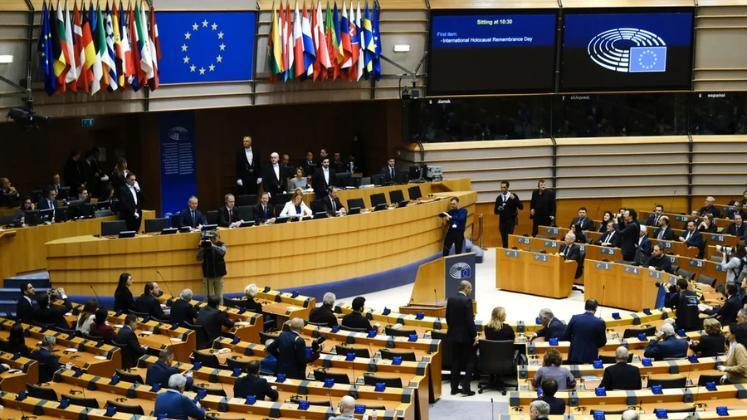
New legislation approved by the European Parliament forbids the sale, importation, and exportation of items made in the EU employing forced labour beginning in 2027.
The European Commission and member state authorities would have the power to look into any suspected cases of forced labour in supply chains under the new legislation.
Investigations into suspected cases of forced labour will be based on factual and reliable information gathered from a variety of sources, including international organisations, cooperating authorities, and whistleblowers, the European Parliament revealed.
The rule now applies to internet sales as well. Shipments will be stopped at EU borders to stop the flow of items made using abusive labour practices.
The decision-making process will be informed by a number of risk variables and criteria, such as the frequency of state-imposed forced labour in particular economic sectors and geographical areas.
The impacted products will be taken off the EU single market if proof of the use of forced labour is established. Manufacturers of things that are prohibited may choose to discard, recycle, or donate the goods; noncompliant businesses may be subject to fines.
However, there are still opportunities for redemption because prohibited items could be reintroduced into the market if the business proves that forced labour has been removed from its supply chains.