Bangladesh exported leather and leather goods worth US $ 1.21 billion in the previous fiscal year and many consider it as the next big potential export product after garments, attracting investment from businessmen in various fields. Arefin Spursho, Founder of Zircon Ltd., has been actively exploring multiple business opportunities from building franchises in Bangladesh to executing trial orders for a pharmaceutical company, and has of late shifted his focus towards sourcing of shoes for international buyers after a successful trial order provided by an Italian client.
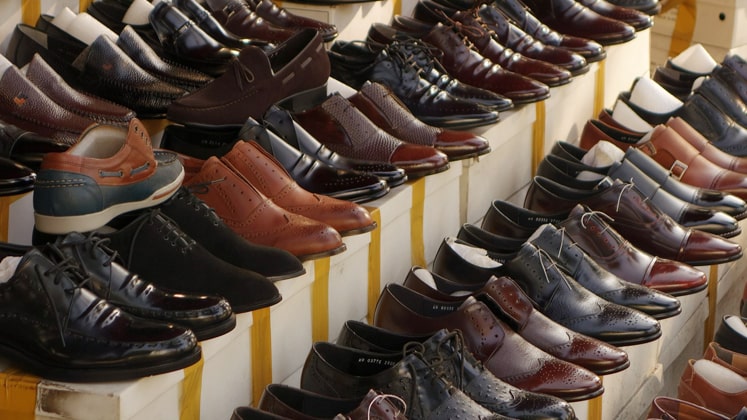
The unexplored segment of shoes being less competitive caught Arefin’s attention after an experience of 3-4 years in sourcing apparels. Bangladesh, popular for bulk orders, has factories concentrating on export of majorly apparels, and utilizing this void to his benefit, Zircon initiated exports of leather shoes. 7,500 pairs of espadrilles, a type of leather shoes, was Zircon’s first ever order, executed by Lalmai Footwear, an export-oriented factory in Dhaka. The shoes were so well received that a subsequent second order of 1,00,000 pairs followed soon after. “The scope of Bangladesh in terms of quality bags production remains largely unexplored as of now,” says Arefin, who has now invested in searching for good factories to manufacture high quality leather bags and PU bags. The buying house now accepts orders of wallets, belts, leather bags, denim bags, along with shoes.
Zircon has strategically decided to work differently from other buyers and has a specific target to source a MOQ of 10-15,000 pairs of shoes at first, followed by 50,000 pairs the next time. In the beginning the MOQ for leather bags are for 3-5,000 pieces. Anticipating growth, the company is now looking to set up a factory for steady production, otherwise it becomes tough for small buying houses to run business. Working with mid-level factories, Arefin stresses the need for such exporters to take effective measures to sustain in the industry as minor errors in measurements or quality parameters can alter the products’ final quality, affecting the trust of the buyers. ‘Nowadays, these things matter a lot to buyers, like in T-shirts, if one side is bigger by even 1 cm than the other, the whole order is rejected. Likewise, one company didn’t replace the needle which was destroying the fabric causing huge rejections,” avers Arefin.
Increasing labour cost in China, Brazil and Vietnam is leading these countries to shift away from leather industry, thereby shaping up a huge opportunity for Bangladesh. The cheap costing of shoe production in Bangladesh is bound to attract new clients. Zircon has marked an average FOB at US $ 2-8 based on style, while a simple flip-flop begins at US $ 1.30. Arefin’s knowledge about leather shoes is helping him to proceed in the industry, thereby growing his business. Apart from two prominent buyers from Italy and the US, few relatively smaller buyers have been consistently associated with Zircon Ltd. With an annual turnover of around US $ 6,00,000, Zircon keeps on pursuing its dream to expand in the industry.
Arefin’s future plan includes the launch of a new lingerie brand ‘Ali de Angelo’ for domestic market, which is under progress. Since no apparel brand from Bangladesh has reached the international level, he intends to take ‘Ali de Angelo’ to a different level on global platform, provided their initial idea to capture the domestic market turns out to be successful. “We only make finished products and import the cups from China. If we reach that level, then only we’ll go international, otherwise not. Because importing cups from China adds to expenses.” He is currently operating through social media platforms like Facebook, acquiring 2 to 3 orders per day. Since market exposure is not that profound in Bangladesh, his initial approach would be to directly sell the products via two showrooms as well as reach out to every store possible. As factories are less aware of proper lingerie production, they tend to fail in the construction of padded bras, though they generally do a great job at normal ones. Arefin’s strategy would be to understand the gap to solve this construction mystery as Bangladesh has the same machines like China.