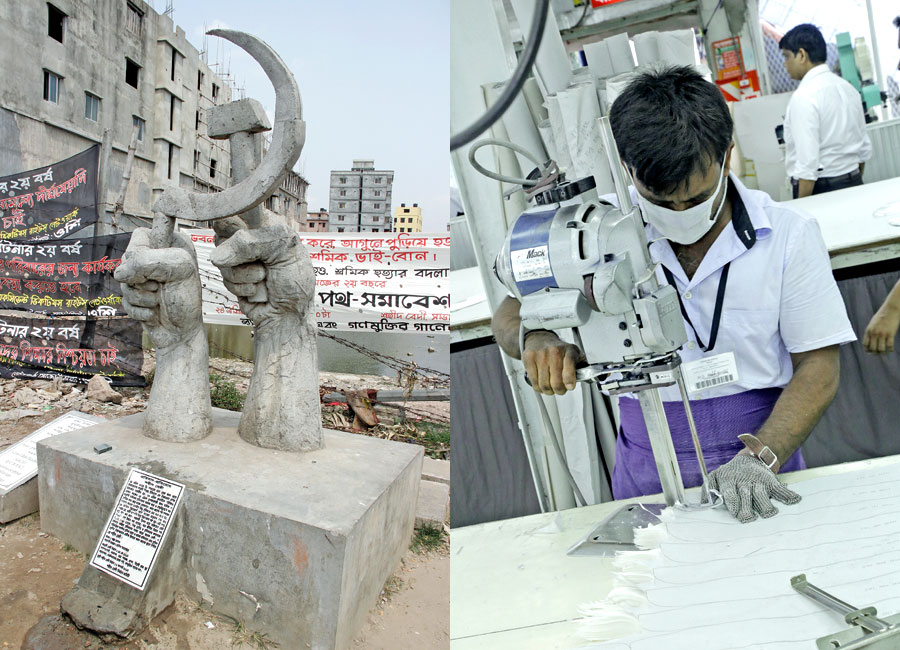
The level of safety and health measures undertaken by companies play an integral role in determining an industry’s growth and development. The Bangladesh garment industry employing some 4.2 million workers – is no exception. Growing at a frenetic pace over the last decade or so, the country largest garment exporter is, trailing only to China. However, in this race, the ‘safety’ aspect of garment manufacturing somewhere took a backseat which was rather rudely brought to the fore by a string of tragic incidents like Rana Plaza building collapse and Tazreen Fashions fire that sent shockwaves not only within the nation but also to the countries that source from Bangladesh.
Ever since, the industry and its bodies like BGMEA and BKMEA, garment manufacturers and the Government have relentlessly been pursuing the safety issue to plug all loopholes, which received a further boost from several international brands and retailers sourcing from Bangladesh, who chipped in their bit through various initiatives and interventions to ensure safe and secure work environs for the four million RMG workers. In the year gone by, this trend of safety improvements was a major area of thrust with more factories working towards improving the safety scenario so as to remain viable for the customers and also ensure business growth.
Adding further momentum to it has been initiatives like ILO-coordinated National Tripartite Plan of Action on fire safety and structural integrity (NTPA), two initiatives representing international brands and retailers: The Bangladesh Accord on Fire and Building Safety and the Alliance for Bangladesh Worker Safety that have already carried out inspections of the factories which their member companies source from, apart from the various certification and accreditation entities working in the field of business and social compliance for their respective clients.
Get Access to more Market Analysis articles from APPARELRESOURCES.COM.
SUBSCRIBE TODAY
Despite coming in for some scathing attack from garment manufacturers as well as the Government for their modus operandi, Accord and Alliance’s safety inspections have been a clear indicator of the massive improvements the RMG sector has made since the Rana Plaza and Tazreen days. The findings of the buyers’ bodies have also been hailed by the Commerce Minister, Tofail Ahmed himself, who went on to state: “Initially, I was also irritated with the presence of Accord and Alliance in Bangladesh. But after the completion of the preliminary inspections I am very happy, as they found that less than 2 per cent of the factories are risky.” Tofail further added, “Now, we can say that most of our factories are compliant.” Both the agencies have already completed preliminary inspections of more than 2,000 garment factories across the country and are now monitoring the progress of the corrective action plans.
Taking a ‘zero tolerance’ approach towards workers and workplace safety, the Government notwithstanding RMG sector’s contributions towards the country’s economy and employment, has reportedly shut down 73 garment factories since 2013 for safety reasons.
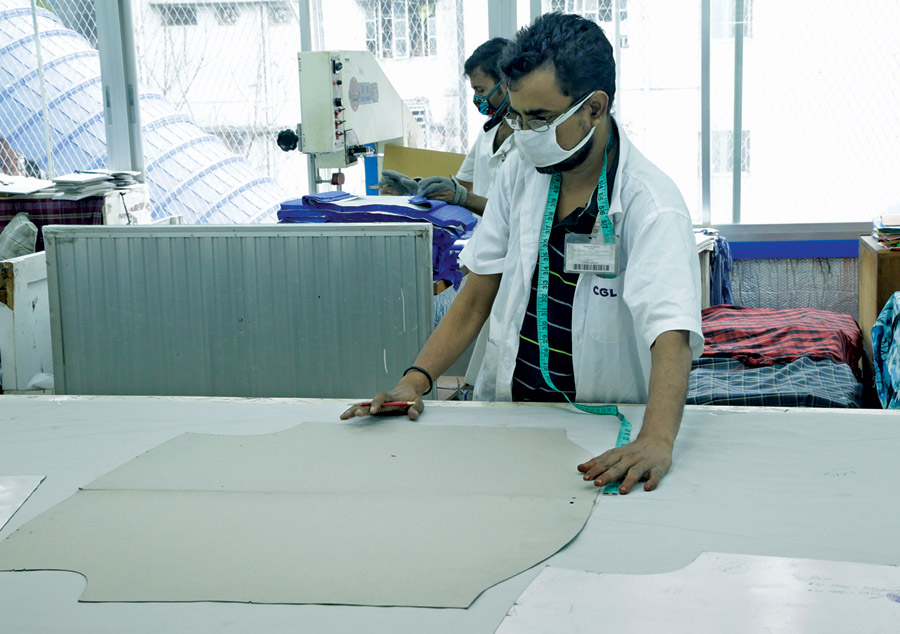
“Virtually all have now been inspected with 37 closed down, helping avoid potential loss of life. We now turn our full attention to the challenge of remediation and ensuring a safer garments sector for all who work in it,” underlined Inspector General of the Department of Inspection of Factories and Establishments Syed Ahmed, a department set up by the Government which in collaboration with the International Labour Organisation (ILO), carried out safety assessment of factories not covered under the Alliance-Accord initiatives.
The Government also made a series of major commitments to rebuild the Department of Inspections of Factories and Establishments (DIFE) and inspection service was upgraded to a department, high level leadership installed, positions for 392 new inspectors created and budget boosted from US $ 900,000 in 2013-14 to US $ 4.1 million in 2015-16. By May 2015, 199 new inspectors had also been recruited bringing the total to 284. Further, taking note of the importance of Fire Service and Civil Defence Department (FSCD) and its role in implementing safety measures in RMG sector, the Government has boosted the strength of the FSCD with the number of fire service staff working as inspectors up from 55 to 265, laying major emphasis on enhancing the department’s capacity to carry out inspections and respond to fire incidents.
The International Labour Organisation in particular, has been playing a significant role in improving the safety scenario of the Bangladesh garment industry. As part of its RMG programme it has launched a US $ 31.4 million, three-anda-half year programme soon after the tragic incidents to improve the working conditions including building and fire safety assessments, labour inspection reforms, occupational safety and health, rehabilitation and skills training as well as the launch of Better Work Bangladesh. ILO is also implementing a comprehensive programme to train inspectors, build the capabilities of DIFE as well as to enhance governance and accountability of the labour inspection system as part of which a labour inspection training programme was launched in August 2015 to enable labour inspectors gain the skills needed to boost working conditions and worker safety.