Buying fabric in dollars and selling in Indian Rupees is getting difficult for the importers, as continuous spiralling dollar rates are adversely impacting business and they are finding it difficult to give competitive pricing to their clients, both the domestic brands and garment exporters. Though the margins are still workable in run-of-the-mill fabrics, in high-end fabrics for formal wears, the importers are feeling the brunt as they have to constantly shrink their margins to carry their businesses. While in Mumbai, Apparel Online’s Textile Team met with two importers of formal men’s wear fabrics Dinesh V. Bahirwani, Director, Trinity Tex Trade and Deepak Shah, Director, PD Fashions, both the importers shared how they have to be on their toes to sustain in a highly difficult competitive environment, where not only price, but new developments are also a must offer…
Though the market for suit fabrics seems to be full of fabric importers, in reality there are no more than 20 regular fabric importers in India in this segment. According to Deepak Shah, 15 new importers are born during the season time, which is the wedding time (from June to February) and then they vanish. “These seasonal players come and go as per business season. They are basically those for whom import is not a business, but just a way of earning interest on the invested money. They have a very traditional way of thinking which says, if I am investing Rs. 20 million in a certain stock and at the end of the day earn 2.5%, it is better than 0.75 paise or 1% that is earned from bank interest. And when the market dies they take out the money. It’s not a business for them, it’s an investment.”

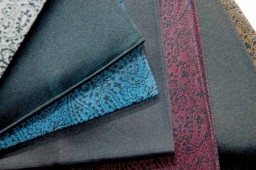
The real competition in suiting fabrics is between the serious players for whom the market is a challenge. For high-end suiting the fabric is being imported from Europe, Korea, China, Indonesia, Vietnam, Bangkok and Japan. Europe’s economy not being in good shape, the volumes are shrinking as the fabrics are expensive. The challenges in importing fabrics are many, the foremost being innovation products and competitive pricing. In suitings, only those fabrics are being imported which cannot be procured from India.
“We always have to be at the top of trends and have to offer the best of innovations. Our colours have to be new. We have to make what India doesn’t have to offer; which is a challenge as India too has a lot of good fabrics,” reasons Dinesh who feels China is still better than India, though Indian mills are catching up fast with innovative designs. “In India, everybody wants to catch the commercially running trends, nobody wants to try out anything new. In fact, very few mills want to experiment, as it takes almost two years to develop that market,” he adds.
Both the importers claim that they start their preparation and developments one year in advance of the season and try to create something what they cannot find with anyone in the market. Working very closely with the factories from where they procure fabrics in terms of forecasts and product development, they both claim to offer very off-beat and new concepts, which are unique to the market. “Our business is full of risk as we buy in anticipation of how the market will react to the new developments and if the fabric doesn’t sell, the loss is mine,” says Deepak.
The other factor which Deepak pointed out is value pricing. “If I am 10% expensive and my client gets a substitute, he will jump to that supplier. So, it is very important for us to keep check on our pricing along with innovative products.”
On the operational front, one of the biggest challenges for importers is the payment terms which are getting tougher and tougher. “Though the brands are growing bigger with increasing profit margins, but their payments do not get better. I think down the line one has to start the FOB model used for exports even in the domestic market, only then will our payments be safe,” says Dinesh. He also suggests collaborative approach to business. “There is a need to build strategic partnerships between the fabric suppliers and the buyers so that both the sides grow; that is the only way to move forward. If I have five to six set clients with a clear understanding that the chunk of orders would come to me, then I’ll ensure that I give them better price, better fabric and eventually I start making better margins,” reasons Dinesh.


Though, both companies are working with exporters both feel that it’s easier to work with the domestic brands vis-à-vis the garment exporters as the international market is very volatile today and it’s risky to work with garment exporters. “The problem with the garment exporters is that they are not transparent. If their capacity of production is 100,000 metres they ask for 300,000 metres and keep us guessing on how much they will eventually pick up,” says Deepak. Similar views came from Dinesh who claims to be doing some very innovative fabrics in suiting like PV-linen with wool and spandex in different weights from 320 going up to even 420 for trousers, “Even if we have offices in China and we have to supply absolutely lower priced fabric to Target or a Walmart, finding the right fabric is not difficult, but it’s not easy working with them as their volumes are huge and if payments are delayed it could kill you,” argues Dinesh.
According to Deepak the garment manufacturers, both domestic and exporters, are looking to take fabrics on credit, so if one has to do Rs. 100 million business one has to invest Rs. 50 million to start with. “To make the first million is very difficult… once you make that million then money makes money but it depends on how much credit I want to give in the market,” argues Deepak, who feels that if he wants to double his business in one year he can do it in no time, as India is a huge market with a billion plus population and he can import anything as he has huge network across the globe, but it is the worry of cash flow that constraints him.
[bleft]It is surprising to know that 80% of TR fabric which leading Indian mills in suiting fabrics sell is actually imported from China. They get the fabrics through the importers and sell it under their brand names with thick margins. [/bleft]
Both the importers are happy doing suiting fabrics, which though a much smaller segment vis-à-vis fashion fabrics, is more stable. They are unanimous in their view that fashion fabrics are very fast moving and trend oriented and hence it is very difficult to handle the stocks. Also, having done the ground work they both agree that India has very good fabric for women’s wear from places like Surat. “There is no point in competing with Indian fabrics,” reasons Dinesh.
Adds Deepak, “In few things India is very good like hand embroidery; this finesse you do not get anywhere; even China imports this product from India. I get many enquiries for this product but it’s very difficult because the quantum they need is very huge which is not possible in hand embroidery. Yet, this is a segment that is of interest and going forward PD Fashions wants to explore fashion fabrics for women’s wear.”
In the meanwhile, moving into the future, Trinity Tex is looking at starting natural fabrics imports. The company is also looking at starting a new company which would tie-up with Indian mills for local sourcing. “It cannot be done from this company as we do not want to confuse our existing customers. But seeing the dollar rates, which is really killing the profits (how much can you hedge?) we are looking to work out a module like we have with the Chinese and Korean companies with the Indian mills… working like partners and not agents,” shares Dinesh.