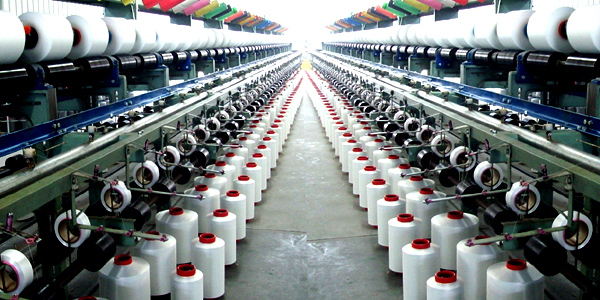
Textile mills in Madhya Pradesh are struggling to survive, owing to the high running costs, a plunge in exports due to subdued demand from the top buyer – China — and the sluggish European economy. These factors have squeezed the margins of textile mills, rendering them uncompetitive in the global arena.
The cost of production has risen by about 10-15 per cent due to higher cotton prices, power tariff and labour wages, whereas the prices of the finished products have largely been stable, industry experts said.
In addition, lower exports have led to an increase in the inventories and surplus in the local market that could further bring the prices of the finished product down.
Suresh Maheshwari, president, Maral Overseas, a leading exporter of yarn and textile from MP, says, “Most of the textile mills are losing money because the cost of production has gone up significantly and we are unable to market our products in the international market.”
There are about 45 textile mills in Madhya Pradesh, of which 35 are spinning mills and 10 are composite mills. Expecting lower output in the country, cotton prices have risen by 5 per cent within a year. Moreover, demand from India’s leading buyers — China and the European Union — has come down steeply in 2015 and the trend is likely to continue this year. However, moderate buying from the United States, a leading market for garments, is expected to lend some support, experts said.
M C Rawat, Secretary, Madhya Pradesh Textile Mills Association said, “China was our major market, but it has significantly reduced its buying to promote its domestic industry. Exports from local mills are falling and unsold inventories have risen.”
Also Read – Indian Mills have Potential for Larger Share in Bangladeshi Market
Export of textiles and clothing material during April-September 2015 has declined by 2.69 per cent at US$ 18.14 billion, as compared to the same period a year ago. In 2014/15, exports from India were US$ 41.4 billion as against the set target of US$ 45 billion.
The local mills in MP have been looking for alternate markets for their products to fill the vacuum created by China.
“We have been trying to sell our products to Vietnam, Indonesia, Bangladesh and Pakistan, but nothing can compensate the loss incurred from China,” Maheshwari added.
The Cotton Textiles Export Promotion Council claims that apart from a drop in the demand of products in the overseas market, high cost of export finance, which is around 10 per cent in India as compared to 3-4 per cent in other countries like Vietnam, Bangladesh and Pakistan, is also affecting India’s competitiveness.