With the industry facing one of its most challenging times, there is an acceptance that the players, whether they are exporters or buyers, cannot sit back on past glories and wait for things to change. Nor can they just keep approaching the Government for incentives and other support. No doubt, Government support is important and many of our competitive countries are growing substantially because of the backing that their Government is giving them. Bangladesh is one of the biggest examples of this. Yet, the industry cannot afford to solely rely on the Government to find new strategies for sustenance and growth.
Taking 2005, the year the quotas were removed as the base, it is interesting to note that while countries like China, Bangladesh and Vietnam did exceedingly well since then, India after a euphoric first year faltered and the growth has been limited, taking India from around $ 6.9 billion at that point of time to just about 12 billion in the last financial. China in the meanwhile grew from $ 62 billion to $ 130 billion and Bangladesh surpassed India with an export earning of over $ 15.7 billion in 2010. Vietnam too overtook India in garment exports in 2010 with export earning from garments at $ 10.8 billion.
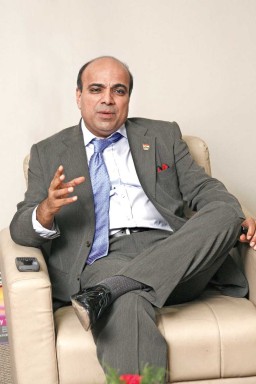
No doubt there is a critical need to analyze why these countries have seen growth while India could not take advantage of an open market condition. Many may argue that Bangladesh has grown because of the numerous competitive advantages it enjoys from the FTA it has with the EU to easy import policies that allow trouble-free access to world-class fabrics and trims. But giving a very different angle to the story, Anant Sadana, MD, Apparel United and boss of Gap India for more than a decade very candidly blames the mindset of the exporters and the lack of hunger to grow really big, as the two biggest reasons for the slow pace of growth of the Indian garment industry, followed by the shrinking margins as FOB prices fell internationally, for which the industry was totally unprepared for.
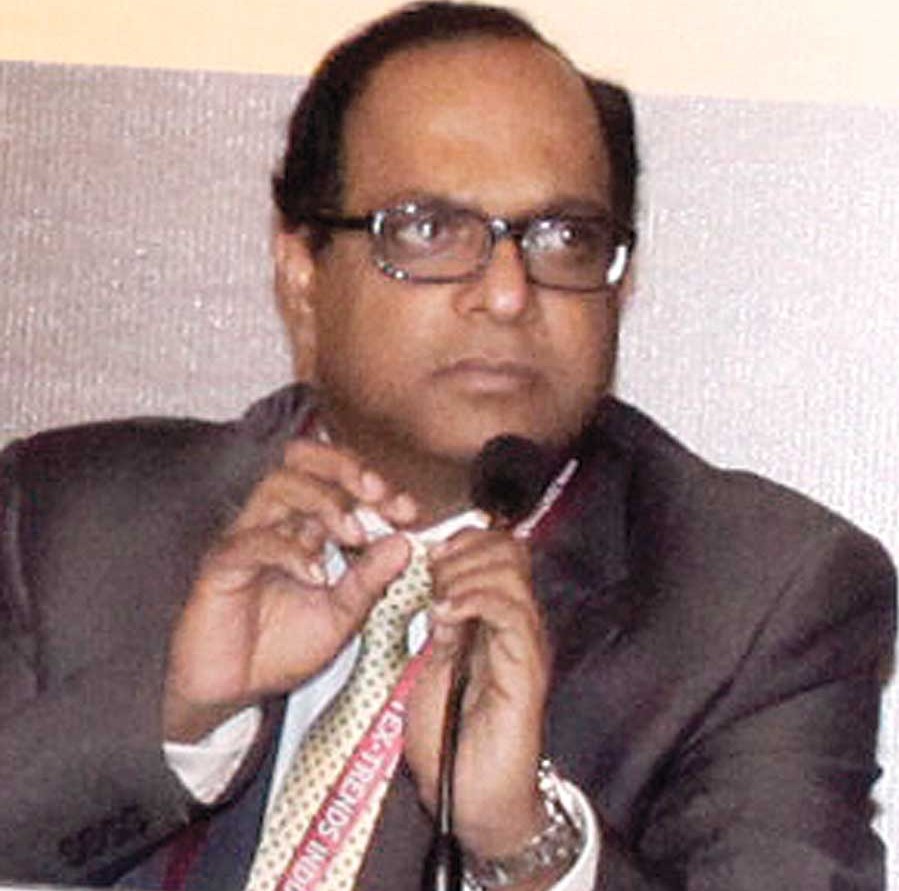
“While we fretted over the falling prices and lost interest in the business as margins dwindled, other countries grabbed opportunities and worked on being competitive,” says Sadana. He added that the lack of cohesiveness over the supply chain with each vendor/supplier only looking at their exclusive gain, inclusive growth became difficult to achieve. Sudhir Dhingra, CMD, Orient Craft very passionately agrees to the observation. “There is a need to get out of the old mindset and work collectively for the growth of the industry, and then only can the individual companies grow,” he argued.
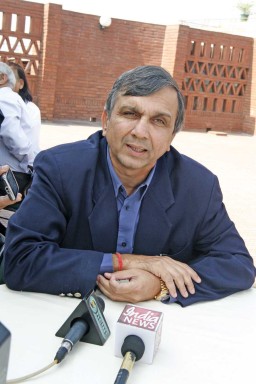

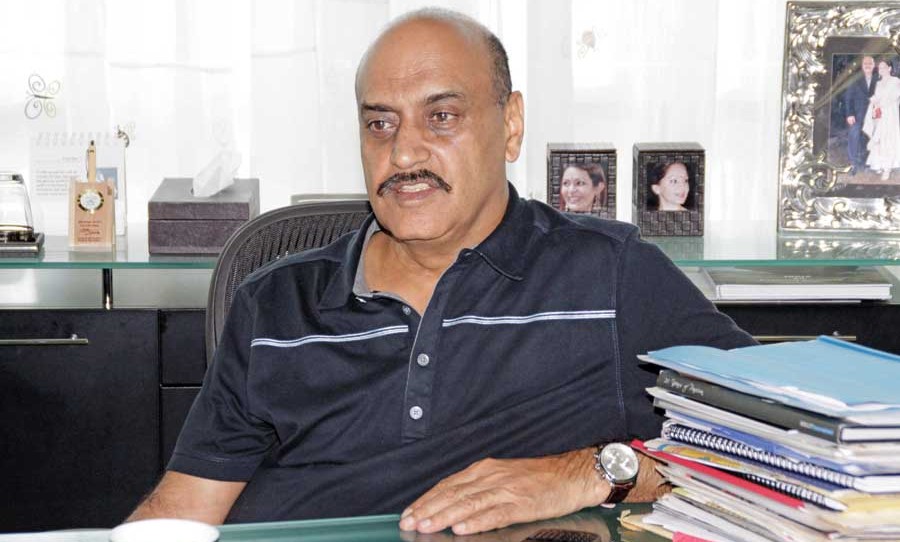
Rajive Suri, Chairman, Impulse practically observes that in a diverse country like India, we are governed by different laws, working requirements and constraints. “It is like working with different countries within the larger umbrella, which for a buyer is sometimes difficult to work around,” he said. He argues vehemently for the need to ‘bring scale to the businesses’. “I think the entrepreneurial skills of Indian exporters is the best in the world and firmly believe that India has the potential to be the ‘centre of gravity’ for the global apparel industry, but some concrete steps need to be taken like the creation of an integrated textile and apparel policy, greater investment in fabrics, action plan to address shortage of labour and better execution of ‘ideas’,” he opined.
However, all is not in black and white and there are many positive indications that buyers not only believe in India’s capability, but are looking to shift business if given the right product and price. “Over the last three years the Indian business has tripled with some business being redirected from China,” says Rachael Smith, Buyer with M&S. The product category that Rachael is most upbeat for is jackets. “India is doing very little volumes in jackets, but there are factories coming up in Bangalore and Chennai that are more competitive on price than China and Bangladesh,” informs Rachael.
That the signing of the much awaited FTA with EU will make India a very attractive destination is a consensus, increasing competitiveness by around 10%. Rajive commits that if a product is offered at the same price by India and Bangladesh, the chances are that the order would come to India, though he does warn that price is one criteria and there are many other factors that have to be taken into consideration.
[bleft]“There is a need to get out of the old mindset and work collectively for the growth of the industry, and then only can the individual companies grow.” – Sudhir Dhingra CMD, Orient Craft[/bleft]
Rajive also points out that the recent devaluation of the rupee has also helped in making India competitive.
One of the biggest constraints for growth of the garment export industry according to most buyers working with India is the lack of wide fabric base and professional approach by textile mills in terms of delivery schedules and quality standards. “Ironically, Bangladesh does not have a fabric base but is able to offer a wide choice of fabrics and also ensure delivery on time. In India, many products cannot be placed in the country as it is difficult to source such fabrics in the time lines and prices asked for,” says Rachael. The importance of a strong supply chain cannot be undermined and unless there is synergy in the textile chain, the constraint will remain, even if each link in the chain does its best.
[bleft]India after a euphoric first year post quotas faltered and the growth has been limited, taking India from around $6.9 billion at that point of time to just about $12 billion in the last financial. China in the meanwhile grew from $62 billion to $130 billion and Bangladesh surpassed India with an export earning of over $15.7 billion in 2010. Vietnam too overtook India in garment exports in 2010, with export earning from garments at $10.8 billion. [/bleft]
Taking the case study of the integrated textile park in Vishakhapatnam, Venu Nair, Director, M&S India emphasizes that if the textile chain worked as a single entity the country would see a revolution with many investments from big chains in Asia looking to set-up units in India. “The impending FTA is of course an impetuous, but many companies are looking at India not only for regular products, the Brandix integrated park is manufacturing formal wear, shape wear, outer wear and bras – all products that are not considered India’s strength,” says Venu. He hints that India was losing out on a critical category – school uniforms. “We (M&S) source millions of pieces of school trousers from Sri Lanka, manufactured from fabrics coming from India. Why can’t India grab this business,” he questions.
According to Venu, the Brandix integrated park is producing 50 million singles in a year at productivity of 65-80% with two shifts and the park is so well integrated that they can ship underwear and knickers in 8 days flat, which includes printing and dyeing, only the grey fabric is available immediately. He points out that everything was possible, but a fresh approach to the business was required.
[bleft]The biggest constraint for growth of the garment export industry according to most buyers working with India is the lack of wide fabric base and professional approach by textile mills in terms of delivery schedules and quality standards. The importance of a strong supply chain cannot be undermined and unless there is synergy in the textile chain, the constraint will remain…[/bleft]
Everyone agrees that manufacturing needs to move to smaller centres to be more cost effective. “We realize that it is not easy as the infrastructure has to be in place for successful implementation and at the Rajasthan Apparel City Project, we are creating the first Apparel City the way we feel will bring long term growth,” says Gautam Nair, MD, Matrix. Some of the initiatives include using sustainable, environment friendly methods of construction, energy saving and water recycling, linkages with service providers who will select and train workers in rural areas in Rajasthan and elsewhere and bring them to the City for employment, dormitory accommodation and various HR initiatives provided for these workers, a world class Training Centre provided in the City to provide focused product specific training as well as skill upgradation programs for workers, supervisors and managers. “Our vision is to make it an environment friendly, sustainable, compliant City where the workers are well looked after and focussed training is provided to enable cost-effective and high quality manufacturing,” says Nair.
[bleft]“According to me the mindset of the exporters and the lack of hunger to grow really big, are the two big reasons for the slow pace of growth of the Indian garment industry.” – Anant Sadana MD, Apparel United[/bleft]
Among the latest effort is the creation of the newly formed core committee headed by Premal Udani, MD, Kaytee Corporation and Ex-Chairman, AEPC to assess competitiveness of the Indian garment industry and on how competing countries like Bangladesh, Vietnam and Cambodia were placed on critical parameters of cost and Government support vis-à-vis India. “We need to show the government why we are losing competitiveness and the target for the committee is to table a report in six months’ time,” says a charged up Udani. “We are all committed to find solutions and the need of the hour is to share ideas and explore all ways possible to not only sustain business but also grow in the new global dynamics,” concludes Sudhir Sekhri, MD, Trendsetters.