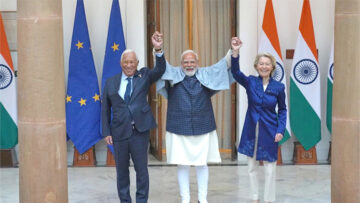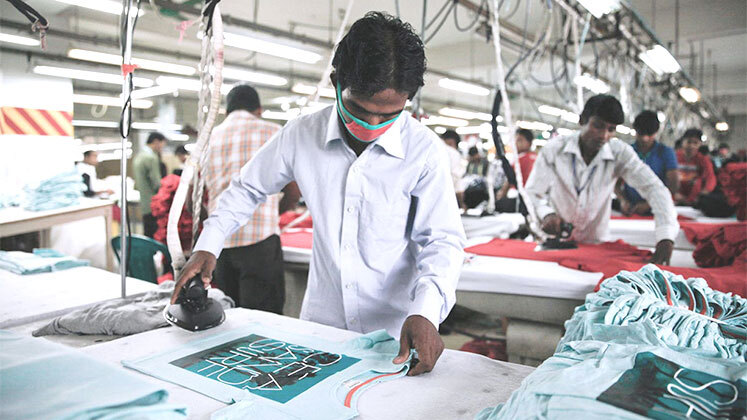
Leading European fashion brands and supermarket chains including Zara, IKEA, OVS, JYSK, Carrefour, Lidl, Aldi and C&A are expected to significantly increase sourcing from India following the conclusion of the India–European Union free trade agreement (FTA), which will grant duty-free access to Indian apparel and textile exports.
Exporters supplying these brands from competing hubs such as Bangladesh and Vietnam said the agreement would help India level the playing field with its regional rivals, which have historically enjoyed tariff-free or preferential access to the EU market. Industry executives said manufacturers were confident of expanding capacities within months to cater to a sharp rise in European demand.
Industry projections estimate that India’s apparel exports could grow by 20–25% annually once the FTA is implemented, potentially doubling within three years, compared with current growth rates of around 3%.
Industry experts said the tightening of environmental, social and governance (ESG) norms and end-to-end traceability requirements in the EU placed India in a strong position as a sourcing destination. India’s strengths in compliance, transparency and manufacturing scale could become increasingly important as European buyers reassess their supply chains.
Historically, India’s apparel exports have faced a disadvantage in the EU due to tariff-free access enjoyed by competing countries, which affected price competitiveness despite strong capabilities in quality and compliance. Exporters said that, even ahead of the finalisation of the FTA, several leading European brands had begun exploring and assessing Indian manufacturing capabilities over the past few months.
Vijay Aggarwal, chairman of the Cotton Textile Export Promotion Council (TEXPROCIL), said major global brands and retailers such as IKEA, JYSK, Carrefour, Lidl, Aldi and C&A were expected to increasingly source competitive and high-quality products from India under the preferential framework of the FTA.
Gokaldas Exports confirmed growing interest from European buyers. Managing director Sivaramakrishnan Ganapathi said European brands had started engaging with Indian manufacturers and exploring the supply ecosystem, although sourcing momentum was expected to accelerate once the agreement was formally ratified and its commercial benefits became fully visible.
The agreement is also expected to spur fresh investments across the domestic textile and apparel value chain. The FTA was likely to catalyse investments in advanced synthetic raw materials, modern processing technologies and capacity expansion, strengthening India’s long-term competitiveness.
The European Union is the world’s largest apparel importer, with imports totalling US $ 202.8 billion in FY ’25. While the EU accounts for about 28% of India’s apparel exports, India’s share of the overall European apparel market remains modest at 2.9%.
Beyond exports, the textile industry also expects benefits from imports of advanced machinery from Europe. Durai Palanisamy, executive director of the South Indian Mills Association, said that, except for spinning machinery, most state-of-the-art weaving, processing and technical textile manufacturing equipment, along with critical spares and accessories imported from the EU, would gain from the agreement and help improve industry competitiveness. India currently imports textile machinery worth approximately US $ 2.62–3 billion from EU countries.