
A highly unpredictable year for the global markets and industries, 2020 brought fashion to a halt and also witnessed the industry’s collective effort to get adjusted to the New Normal in order to bring the stats up to the pre-Covid numbers for the least. Reports by GlobeNewswire suggested that the global fast fashion market was expected to decline from US $ 35.8 billion in 2019 to US $ 31.4 billion in 2020 at a compound annual growth rate (CAGR) of -12.32 per cent. The decline was due to the economic slowdown across countries owing to the COVID-19 outbreak and the measures to contain it. The report also predicted that the market is then expected to recover and reach US $ 38.21 billion in 2023 at CAGR of 6.7 per cent.
Although the tremendous supply chain shakeup for buying and sourcing was no cakewalk for either the buyers or suppliers, but the adjusted ways of the New Normal have indeed caused ripples in a way that has been a blessing in disguise. Economies halted; consumer spending power dropped; orders became leaner, and thus, fashion became relevant fast-tracking long-term sustainability goals, making worker safety an intrinsic segment of manufacturing, spotlighting digitisation of the supply chain as well as decluttering sourcing hubs to make them evenly distributed in order to reduce the dependency on one country/region.

Apparel Resources gets into a candid discussion with industry experts who were at the front lines of this dynamic supply chain for 2020, and how they predict 2021 is going to be like for the buying sourcing arena.
The number drops
One stark reality of 2020 was the sharp decline in the number of units placed for the season of SP/SU 2021 after tremendous cancellations for FA/HO 2020, due to the initial lockdown and stagnant inventories.

Linda Augustsson, the Founder of Continuum Buying Agency, talks about the overall changes in the inventories and subsequent orders, “SKUs have gone down slightly, quantities are much lesser as compared to a year ago. As far as pricing goes, we see that prices are pretty much the same as long as product is right, and buyers are more prone towards having clear targets in mind already at product development stage.”

Neha Jain, Sr. Sourcing and Production Manager for a New York based outerwear and activewear importer, also chimes in, “Less is more – it will be all about ‘buy now’. Brands need to find ways to increase the full-price sell through instead of buying a lot of inventory and selling for an extended period with heavy markdowns. The assortment strategy will shift towards a more demand-based approach.”
During a survey by Supply Chain Dive, more than 60 per cent of retailers said they have cancelled or postponed less than one-third of their total orders. However, nearly 50 per cent said the order cancellations and postponements go beyond the second quarter of 2020 and another 40 per cent believe they could remain in effect until Q4 or later.

Sanjay Thakur, Director-Sourcing for ethicalsourcing.in also shares his perspective, “Overall styles have dropped by 30-40 per cent, although I feel there will be an initial surge to fill depleting stocks, along with the volume and need for faster deliveries. Pricing has also become challenging to the extent of 15-20 per cent.”
The Chinese shift
Being the epicenter of the pandemic and owing to strict safety regulations, China was one of the first countries to rebound from the effect of COVID-19, causing a major shift of orders to the country in the initial lockdown months. Neha observes the same trend, “A lot of manufacturing activity in China has surged recently as their manufacturing prices have significantly dropped in the past few months. Just after COVID-19, China seemed like a viable sourcing hub as it was the only country functioning during lockdown elsewhere.”

Sanjay also supports the same, as he outlines that change of sourcing did take place due to trade wars as well as pandemic as sourcing that was heavily dependent on China saw some shift majorly from US brands that leaned towards India and other SEA countries. However, European brands were not so keen to move out of China because of their lower volumes, MOQs and lean lead-times and sharp pricing which were difficult to negotiate in such short span of time with new territories and factories looking at their strong relationships in China.
He furthers, “Fearing the shift, the Chinese factories reduced their prices / MOQ and lead-times further which was difficult to match for any other supplier. Customers are trying to explore the possibilities of sourcing Chinese fabrics and thus, Indian mills have to up the game by investing in the infrastructure and machinery.”
Blessing in disguise: Sustainability and automation peaks post-Covid
As orders became smaller, more importance was given to the careful development and selection to match the end consumer’s needs. In addition to having stringent norms to ensure worker safety, buyers and vendors went above and beyond to ensure seamless and safe production lines. Additionally, answering to the tremendous lack of basic transportations and shipping limitations, the pre-production processes took a more digitised form in order to save time for approvals that initially took 7-8 days just for the submits to reach the buyers.
As Neha avers, “Buying practices have changed as buyers are demanding digital presentation of the product lines. Online shows and digital product presentations are what companies will invest into. The traditional system of seasonal buy where the retailers predict the sales with no advance customer feedback will also change.”
She also continues to discuss the changing buying windows, about how instead of a traditional seasonal buy, buyers are now looking at a product digitally and buying the product based on the needs of ‘now’, which she deems to become the New Normal. “This will lead to a reduction of excess inventory, fabric waste and warehousing, making the industry more efficient,” she says.
Automation and virtualisation of supply chain not only reduces the pre-production time and makes product development smoother, it contributes to reducing significant amount of resources that conventional supply chains consumed.
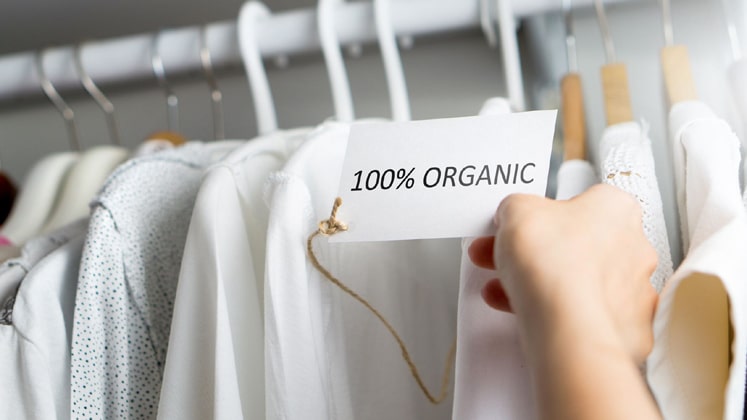
Talking about sustainability, Linda adds, “A lot more focus on sustainable fabrics is there. We have customers that really make a genuine effort in all trim sourcing, fabrics, poly bags etc., whereas some brands ask for it because it is the ‘new market norm’ but efforts are neither consistent nor do they seem to come from the heart of the person asking for it. From a broader holistic view on what sustainability actually also means, we have witnessed a tremendous 360 degree change – not only to include the fabrics but also concerns about how a product has been made, by whom.”
The To-Dos for 2021
Our industry experts believe that a more collaborative supply chain with proactive suppliers and flexible buyers will pave the way to success for sourcing and buying in the upcoming year.
Neha opines, “Based on my experience and perspective, I think the four most important things that will work for the best of everyone involved in the supply chain to ‘make it’ in 2021 are – increased flexibility, innovation, adaptation to change and resiliency. Manufacturers will need to invest a lot more in technology to drive innovation and flexible solutions to meet the customer’s changing demands – the primary driver being digital channels like livestreaming, 3D fitting, virtual customer service, etc.”
Additionally, she considers Supply Chain Transparency as key to protect the brands, where manufacturers will need to track the inputs of materials and data and share it with their customers for increased transparency. “Honestly, I feel that 2021 will bring tonnes of new opportunities and will not be as tough as 2020 for fashion business,” she concludes.
On similar lines, talking about the Indian scenario, Sanjay mentions the need for Indian suppliers to up their game, as comprehending needs of each other proactively will ensure that the business is supported well.
He furthers, “Factories should not be surprised by the need of 15-30-45 days lead time for smaller quantities; they should proactively scan their buyer’s financial health with the institutions and keep the longer finance approvals in place etc. Cost efficient product designs, aligning the supply chain to overcome delays and disruptions caused by Covid, open-mindedness to accept new products as well as investing in sustainable fabrics and backend including compliances will definitely help Indian stakeholders to increase the country’s prowess as a sourcing hub.”