Even as most of the medium-level bottoms manufacturers are struggling to keep afloat, others are constructing new and green facilities for bottoms/trousers/denims. So what is it – the motivation or the push – for these players to enter into bottoms manufacturing, and how do they plan to face the challenges that have already created issues for others. Apparel Online tried to figure this out in discussion with four RMG exporters.
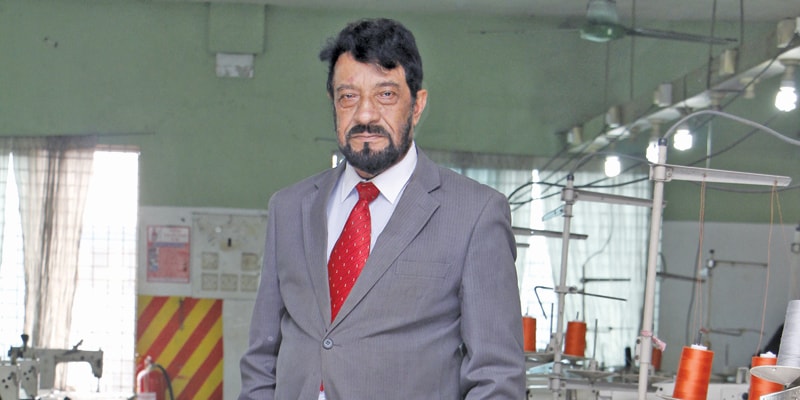
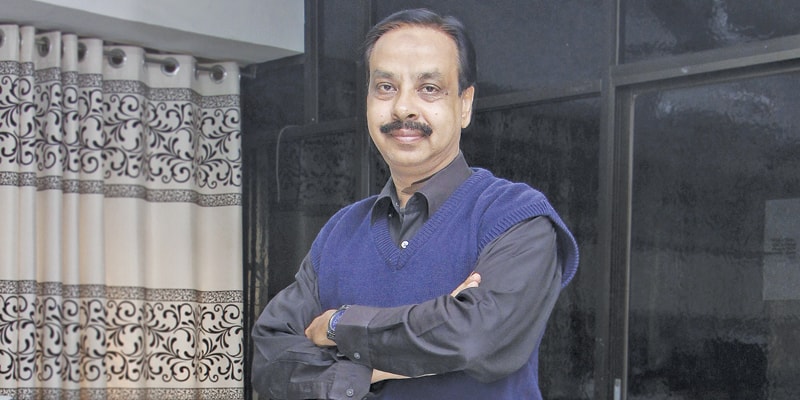
Some of the small factories have closed down because of serious price pressures and their owners strongly maintain that there is no scope of negotiation with the buyers on price; either you take what they offer or lose out on orders. “They dictate and we run the machines. This has led the buyers to now think that they should reduce prices further for new orders as vendors could manage at lesser price and still make profits. But the fact is vendors are incurring losses,” says Engr. Tamzidur Rahman, Chairman of Corona Fashions – the 350 stitching machine-strong compliant company, doing 1,24,000 trousers (woven mostly) per month with FOB of US $ 8 to US $ 10.
 An aeronautical engineer, Tamzidur took over this trouser factory after retirement in 2004 along with three other partners, but is the sole owner now. Initially, the factory had one floor but expanded subsequently only to struggle with the current market situation. “Cost is increasing while prices are going down; but on the other hand our currency against dollar has almost remained the same for the last 7-8 years. Business now is stagnant with no apparent signs of growth. Despite the struggle, we are somehow managing to keep the factory running, the only hope being things will improve one day and we will be able to make money,” he further adds.
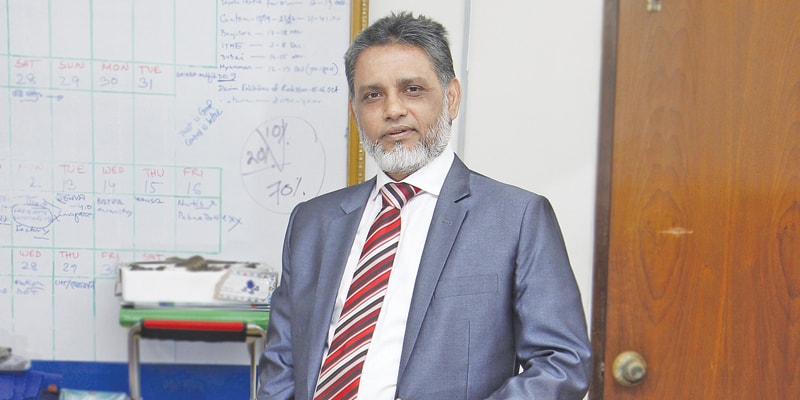
Similar is the experience of Khondoker Abdus Salam, MD, Anika Apparels, who is also the Chairman of the Standing Committee on Health Centre of BGMEA and associated with the apparel industry for the last three decades. “It’s been 17 years since we started this company. We mainly make all kinds of bottoms using variety of fabrics, but now we are surviving on bank loan and the hope that better days would come soon. Our bank is closely watching us and satisfied that we are spending the loan in a proper manner. We are caught in a vicious circle… There are some buyers for whom we are working for years. So, just for the sake of price we can’t avoid them. Some orders we are doing on break-even point, some on very little margins while others on loss.” He further adds that the down sentiments of Europe is not a big issue for him as he is exploring Australia, Russia and Japan too. His only worry is price! The company is working mainly with wholesalers and retailers of France, Spain and Germany and some from UK and US as well.

Working with many good buyers, brands like Edcon (South Africa), Next (UK), Reliance (India), etc., Zahangir Alam, MD, Design and Source Ltd. (DSL Group) is well aware of these challenges as he is running 11 factories in Dhaka and its nearby areas. Manufacturing entire range as per customers’ demand but mainly into woven, the company is coming up with a huge new factory for denim/bottoms. Why denim bottoms? Answers Zahangir: “Our strong washing skill (washing technician from Sri Lanka and experts from few countries at various positions), in-house availability of processes, and our vision to offer variety of bottoms like shorts are some of the main reasons for us to invest US $ 31 million. As we are constructing a LEED-(Leadership in Energy and Environmental Design) certified denim plant, it will be an added advantage for us though there is no premium at all for such efforts but concern for nature always pays and also saves a lot of resources, which in fact increases profitability.”
Design and Source Ltd. (DSL Group) is doing business of more than US $ 60 million and, presently investing US $ 31 million, and expecting to raise it to US $ 150 million by 2018. FOB of the company’s product is little high due to value additions as well because it does a lot of kidswear. It is among the few companies of Bangladesh paying holiday bonus to their workers, and claims that it is giving the best salary. Wherever possible it uses recycled materials and recycled water as well. Associated with Simtex (a listed company manufacturing sewing thread), and other businesses like finance and hospitality sector, Zahangir Alam, MD says, “We are into corporate governance despite family involvement, I don’t indulge in the day-to-day affairs. It’s the professionals who are responsible for all the processes.
And what about the price pressure, the main concern for the middle-level companies? Zahangir seems rather comfortable on prices. “Our buyers and costing is different. The buyers we are working for are with us for more than decades and are also the oldest in the market. As we are financial experts, we plan better, evolve and execute costing. On the other hand we keep motivating our workers for improved productivity besides upgrading the machinery. All these combined, create a big difference,” explains Zahangir. He also claims that some other factors which makes him different from others irrespective of product category is the work culture, which Zahangir claims is totally transparent with the labour as well as the buyers at all levels. “Whichever buyer starts working with us, never leaves. Even our union leaders can see our accounts, we have a strong trust among all the stakeholders,” said Zahangir.
Started as washing expert and now apart doing job-work at the large level, Hams Group manufactures Tees (42 lines) and undergarments (28 lines). The company, under the leadership of its MD, Engr. Shafiqur Rahman, is expanding in multi-directions and is investing 500 crore Takka into washing and jeans manufacturing, followed by lingerie. “Yes, bottoms/jeans is a new product category for us and Bangladesh is already full of jeans manufacturers. But for us it is the buyers’ push and that too due to our washing/dyeing expertise. The buyers want to source the final products from us. We can make jeans/bottoms more and more fashionable. So along with woven, our focus will be on knitted value-added jeans,” says Shafiqur. Construction of bottom factory is almost finished and production is expected to start in next 6 months. Initially, there will be 10 lines and capacity will be 4,00,000 pieces per month. Later it can be enhanced up to 40 lines.
Hams Group with current group turnover of US $ 70 million is expecting 30 per cent growth. Engr. Shafiqur Rahman, MD, who started with US $ 3000 in 1994 with screen print, worked as an employee of H&M and now is the vendor for this prestigious brand. The company is expanding in many areas. To begin with, Hams is enhancing its dyeing capacity from 20 tonnes to 40 tonnes and subsequently starting a lingerie factory, which is expected to start by the end of 2017.
Shafiqur, working with buyers/brands like H&M and rest for M&S, New Look and Next, do have strength of eco-friendly initiatives as he is already using advanced technology in his biological ETP and moving further it has already registered with The US Green Building Council (USGBC) as its new factory will be a green one.
Away from China…, near to Dhaka
All the four exporters agree that some of the buyers are moving from China and coming to Bangladesh, hopeful that this trend would give opportunities for further growth and expansion. Zahangir Alam adds, “Even India is focusing more on new markets like Africa rather than US/EU. So we have full opportunities and there should be no competition as such.”
Value addition can be a tool
Bangladesh of today is moving from basic to value-added products, even medium-level exporters are showing a noticeable tilt towards design-based garments even though many of them do not have dedicated designers of their own. “We are doing 30 per cent value-added products of orders that are coming. Currently, damaged jeans are more in demand as also finishing like sandblast,” says Tamzidur. Adds Khondoker, “Basics are not profitable so we are moving towards fashion trousers. Currently 50 per cent of our orders are value-added. Though we don’t develop own designs but are planning to hire a fashion designer so that we can increase focus on value addition and PD. We need good fashion people with strong understanding and forecasting as Bangladesh is still lacking in that front.”
Even big groups like DSL does not have its own designers but are utilizing the resources and opportunities smartly to come up with value additions. “We have a contract with GISELA (a Spanish brand), to use styles which they get developed from us but don’t place orders on,” informed Zahangir. Shafiqur is equally enthusiastic on this as he maintained, “We will focus now on embroidery also as we already have expertise in printing and dyeing effect. Process is on to add digital printers…; laser print on tees is going to be big development from our side.”
Doing the best to survive
Corona Fashions believes enhanced productivity and cost cutting increases the chance of survival but accepts there is a limit as well. The company tried the same by using advanced machines to reduce labour dependency and giving in-house training to the workers to increase efficiency. Already BSCI/OekoTex certified, Anika Apparels is now going to get SEDEX certificate. GEMO brand of France is satisfied with the compliance being followed by the company.