Some years ago, one well-known Jaipur-based exporter having 3 factories, approached Tesco, H&M and few other such top brands/stores to work with his factories. The factories were even certified but after all this, the top brands refused to work with this Jaipur exporter without specifying the reason, even though the rates offered by the exporter were impressively less from those being offered by exporters in Delhi-NCR. Not the one to be disheartened, the exporter then approached top Indian buying houses and assured them that he will get at least 4-5 big exporters in the loop, as the buying office clearly said that they did not wish to come to Jaipur to work with a single supplier, but even then the buying houses refused by saying that it would add to their expenses…!
The fact that buyers are not taking the initiative to explore Jaipur, preferring to remain in the comfort zone of the NCR, which is close to the city, is one of the biggest reasons that not even one apparel/made-ups exporter of Jaipur is doing annual business of Rs. 100 crore. The city which has 200 good apparel and home furnishing export firms has only 5 to 7 companies which are doing turnover of Rs. 50 crore or above. Apparel Online approached both top and small exporters of Jaipur to find out their views on how the city can expand and companies would be able to touch the magical figure of Rs. 100 crore.
High Street Fashions, Jaipur – known for its socks (diabetic socks, flight socks), wrist bands & head bands, knee support, elbow support, among other products, is the only company in the city exporting such products to well-known global brands and doing very good business.

Suresh Agarwal, MD, Aman Exports – doing annual business of more than Rs. 50 crore and equally strong in exports as well as domestic market – insisted that whatever export orders Jaipur has got so far is totally through importers. “We are still waiting for big department stores or top brands like Zara, Mango, Walmart, H&M, Tesco. Whatever orders Jaipur has, were given by importers and who are getting ‘eliminated’ by the day.”
So, what is the solution? He adds, “The only solution is to bring the big stores to Jaipur; for this everyone has to work collectively, be it our Councils, Associations or the State Government.” Agarwal rightly points out that Jaipur exporters are ready to give products at lower price compared with any other hubs as they have advantages of less overheads and lower minimum wages. He does not agree with the opinion of fellow exporters that there are no orders in the market and even sentiments are low. “Few of my Delhi-based friends, who are also into garment exports, don’t have time and are quite busy with orders from US and Europe,” says Agarwal. But he does agree that Japan, Brazil, South Africa and Russia, which were the core markets for Jaipur are not in good shape due to various reasons.

Recently, honoured by AEPC for maximum export to Japan, Dalpat Lodha, Director of Lodha Impex (turnover of Rs. 90 crore from Jaipur operations) endorses the view that buyers prefer not to place bulk orders in Jaipur. But he is positive that as soon as markets will pick up, Jaipur-based companies will have more orders. Ironically, exporters admit that not many in the city are interested in bulk orders. One reason for this is the kind of margins that Jaipur exporters enjoy, which are far better than what most of the other hubs have. The attitude of most of the exporters is to make more money by less work or more profit in less orders, rather than doing volume business which gives such magical numbers, but not necessarily the profitability. But now as the situation is changing and one doesn’t get so much orders, at bigger margins, so the industry is struggling.
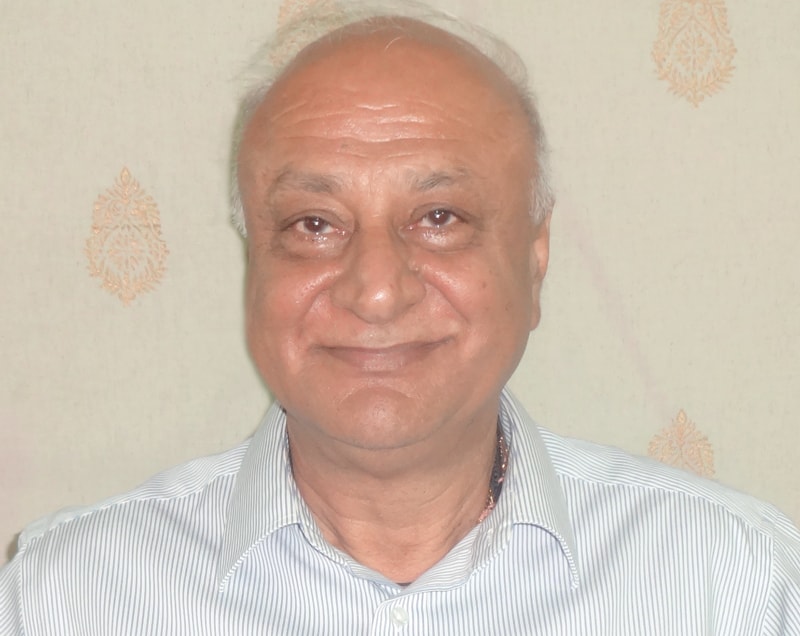
Another veteran of Jaipur, Rajeev Dewan, MD of Ma’am Arts, adds that in Jaipur exporters after attaining a certain level get contented, as they have grown from the grassroot level with 3-4 machines and personally been involved in all aspects of the business, so the burn-out rate is higher. Many a times this also results in lack of initiation of technical and professional help, which has hampered growth. Vivek Khandelwal, Director, Pattern India argues, “How many factories in Jaipur have IE Department or even IE staff. We need to think and work in this direction.” Even in case of companies that do want to hire, retaining pass-outs from leading institutes, is difficult.
“Our city started with traditional strengths like tie & dye, hand block and most of the exporters are still limited to this, rather than mass production or exploring different product categories. Not only Jaipur, but the whole of Rajasthan does not have very heavy or big industry. Lack of Government support is also a big factor. Rajasthan has carpet, handicrafts, and furniture units which come under the cottage industry, so its beginning was slow. Being a tourist city, it is costly too; the land price is high and the state is lacking in aggressive policies like those of Jharkhand or Odisha. The city doesn’t have a cluster with all necessary facilities like dyeing, washing, etc. The hub also misses a strong political will, which is required for such development; it is hard to get the job done in Jaipur.” – Ravi Poddar, President, GEAR (Garment Exporters Association of Rajasthan)
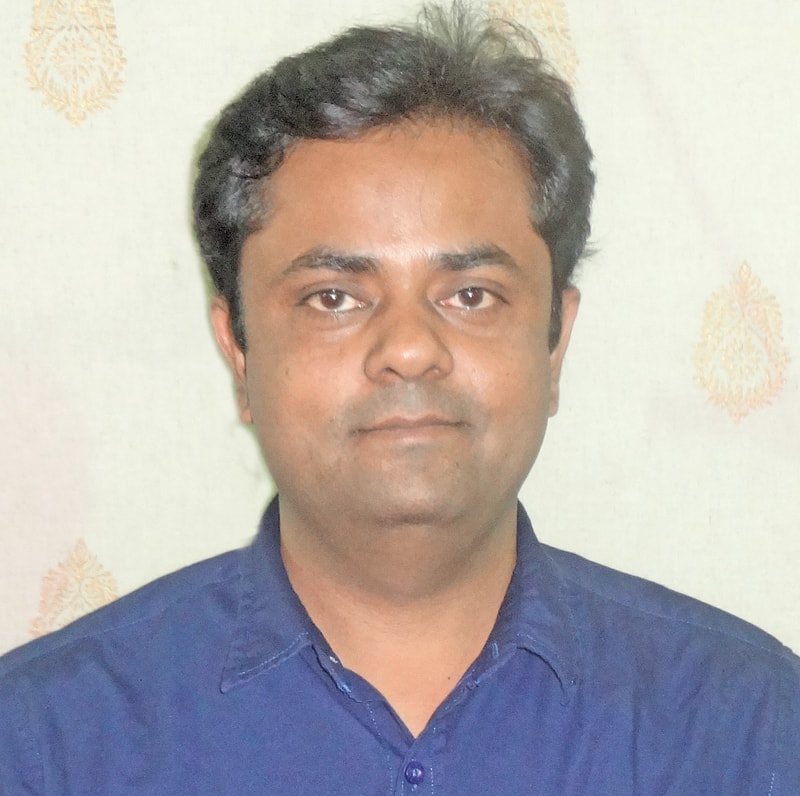
In consent with all the above-mentioned reasons for current condition of Jaipur, Mohammed Arif, Director, Kagzi Exports adds that raw material sourcing right from fabric to accessory is another hurdle to achieve bigger growth. “We need at least 7-10 days to develop a sample while in Delhi the same is possible in 24 hours. It really matters.” On the issue of top brands not coming to the city, he says, “all of us have to be aggressive in our approach to catch them.”
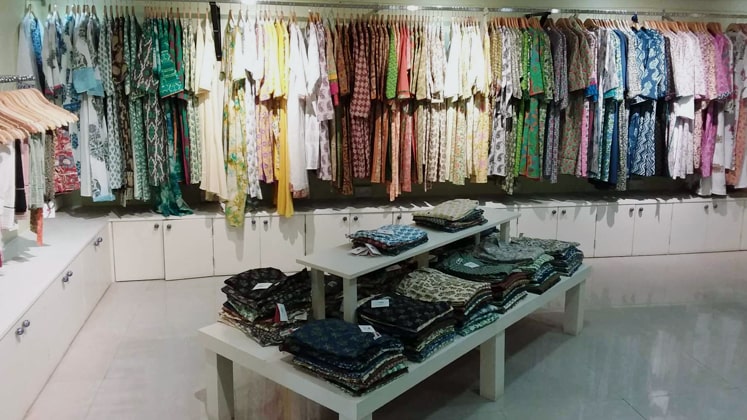
Jaipur’s products are more suited for boutique stores, as they can give more value but not the volume. The city is not making any basic product or product of mass manufacturing like shirts or trousers. But exporters are hopeful that such products will be produced in the future as few companies are expanding their capacities. The industry believes that even if one company shows the way, others will follow it. Arjun Singh Shekhawat, Director, Rainbow Texfab says, “Fellow exporters need to work more on quality as day-by-day buyers’ quality parameters are becoming higher. And one of the main reasons to lose on quality is the dependency on job-work, right from the stitching to value addition.”
An exceptional case is Bella Casa Fashion & Retail Limited, the only company doing Rs. 100+ crore from Jaipur and that too mainly working with domestic market and made-ups. Harish Kumar Gupta, Chairman of the company has some good suggestions for the industry. He says, “Exporters have to take risk and do lot of experiments. Printing techniques too need to change here; we have done men’s shirts for few brands, so this city can manufacture anything. People here are very content and don’t want to take headaches. They tell the buyer that we have this, if you want, you are welcome, otherwise bye-bye. This attitude needs to change. I assure the industry that if they will apply latest technology, they will definitely get benefited and grow.”
Many factors that are not in the hands of exporters have also affected the potential growth of the city. Ashish Ahuja of Ahuja Overseas says, “There is not enough air connectivity that can bring the buyers directly to Jaipur, similarly logistics is also a hurdle. The city doesn’t have big dyeing or printing mills.” However, Agarwal and few other exporters stress that it is only the lack of sufficient orders which hampers business, all other things are secondary. “If any exporter gets orders, all other issues, like lack of trained professionals, and raw material availability gets solved anyhow,” he concludes.