As we head further into 2022 with a renewed outlook having gained a unique experience in the previous two years owing to COVID-19, brands and retailers are faced with the challenge on how best to develop their strategies for the year ahead in tune with what the current consumer wants or would want.
A digital transformation of sorts has taken place not only in fashion, but also in retail, as the future demands to be digitised. Brands have to encounter and tackle challenges that would range from providing sustainable spaces, tackling differing regulatory landscapes, marketing across generations, building a circular economy to embracing the meta economy.
But, how will they achieve this?
To begin with, following the footsteps of fashion’s recommerce boom, second-hand interiors and circular retail strategies are going mainstream. The rise of low-impact consumerism, paired with closed-loop supply chains and second-hand products have led to the realisation of ‘less is more’, and like many trends, the pandemic has only accelerated consumer awareness, putting a spotlight on personal consumption habits and their impact on a global level.
45 per cent of Gen Z consumers are becoming thriftier in order to build confidence in their financial future, while 72 per cent are trying to think of creative ways to save or make money. – US recommerce retailer Decluttr
To say that sustainability solely is the one contributing factor pushing consumers to embrace second-hand products and a circular mindset would be dismissal, as it also merges with a recessionary mindset and the growing number of consumers who are embracing frugality in terms of what they invest their time and finances in.
A survey carried out by US recommerce retailer Decluttr in August 2020, states that about 45 per cent of Gen Z consumers are becoming thriftier in order to build confidence in their financial future, while 72 per cent are trying to think of creative ways to save or make money.
In addition to this, Millennials, many of whom are now living through the second recession of their lifetime, are also mindful of how they’re spending.
Commenting on the same, Danny Kim, Senior Consultant NAM, Mindset said during WGSN’s Create Tomorrow Podcast, Quick Commerce, Data and the Meta-Economy:“The Alpha generation is the next generation post-Gen Z. Marketing towards the Alpha generation is quickly approaching and there’s not a ton of information out there on Alpha because they’re still too young to have that impact on spending power, but globally, there will be over two billion Alphas by 2025. From influencer strategies to products and services focused on the next generation, this is the next topic that companies are wanting to know more about.”
Circular Retail Stores
Circular stores are taking the conversation surrounding sustainable fashion and circular design one step further.
From mass brands to local stores, interior retailers are creating circular ecosystems that embrace new second-hand shops.
According to ThredUp, the global resale market (which includes furniture, decor, books and clothing) is expected to take over the traditional thrift and donation segment, growing to US $ 64 billion by 2024.
In sync with the same, fashion retailers and brands are looking to tap into this market, by launching their own stores in which consumers can sell and purchase used products.
The global resale market is expected to take over the traditional thrift and donation segment, growing to US $ 64 billion by 2024. – ThredUp
Brands can look to create second-hand retail channels online and in physical spaces to appeal to consumers who want to keep products out of the landfill and save money, i.e., want to be sustainable and prudent at the same time.
Embracing the meta-economy
“Do not look at the metaverse as almost a different reality, but what if you started calling it the ‘meta-economy’? So start looking at it from a point not only to engage with consumers in how to communicate because obviously the metaverse also encapsulates things like social media, or social commerce, but also how you can almost break the rules of retail and sell into something that can come in so many different ways.” – Maria Errobidarte, Senior Consultant, EMEA, Mindset
In today’s day and age, if you have not heard of the word ‘metaverse’ at least once, then you probably belong to the minority population of the world.
What started off with the tech space has quickly filtered through various industries – fashion being one of them.
Brands are already experimenting with virtual worlds as a key communication and engagement channel in terms of new collection drops, store openings, in-game purchases, etc. So, it won’t take long from now for the trend to sweep into the retail space as well.
The global market for Metaverse estimated at US $ 194.4 billion in 2022, is projected to reach US $ 758.6 billion by 2026
Metaverse – Global Market Trajectory & Analytics report
And here is where brands and retailers need to put on their thinking caps.
Sportswear giant Nike, which has already filed patents for digital goods, such as its impending ‘cryptokicks’ or digital sneakers intended to be sold as NFTs, has announced plans to also launch a Metaverse Studio and is already recruiting for its ‘meta-force’ or the metaverse workforce.
In the case of designers and fashion brands, the Metaverse is free from the two-dimensional barrier of the physical world, offering unlimited potential for creators and commercial businesses. As users look to establish their digital identities, fashion will play a key role in this space.
Key trends to look at include mapping the rising trend of NFTs, decentralised commerce and utilising POAPs as digital souvenirs.
Stores as broadcast studios
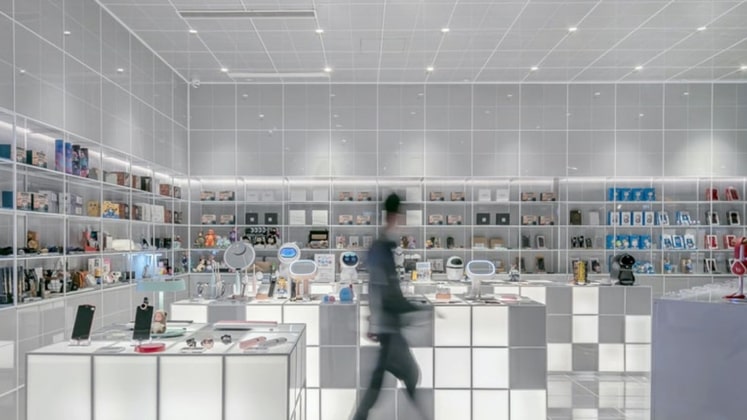
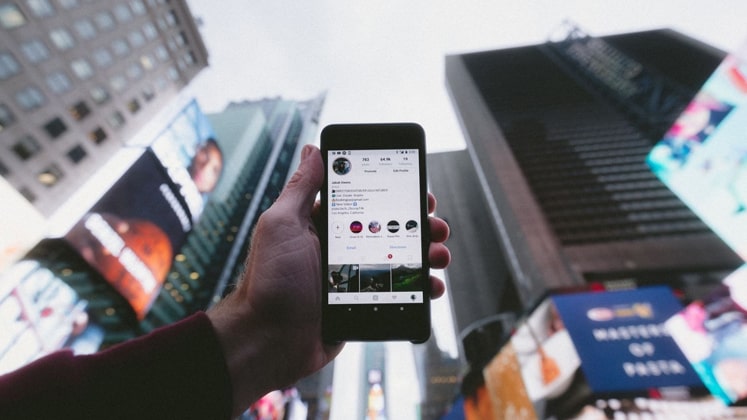
As the ‘phygital’ trend of merging the physical with the digital gains more prominence, we are going to see the same elements translate into the retail world as well.
As authority lines continue to blur, consumers demand greater transparency from stores and a feeling of being included.
“We’re going to see this convergence of the physical store and the digital world, so this idea of the store as a broadcast studio. We’ve been talking about it for a while, but I’m really excited to see how the shopfloor is going to continue to be redesigned with broadcasting for live video in mind. The store is going to increasingly become a kind of content studio.” – Laura Saunter, Senior Strategist, Insight at WGSN stated.
Diversifying into new categories
Brands and retailers need to stop limiting themselves and their brand to only sell the products that are featured on their website, within the four walls of their retail space, and start analysing the relationships they have and should want to build with customers as individuals or communities.
The question that needs to be addressed is : How can you stretch your brand into creating a whole new different set of services?
Targeting the Chinese Gen Z

“China’s Gen Z consumers are less motivated by status and are increasingly seeking self-expression as well as personalisation. Part of this is due to the highly competitive and stressful environment they’ve been raised in. Throughout the uncertainty of the pandemic and current times, they are starting to rethink their priorities and looking to follow individual dreams as well as personal aspirations.” – Crystal Tai, Consultant APAC, Mindset during WGSN’s Create Tomorrow podcast, Quick Commerce, Data and the Meta-Economy
This presents brands and retailers with a huge untapped market opportunity with enormous purchasing power looking to be addressed.
How can your brand cater to the demands of this consumer base? When retail is no longer confined to geographical boundaries, how are you going to leverage the space to provide solutions that need to be seen?
Biophilia Dominated Spaces
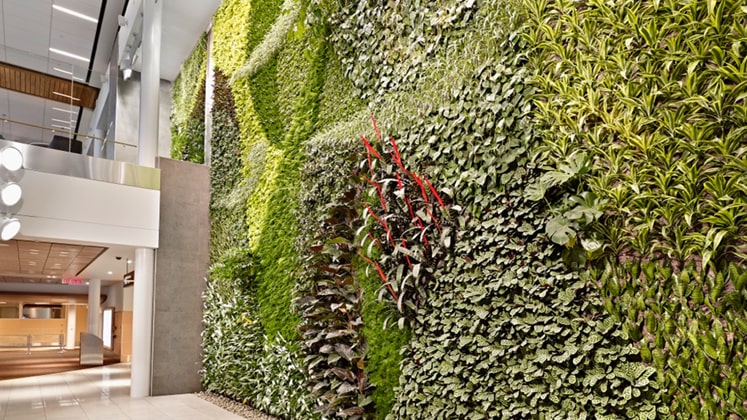
Another trend that has been predicted to influence retail in the near future is biophilic design.
This offers brands and designers a blank canvas in terms of how they can integrate biophilic design elements into retail and store scapes.
It would be exciting to see how stores of the future will be able to integrate nature and green space into what they offer – for example, things such as rooftops being converted into rewilding spaces, or farms to grow the produce that then you can eat in restaurants in the mall.