Even as the mass market plunges in Russia due to economic downturn; luxury brands in the country are still seeing strong sales as rich Russians are investing more actively in absolute luxury goods such as bags and watches. Though the currency devaluation is eating into the margins of many retailers, but still luxury brands are seeing a surge in sales looking to either expand or open more stores as its ever loyal customers – the rich Russians, are leading the way and spending more.
As Russia witnesses economic slowdown with no signs of recovery in sight for 2016 as well, an opportunity has been provided to boost Russian manufacturing. Further, with wages decreasing by roughly 10 per cent over the last year, middle-class Russians have moved from mid-segment retailers to favour budget clothing. According to National Polls, about half of Russians can barely afford purchases beyond food and other basics. Despite all this, with limited or no domestic alternatives to luxury brands such as Prada, D&G, Chanel, etc. for the rich customer, the market is left with no choice but to continue importing such products despite the value of rubble increasing, leading to retailers absorbing these cost that is hitting their margins.
Compared to the mid-market competitors, the luxury brands have not only weathered the storm as the economic crisis hasn’t affected the daily consumption patterns of the wealthy Russians who are heavily investing on luxury bags and watches, but they have also consolidated their market share at 10 per cent. The key indicator for this sharp polarization between the rich and the ever growing population of the poor, as the Government data reveals, is that 4 million people fell below the poverty line in the first 9 months of last year. However, according to the Fashion Consulting Group (FCG), the luxury clothing sector is expected to shrink by 20-25 per cent this year to £ 1.7 billion, down from £ 2.1 billion last year, because of the continuous pressure on the economy.
Nonetheless, luxury brands are doing well as they have rich Russians constantly feeding into their latest collections. Though the quantities of purchase might be lower than before, but these specific consumers are not deviating from their luxury brand of choice. Such is the case that the leading luxury brands such as LVMH Moët Hennessy Louis Vuitton SA, Kering SA, Chanel SA and Prada SpA are doing well in this market. This has been possible due to their strong branding, investment on heavy marketing and promotions and widespread distribution, thus being well positioned to attract new consumers, while also feeding into their old consumer base as well. In watches, Rolex SA and the Swatch Group Ltd. witnessed the strongest growth benefiting from a surge in demand for luxury timepieces.
Tapping into the competitive pricing of Moscow are the Chinese tourists whose numbers have surged in the past two years.
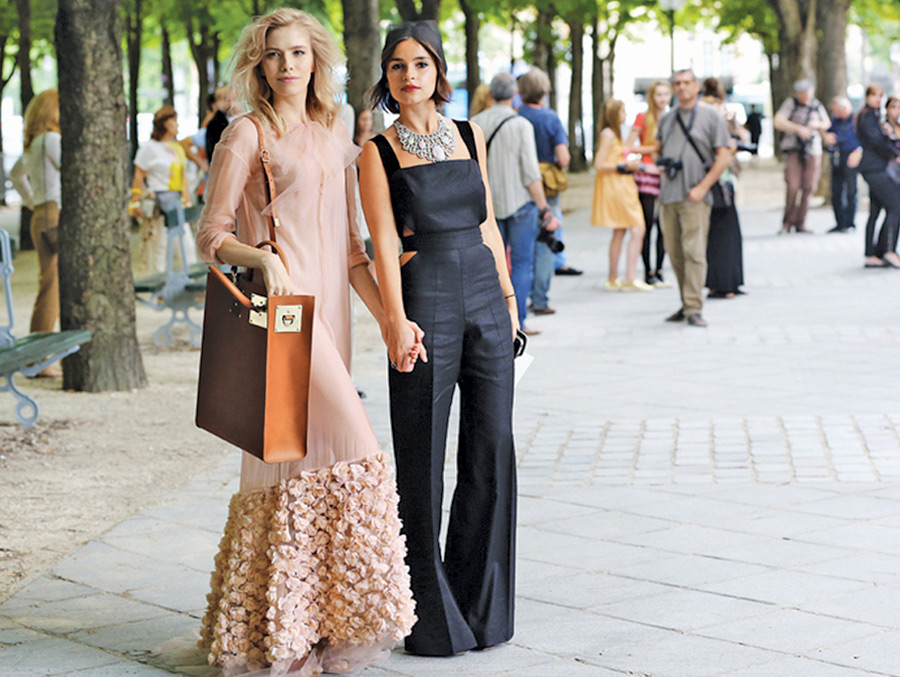 Owing to this trend, a few brands believe that growth will continue and are opening new stores to tap the new wealthy consumers. Amongst them are Bulgari and Jimmy Choo, who have opened a new departmental store across Red Square, whereas Hermes has doubled its selling space. Various luxury brands are providing testaments to this change as Prada revealed that its Russian sales last year have ‘registered significant growth’, while for Rolls Royce, ‘Russia was the strongest market in mainland Europe’. The spending habit of Russia’s elite spreads beyond the country’s borders. According to the tax-refund company Global Blue, though the Russian spending abroad dropped dramatically last year with a 41 per cent year-on-year fall in September, but still Russians constitute the third largest group of tax-free shoppers, mainly because rich Russians continue to buy.
Get Access to more Market Analysis articles from
APPARELRESOURCES.COM. SUBSCRIBE TODAY
Giving further impetus to this has been the plunge in rubble that has created bargains for the shoppers as prices don’t necessarily keep up with the currency’s decline as fashion retailers claim that they are keeping prices down to retain consumers. This has provided scope for many to keep constant their purchase of such products despite the economic downturn. Also tapping into the competitive pricing of Moscow are the Chinese tourists whose numbers have surged in the past two years, helping in boosting luxury sales in Russia, as exchange rates are comparatively lower than what they get in China.
Yet, according to Euromonitor’s latest report on the Russian market, the luxury goods market is predicted to record value stagnation (at constant 2015 prices) and volume decline over the coming years. This will lead to the consumers’ approach to purchases becoming more pragmatic rather than spontaneous or impulsive. Also, rising unit prices resulting from possible currency devaluation may lead to lower spending on luxury goods by the Russian consumers. This will require the luxury brands to focus on re-strategizing, while keeping their loyal customers closer and in the process tapping the new ones. “Most luxury operators are expected to be more conservative in new outlet expansions due to the concerns regarding economic slowdown and higher rental costs,” reveals the Euromonitor report.
With concerns regarding the economic downturn eating into the sales of luxury brands, many luxury brands are leaving no stone unturned in catching a share of the Russian expenditure. But what needs to be seen is whether the luxury brands are capable to tap this consumer segment which is flamboyant in its demands and also travels a lot!