While every industry has been busy keeping an eye on the millennials and their behavioural patterns as business opportunities, a whole new generation with a fresh mind-set is fast emerging, ready to push the millennials into the background. Welcome to the world of Generation Z – a brigade of youngsters born post-1990 and now entering the workforce, exerting their preferences and beliefs. So even as the retail industry is still trying to figure out how to capture and retain the attention of the millennials, a new challenge that is different and complex has already reared its head!
Many retail analysts believe that the ‘Millennial’ cohort is really two generations – Generation Y (born between 1978-1989) and Generation Z (born between 1990-1999; some even prefer to include only those born post-1995). According to estimates, Gen Z represents about 60 million people in the US and about 2.6 billion people worldwide. As of today, this group makes up a quarter of the US population and by 2020, will account for 40% of all consumers. Understanding them will be critical for companies wanting to succeed in the next decade and beyond. In the meanwhile, media and market research companies have already labelled them as “screen addicts” with the attention span of a gnat (a recent study suggests that Gen Z attention spans have shrunk to eight seconds).
No wonder, many analysts also refer to them as ‘Net Gen’. On a personal level, Gen Z seeks immediate validation and acceptance through social media, since that’s where all their peers are and where many of the important conversations happen. “Never before has there been a generation incapable of remembering the world without the internet,” said Goldman Sachs analyst, Christopher Wolf, in a presentation recently. However, ironically, these are the same people who are also looking to differentiate themselves professionally. Research suggests that Gen Z is also the ‘entrepreneurial generation’ who like the idea of working for themselves, the majority of them being risk-averse, practical and pragmatic. Significantly, these youngsters are also very cautious about their privacy and are less inclined to share information without understanding the consequences.
According to estimates, Generation Z represents about 60 million people in the US and about 2.6 billion people worldwide. As of today, this group makes up a quarter of the US population and by 2020, will account for 40% of all consumers.

According to Goldman Sachs researchers, this bunch of highly informed, but restless consumers will be the biggest influencers for retail trends in the future. “That’s because (their) diversity, fluency with technology and conservative attitude toward money will have profound social and economic implications,” reasons Wolf. In fact, the diversity of this generation is the most dynamic in the history of the US. Research provided by Frank N. Magid Associates suggest that Gen Z comprises a mix of 55% non-Hispanic Caucasian, 24% Hispanic, 14% African-American, 4% Asian and 4% multiracial people. This interesting mix of cultures and influences will also be reflected in their retail choices.
Having seen how their elders struggled through the recession, Gen Z is very conservative in its financial approach, a major difference from the millennials. It is a group that will rely on debit payment systems, and not credit cards. According to a market research by The Center for Generational Kinetics, 29% believe personal debt should be reserved for a few select items and 23% believe it should be avoided at all costs. The focus is on getting maximum value for money. While Gen Z is realistic about the challenges ahead, 89% of them remain optimistic about their futures, which is higher than any other generation on record.
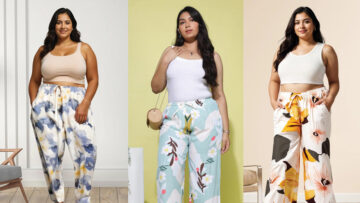
Vision Critical, in partnership with research firm MARU/VCR&C, recently ran a study exploring the attitudes, behaviour and values of this generation. In an interesting find, it was discovered that the number one thing that Gen Z shoppers look for in the products is ‘aesthetics’ and admittedly, fashionable design matters for 67% of them – more than that mattered to any other generation. Since this generation is always posting photographs, they prefer to be seen in clothes that do not have prominent brand logos. They do not want to be walking advertisement billboards.
Retailers are already sensing this opportunity, and recently Target introduced a clothing line called Art Class, designed with the help of 10 trendy ‘Gen Zers’, with collections that refresh every four to eight weeks. Contrary to their social persona and love for the net, these Gen Zers love shopping in-stores for their personal styles. One may assume that this is good news for brick and mortar stores, but in fact the pressure is more, as these youngsters are well aware of what other retailers are offering and the best ‘buys’ available online, putting pressure on the retailers to deliver. So, to win with Gen Z, retailers must be sharp with both the in-store and online shopping experiences. Some favourite Gen Z retailers of today include Urban Outfitters, UGG, Gamestop, The North Face, Sunglass Hut, American Eagle, Forever 21 and H&M. As a gender-specific observation, while guys spend more on products, girls spend more on experiences.
It is widely accepted that Gen Z is even more attuned than millennials to issues like sustainability, and believes in its own power to make a difference. A major change being predicted is that fast fashion is going to turn to slow fashion, because this generation is not going to see the need to spend money. According to an IBM/NRF study, these young consumers have access to US $ 44 billion in buying power, with 75% saying they spend more than half of the money available to them each month. They’re very much willing to switch brands, and they’re demanding too. They’re also less swayed by traditional marketing techniques, like harnessing celebrity power, and they have gone from blockbuster celebrities to unlikely role models they see and connect with on YouTube.
Another noteworthy characteristic of these young Gen Zs is that though they see the workplace as a battlefield where getting a good job is a priority, they are inclusive and tolerant of difference. They have grown up in a world where a black man was leading the country, women were in positions of power in the workplace and gay celebrities were role models in the open. Hence, they are not judgemental. Retailers are using these features to grab attention, as Gen Z is creating their own personal brand and not getting impressed by big names.