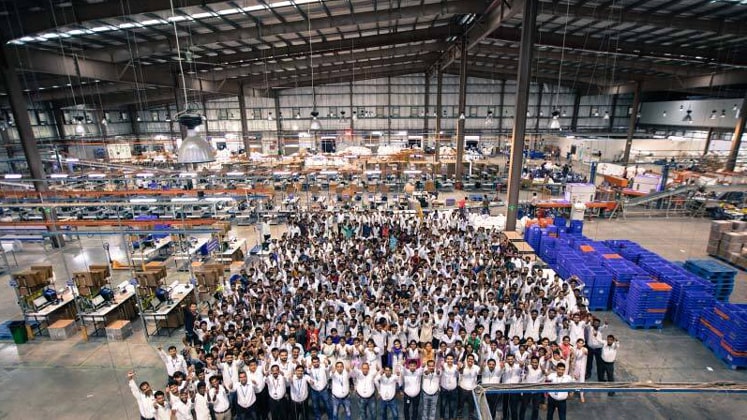
Often on various platform, it is being repeatedly highlighted that the textile and apparel industry is the second-largest employment creator as around 45 million people are working in this industry. But at the same time, it is good to see that e-commerce giants, which have the major share of the revenue from the sale of fashion products, are also creating jobs in huge numbers and interestingly these jobs are spread across India. It will not be wrong to say that the pandemic-fuelled e-commerce boom will generate more and more jobs in future. Various research reports also strengthen this fact. The credit of creating jobs in huge numbers also goes to the apparel industry as the synergy of apparel and e-commerce players is a big factor in the overall growth of e-commerce companies.
Synergy of fashion and e-commerce players
Amazon is now the world’s number one apparel retailer in US and at the same time in India, it achieved 40 % Y-o-Y growth in its fashion category in FY ’21. Similarly, in a bid to ramp up its fashion business and co-create new brands to meet the emerging demands of new consumers, Flipkart Group is grabbing a share in apparel companies. It bought a minority stake in Aditya Birla Fashion and Retail Ltd (ABFRL) for Rs. 1,500 crore and also bought a stake in Arvind Youth Brands (which owns the Flying Machine brand) for Rs. 260 crore.
Similar is the experience of Snapdeal as its sales of fashion category have grown by 210 % in the first six months of 2021 and it witnessed kids’ apparel sales growth of 493% in 7 months of 2021. The company is geared up for IPO and could raise US $ 350-400 million.
Bumper jobs, especially for Tier-2 and Tier-3 cities
As of now, Amazon is hiring for more than 8,000 direct job openings across 35 cities in India and these job opportunities are spread across corporate, technology, customer service and operations roles.
“We will create around 2 million direct and indirect jobs by 2025. We’ve already created around 1 million direct and indirect jobs. Even during the pandemic, we had nearly created around 3 lakh (0.3million) direct and indirect jobs across technologies, content creation, retail, logistics and manufacturing,” says Deepti Varma, HR Leader, Corporate, APAC and MENA, Amazon.
Amazon is leading in job creation because of its size and focus on the same. The company recently hosted its first-ever Career Day in India and guided job seekers and motivated them to work with Amazon.
Very recently Amazon India expanded its fulfilment network in Haryana with the launch of a new specialised Fulfilment Centre (FC). This is the company’s 7th Fulfilment Centre in Haryana. The company says, “The continued investment in the state will lead to the creation of new direct and indirect work opportunities. Individuals from all backgrounds and especially locals in the nearby regions will find a variety of roles in the operations network, including full time and part-time opportunities. These individuals will have opportunities to learn and grow with training and upskilling opportunities.”
Over the past few months, Flipkart has added 66 new large-scale fulfilment and sortation centres across 12 states and created 1.15 lakh additional seasonal jobs to strengthen its supply chain network.
Fulfilment centres are specialised facilities where products are received from sellers across the region, processed and packed and then sent to sortation centres and delivery hubs for delivery to customers.
The interesting aspect is that such centres are spread across India like Flipkart added three new fulfilment centres (warehouses) in Karnataka’s Kolar (65 kms from Bengaluru), Hubli (400 kms from Bengaluru) and Anekal (around 36 kms from Bengaluru Centre). These 3 centres will help to create around 14,000 jobs. Now the company has 9 such centres across the state and has so far created more than 26,000 direct and indirect job opportunities through these supply chain facilities (including fulfilment and sortation hubs).
Similarly, its four new fulfilment and sortation centres in Bhiwandi and Nagpur (Maharashtra) will create over 4,000 direct and indirect job opportunities. Snapdeal has opened 130 new distribution hubs this year across the country and as per the company, the network expansion is serving the growing demand for online shopping from smaller cities such as Baramulla (J&K), Saharanpur (UP), Khammam (Telangana), Alwar (Rajasthan), Sambalpur (Odisha), Tumkur (Karnataka), Latur (Maharashtra), Dimapur (Nagaland). There is either growing buyer demand or higher seller concentration in above-mentioned areas.
Last year also it opened 15 new warehousing centres at industrial hubs located across ten cities including Ahmedabad, Panipat, Surat, Jaipur, Indore and Hyderabad and four top cities Gurugram, Mumbai, Bengaluru and New Delhi.
It is pertinent to mention here that these companies are having a focus on Tier-2 and Tier-3 cities as a big chunk of their business are coming from such areas. Last year, during the ‘Big Billion Day’, Flipkart sold over 16 million products across 40,000 brands and saw a 51% increase in shoppers from Tier-2 cities over the previous year. Similarly, Myntra’s ‘Big Fashion Festival’ sale saw close to 1 million new shoppers on its platform, with a 180% growth of shoppers from Tier-3 cities, compared to the previous edition.
Around 80% of Amazon’s new customer acquisitions have come from Tier-2, Tier-3 and Tier-4 towns. In FY ’21, it saw growth of 40 % in fashion category and 65 % demand emerged from Tier-2, Tier-3 and Tier-4 regions.
Not only customers, even new sellers and MSME base predominantly come from Tier-2 and Tier-3 markets such as Panipat, Agra, Indore, Rajkot, Jaipur, Surat, and many others.
It is worth mentioning here that some of the initiatives of these e-commerce players are totally women-centric and creating jobs by these giants is also strengthening Diversity, Equity and Inclusivity (DEI). For example, Amazon India has all-women delivery stations in Kerala (Aranmula, Pathanamthitta) and Kodungallur, Thrissur), Chennai and Kadi, Gujarat.
Jobs for retired too
Along with creating fresh employment opportunities for youth, these online giants are also significantly focusing on the retired people.
Just a few days back, The Indian Naval Placement Agency (INPA) and Flipkart signed an MoU, through which both organisations explored opportunities for the recruitment naval of veterans at the Flipkart Group. INPA will identify a pool of Ex-Servicemen candidates for relevant roles as per recruitment standards of Flipkart. The company will, in turn, enable these individuals to transition to the corporate sector through in-house assimilation and training programs.
Future full of opportunities!
A report by Kearney says that driven by a rapid increase in internet user base and with more people embracing online shopping, the value lifestyle retail market is expected to grow from US $ 90 billion in 2019 to US $ 156 billion by 2026, and touch US $ 215 billion by 2030. APAC’s regional research report titled Unlocking APAC’s Digital Potential: Changing Digital Skill Needs and Policy Approaches reveals that India will need 9 times as many digital skilled workers by 2025.
This huge growth in the next 9 years will naturally require more opportunities at various levels, more people to manage things so there is no doubt that in future also, these platforms will create good jobs.





 Bharat Tex Special Report 2026