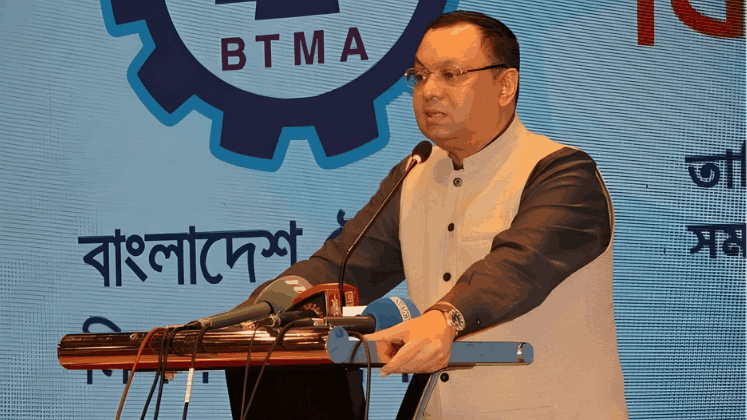
The Bangladesh Textile Mills Association (BTMA) has called for urgent government intervention, urging authorities to take decisive action within 72 hours to help local spinning mills reduce production costs and remain competitive amid a deepening crisis in the textile sector.
The association, which represents primary textile millers, has placed several demands before the government. These include a 10% cash incentive for the use of locally produced yarn, a reduction in gas prices and lower bank interest rates to ease financial pressure on mills.
BTMA President Showkat Aziz Russell stated that approximately 50 textile mills across the country have already shut down due to multiple challenges, leading to the loss of around 20,000 jobs. He warned that many more mills could face closure if timely measures are not taken, citing the recent shutdown of one of his own mills as an example of the sector’s vulnerability.
Russell made the remarks while addressing a press conference at the Gulshan Club in Dhaka on Sunday. He said the textile industry, along with the broader economy and political environment, was facing serious challenges that threatened its sustainability.
He further alleged that yarn imported from India was being dumped in the Bangladeshi market at significantly lower prices, creating unfair competition for domestic spinners and accelerating mill closures. According to him, the situation has been exacerbated by a lack of meaningful government initiatives over the past 20 months, making it difficult to revive already shuttered mills.
Data presented by the BTMA showed that yarn imports surged by 137% over the past year, highlighting a growing dependence on imported raw materials from India. Russell described this trend as alarming and warned of serious long-term consequences if domestic textile mills were allowed to collapse.
Recalling past instances when India halted cotton and yarn exports after weakening local industries, he cautioned that Bangladesh could face similar risks if its spinning sector continues to decline without adequate policy support.