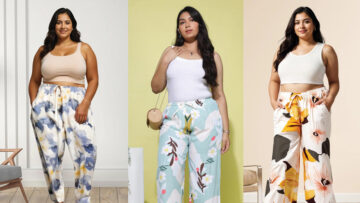
The rise in the number of expectant mothers in the workforce and high disposable incomes as well as the opening up of the markets have led to an increase in the demand for stylish maternitywear in India. It has been a long road from oversized or men’s clothing to trendy dresses or post-natal ranges that offer utmost comfort.
According to reports, the maternitywear industry in India was estimated at Rs. 2,000 crore in 2017 and the segment is growing at around 15-17 per cent Year-on-Year, thereby holding enormous potential for this burgeoning fashion retail vertical.
Founded by Naiyya Saggi, BabyChakra is India’s fastest growing and largest platform for pregnancy and childcare. Parents use it as a companion from when they are trying to conceive to when their child is 5 years old. Currently operating through their website and app, the platform creates a personalised ecosystem where parents can connect with other parents, experts and can buy relevant services and products. It has the largest community of Indian mothers online and the biggest base of reviews on maternity and childcare services.
In order to get a better picture of the growing base of maternitywear in India, Apparel Resources spoke to Anvita Dekhane, Chief of Staff at BabyChakra.

AR: How has the maternitywear market evolved and what is the current situation of the industry in India?
Anvita: Before jumping onto just the maternitywear market, there are a couple of big trends in the mom and childcare space. Women are coming online more and more due to the next wave of digital penetration which has helped bring 500 million mothers online.
They may have turned to e-commerce, but they still don’t have faith in the likes of Facebook or any other platform and they look for trusted players. BabyChakra is helping them navigate their way through the market. The mothers that look for information and products online are the audience we target, as they have a lot of paying capacity and aspirations. The disposable income is on the high rise now, and this trend is helping us bet that overall the mom and childcare market will become larger with the digital penetration, also applying to maternitywear as a segment.
Thanks to the growing trend of nuclear families in India, gone are the days where there were in-laws around in the house. There are usually only three people now – the mother, the father and the child. Now they look for solutions and every possible answer online. This has led us to believe that digital is the way out for all these families to find all these solutions that they are looking for. Which means that maternitywear, as a category, is taking shape overall.
I’ll draw a parallel here. Categories like toddler food did not exist 5 years back; khichdi used to be the toddler food in the house back then.But that has completely changed now with people asking if they can feed their kids ready-to-eat or ready-to-cook mixed vegetables to avoid to be in the kitchen all the time or if they are working professionals along with handling a toddler.
Even now, to some extent, women are relying on wearing double XL sizes, but they are also aspiring to see if there can be a section which is dedicated to their needs for the 9 months. That’s how we’re looking at the whole maternitywear space as well. It’s more and more at BabyChakra today that we’re seeing people come out and share their hacks or solutions of the kind of apparels they relied on while they were pregnant. We’re creating a space where the mother can not only shop, but learn the methods to prepare and ace parenthood as well.
AR: How do you think the shopping behaviour differ pre natal and post natal?
Anvita: It does quite a bit. During maternity, it is completely around flaunting or hiding the bump in different ways for different people. But after the baby is born, it is about the apparel being comfortable for breastfeeding for up to a year. Those needs are completely different because the post-maternitywear has to be completely nursing-friendly. Interestingly, there is more demand for the post-natal wear.
Now we’re seeing that in Tier-1 and Tier-2 towns, the concept of going back to work after 3 or 6 months is catching up more and more. There is a need for smart clothes for mothers who want to feel good about their professional lives which call for them to wear something that is friendly for them to be able to breastfeed their baby while they need to rush out of the office for a couple of hours and then come back to resume work. These needs are causing the whole post-natal segment in terms of apparel to grow more than pre-natal maternitywear.
“During maternity, it is completely around flaunting or hiding the bump in different ways for different people. But after the baby is born, it is about the apparel being comfortable for breastfeeding for up to a year. Those needs are completely different because the post-maternitywear has to be completely nursing-friendly. Interestingly, there is more demand for the post-natal wear.”

AR: How has the per capita consumption grown?
Anvita: From a macro perspective, India has come a long way in terms of overall per capita consumption. That’s a sign for us to know that people have much higher paying capacity and a lot more money to spend. In mom and childcare industry specifically, the interesting thing is that it is typically not a price elastic or price sensitive sector overall. So when it comes to you wanting something when you’re pregnant, I think it’s completely around whether you need it and if you do, you’ll go and buy it. Price doesn’t affect the decision making as it does in most cases.
Overall, the per capita spend on mom and childcare has grown primarily for two reasons. First one being, there are new emerging categories and products which mothers and families, as a unit, are now able to spend on. Products like educational toys, homecare or home utility which help them live through their early parenthood a lot more comfortably are on the rise. The second being that earlier they were completely reliant on what their moms-in-law said, but now they’re relying more on whether it really makes sense and are opting for information that is a lot more authentic or a lot more confirmed for them to take a decision on.
Just to give you a ballpark figure, after a couple of bottom-up analyses that we, as a team, have done, we realised that about 8 per cent of Indians spend about Rs. 4.5 lakh in overall mom and childcare in about 4-5 years of their parenthood minus the 9 months which is the expecting time. That’s the premium or the semi-premium segment. The mass market, 52-53 per cent of India, is spending Rs. 1-1.5 lakh in 4 years of parenting and childcare when they’re raising a kid and living through the pregnancy journey. These are just ballpark figures which have led the mom and childcare market to be as large as a US $ 74 billion in India today between products and services put together. That is growing at about 30-35 per cent year-on-year.
AR: Who are your target consumers?
Anvita: BabyChakra, as a platform, is a lot more generic. For us, a target consumer is anybody who is an expectant couple or a young parent. About 60 per cent of our audience comes from Tier-1 and Tier-2 cities and metros. About 30-35 per cent comes from Tier-3 and Tier-4 cities also.
AR: Do you see your market growing in the Tier-3 and Tier-4 cities? Has it been growing?
Anvita: The answer to that would be yes, and no. When I say yes, it’s because we do see that there is a lot of latent demand in those towns. We are taking note of that and are launching different languages and bringing in new products that are a lot more friendly to this audience in Tier-3 and Tier-4 cities. But having said that, we also realise that the paying capacity there is still a little less.
Also Read: Mind the bump: India’s evolving maternitywear industry undergoes a trendy makeover