 “Made To Measure (MTM) becomes mass customisation of fit when the appropriate technologies and business processes are employed. One must first determine the features that are to be customised and there must be technology to allow it”. Mike Fralix, President, TC2.
Made To Measure enables manufacturers to build products on-demand that are mass customised for niche markets, various countries, or individual customers with fit techniques. Russel Timothy, Associate Proffessor, and Anusha Murthy, fifth year student, NIFT, Chennai did a project on MTM with Louis Philippe as their model, which is reproduced below:
Made To Measure goods compete with standard goods which may be available right now at stores or dealers. The biggest appeal of mass customisation is being able to
- provide customised goods,
- quickly re-supply stores with standard products that have just been sold with built-to-order replacements and
- for industrial suppliers, to be able to respond on-demand to assemblers’ pull signals, which may be part of the spontaneous supply chain for the first two cases.
 In order to deliver products fast, mass customisers need ‘flow manufacturing’ to make products fast in small quantities and a spontaneous supply chain which can assure spontaneous availability of materials and make parts on-demand.
Flow Manufacturing is a manufacturing strategy that produces a part (component) via a ‘just-in-time’ and ‘kan-ban’ production approach, and calls for an ongoing examination and improvement effort which ultimately requires integration of all elements of the production system. The goal is an optimally balanced production line with little waste, the lowest possible cost, on-time and defect-free production. Flow Manufacturing is in direct opposition with traditional mass production approaches characterised by use of economic order quantities, high capacity utilisation, and high inventory.
 Establishing Spontaneous Supply Chains
Spontaneous supply chains avoid the need to generate forecasts, count inventory on-hand, generate purchase order inputs through MRP systems, place purchase orders, wait for parts to arrive, expedite those that are late, receive (and maybe inspect) materials, warehouse, group into kits for scheduled production, and distribute within the plant. The first step in establishing a spontaneous supply chain is supply chain simplification.
The simplification steps for supply chain management are standardisation, automatic re-supply techniques and rationalisation of the product line to eliminate or outsource the unusual, low-volume products that contribute to part variety way out of proportion to their profit generation ability. The goal of supply chain simplification is to drastically reduce the variety of parts and raw materials to the point where these materials can be procured spontaneously by automatic and pull-based re-supply techniques. Reducing the part and material variety will also shrink the vendor base, further simplifying the supply chain.
According to David Anderson, there are three ways to customise products:
- Modular customisation: tailoring a product by assembling a range of combinations of modules. A clear example of modular customisation is assembling many components in a vehicle.
- Adjustable customisation: these are mechanical or electrical adjustments which are reversible. An example of this is the possibility of customising software by user-defined settings.
- Dimensional customisation: this is the permanent customisation which can be infinite or have a selection of discrete choices. The tailoring of clothing falls within this definition.
Build to Order
often abbreviated as BTO and sometimes referred to as make to order (MTO), is a production approach where products are built after a confirmed order is received for it. BTO is the oldest style of order fulfillment and is still the most appropriate approach used for highly customised or low-volume products. Build-to-Order is the capability to quickly build standard or mass-customised products upon receipt of spontaneous orders without forecasts, inventory, or purchasing delays.
The main advantages of the BTO approach in environments of high product variety is the ability to supply the customer with the exact product specification required, the reduction in costly sales discounts and finished goods inventory, as well a reduction in stock obsolescence risk.
The main disadvantage of the approach is that manufacturers are susceptible to demand fluctuations in the marketplace that can lead to a reduced capacity utilisation in manufacturing. Hence, a BTO approach should be coupled with proactive demand management to ensure an effective use of production resources.
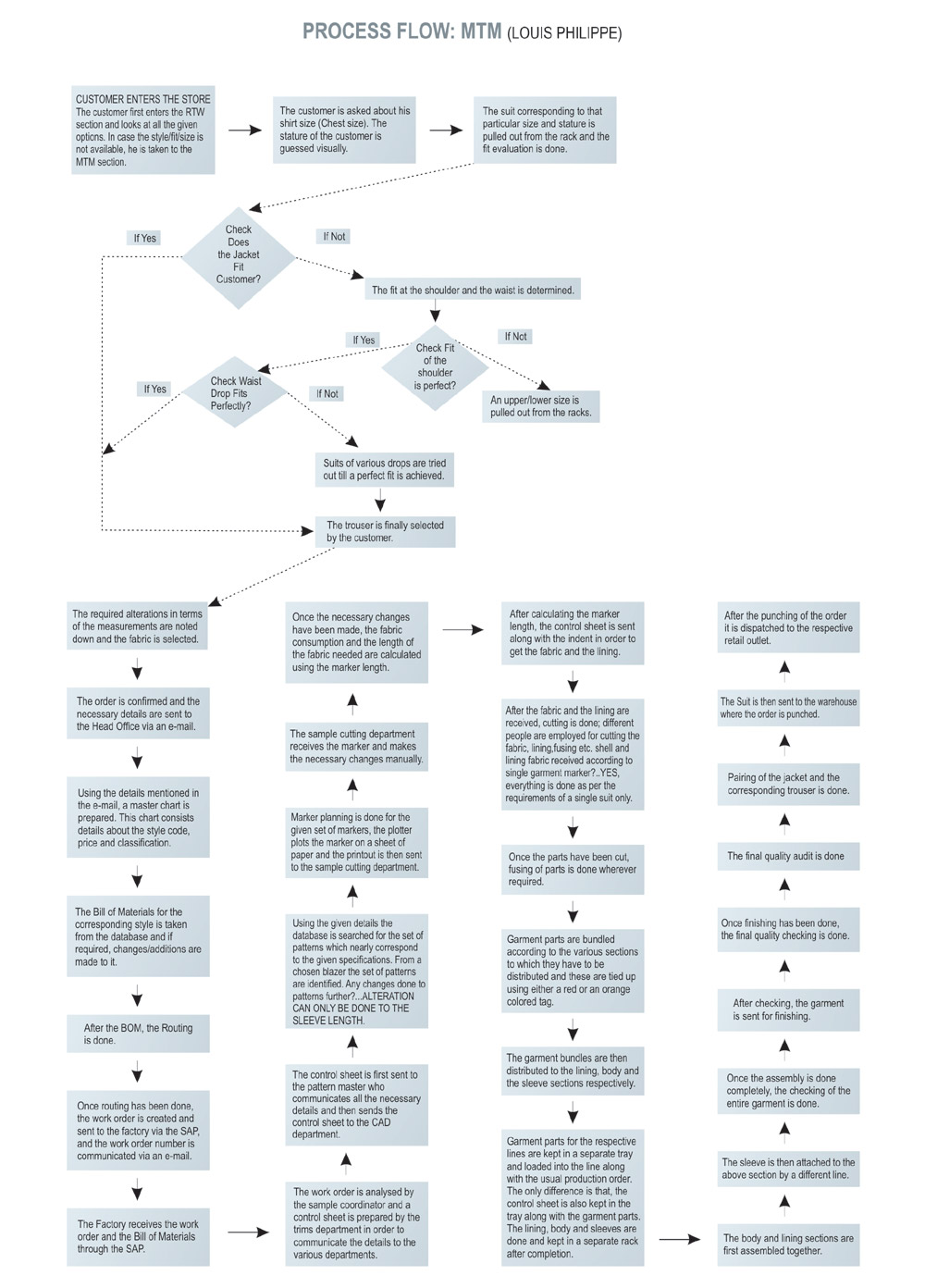
Made-to-Measure (MTM), as an Illustration of MC
Mass customisation is the same as made to measure, but on a larger scale. The number of orders are much more in the case of MC. Also, unlike MTM, MC makes extensive use of IT. Without automation, MC is not possible. MTM by Louis Philippe is one of the very first endeavours in India towards mass customisation and it calls the entire process as MADE TO MEASURE.
When one contemplates made-to-measure clothing, thoughts usually run to men’s tailored suits and shirts from retail clothiers specialising in that market, or custom clothing made by the local tailor. Most of these garments evolved from custom measurements translate into hand made patterns and hand cut fabrics, for which the customer paid a handsome price in both cost and time for delivery.
We have evolved from an era of mass production to mass customisation, where customers demand change from being a slave of fashion to wanting products and styles that reflect their own unique personality.
The nature of the made-to-measure business model creates an opportunity that is rather unique for the manufacturer, that of direct contact with the customer. This can provide some interesting challenges to a company whose database, marketing plans, inventories and accounting systems are all geared towards production and marketing in mass quantity.
The Need for Made to Measure Suits
In the case of a ready to wear suit that is of a standard fit and comes in short, regular and long sizes, one would choose the best fitting one for oneself. With made to measure, the fit is based on that very simple concept of being cut from this standard size (for example a 44 short) and then the actual measurements are adjusted according to the customer’s measurements. For example the length of a 44 short fitting coat is a good fit; however if one has very long arms, then, in such a case the sleeves would have to be lengthened. Also the waist that would go with this size will be 38”. But, in case the customer’s waist happens to be only 36”, then one would have to struggle to find an Off the Rack suit as the trousers don’t fit!! In case one gets everything tailored on one’s ready to wear suit, it would cost an absolute fortune and the actual line of the suit would never be the same. By having a made to measure suit, the line of the waist is cut proportionately, also the sleeves would be lengthened and the width adjusted accordingly, in order to complement the customer’s arms.
Made to measure gives one a thousand more options to tailor one’s suit more personally to one’s requirements.
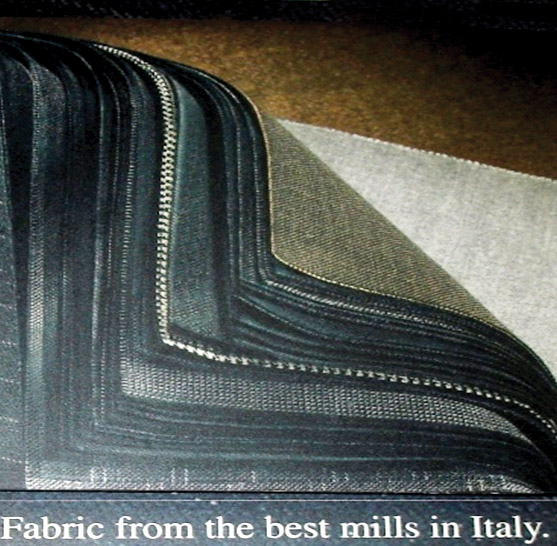
Louis Philippe launched its unique and exclusive Made to Measure service for suits in 2004. This new and unique concept gives Louis Philippe customers the choice of fabric and the luxury of a perfectly fitting and finely crafted factory made suit and trouser. The Louis Philippe customer has a varied choice of fabrics to choose from. For suits and trousers, he is served with a wide variety in the finest of wools in Super 110s, 130s and 160s, all from the best mills in Italy.
The combination of size, fit and the fabric selected by the customer is sent to the state-of-the art suits factory near Bangalore. The outcome is a unique, customised garment, just for the Made to Measure client/customer. All this is completed within a short span of two weeks.
The Exclusiveness and Speciality of Louis Philippe MTM Suits:
If a suit ranks as the most articulate garment in the language of clothes, then it should guarantee sartorial eloquence. Legitimately, suits involve a specific series of steps with commensurate degrees of quality. A Louis Philippe suit represents the highest levels of authentic craftsmanship distinguished by its construction.
Wearing something expressly created for one’s body and mind is an intoxicating luxury. After realising what such refined raiment can do for him, both physically and psychologically, it is the rare man who does not become a convert for life. Even in today’s culture of instant gratification, a large majority of the world’s best-dressed men still go to the effort and expense of having their clothes made to measure.
Made to measure apparel is the product of exact measurements taken for the customer, instead of an imaginary figure. Ready-to-wear garments, no matter how well altered, can never be as accurately fitted as one made by a skilled craftsman who constructs it especially for one’s body.
Key Features of Louis Philippe MTM:
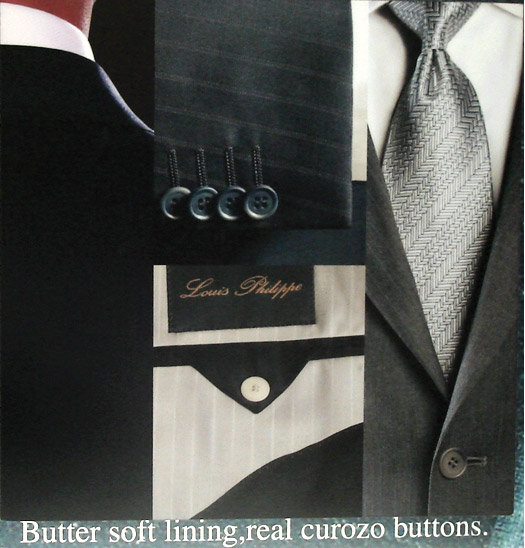
- Every aspect of the suit, be it lining, vents, collar or trims is carefully monitored by specialist designers.
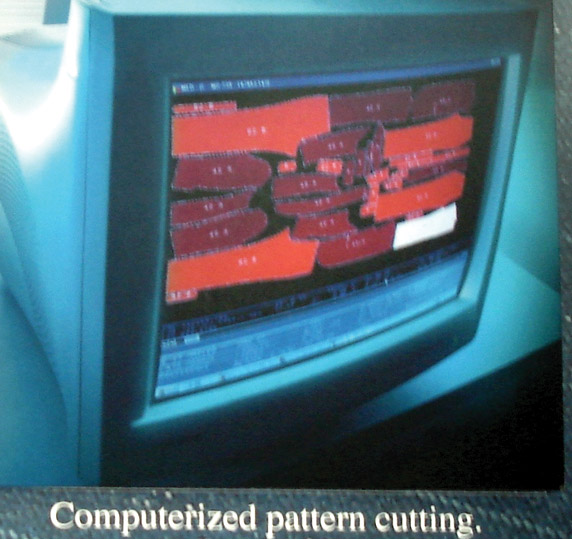
- Full-fledged, precision machine systems are employed for finer cuts.
- Only the choicest Italian fabric imported directly from the best mills in Italy are used.
- The fabric on display for MTM is imported exclusively for MTM and are not available in readymade suits.
The Customisation Technique for MTM Louis Philippe
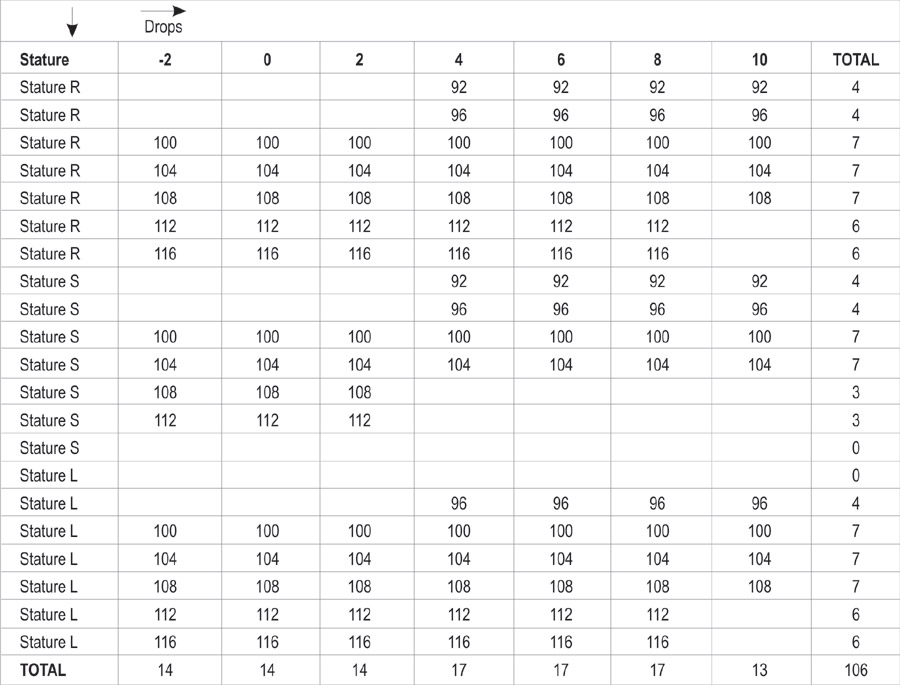
There are three variables in a suit size – Chest, Drop (chest to waist) and Stature. An individual can be fitted best by changing these variables.
Chest Size: equivalent to corresponding shirt size
Example: 38 (95cm), 40 (100cm) etc.
Drop: same chest size, but varying waist size
Drop = Chest size – Waist Size
Example: For a chest size of 38 and waist size 40, the corresponding drop is –2. (Thumb Rule: Waist
greater than chest means negative drop)
Stature: same chest size, varying shoulder to waist length. The three variants offered are- Short, Regular and Long.
Based on different feasible combination of these three variables a size set of 105 blazers is kept in the showroom.
NOTE: These 105 pieces form the total available size set. Beyond the displayed sample set only alteration of sleeve length is possible.
The customer selects one of the displayed sample sizes and confirms the same for ordering after complete satisfaction with the fit.
In this way, the suit is customised for the customer