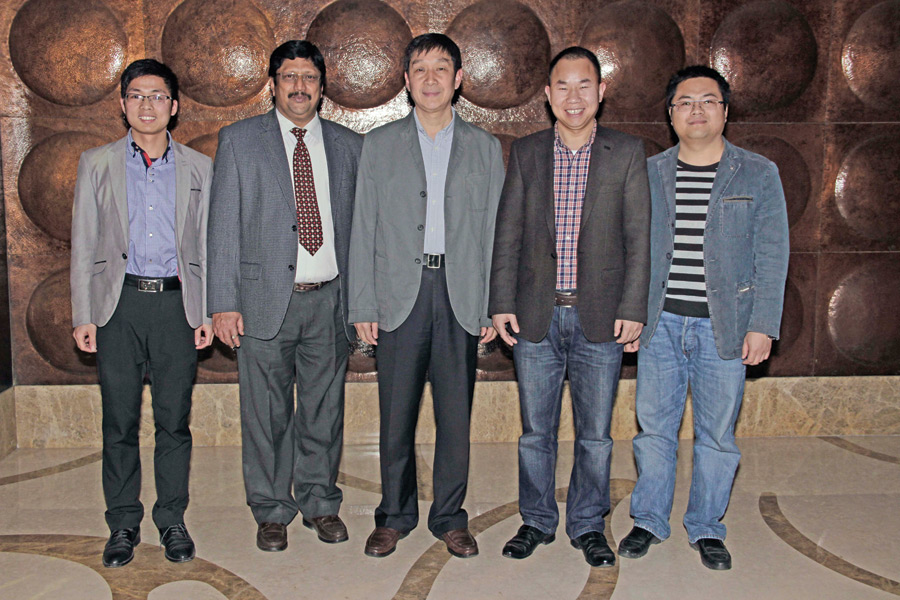
Technical support and after-sales service have been touted by every technology provider and manufacturer as their top priority and the only way to find success in the highly competitive global market. But rarely does the industry witness strong moves in this direction and in one such move, Chinese sewing solution pioneer Jack Sewing Machine Co. Ltd, held the first agent conference in India at Hotel Crown Plaza, New Delhi on 4th February. This effort was further strengthened by the presence of Zhao Xin Qing, Chairman of Jack Sewing Machine Co. Ltd., who highlighted the importance of India in the future growth plans of the Chinese sewing solution juggernaut.
Visiting India after 15 years, the Chairman emphasized that with Chinese Premier is looking at India as major trade partners. JACK as the biggest manufacturer of sewing machines in the country is committed to walk on the same path and henceforth there would be a renewed thrust to capture a major chunk of the garment manufacturing industry. The event was an opportunity for the company to share future plans and strategies of JACK for the Indian market, along with the schedule of training programmes for the coming two years with its dealers. Most of the dealers from North India were present, along with some big dealers from South India.
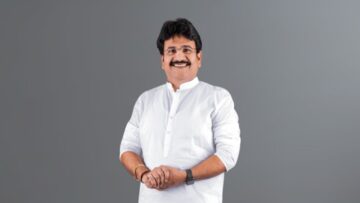
On the eve of this event, StitchWorld spoke to Vincent Guo (VG), Director General Manager, Jack Sewing Machine Co. Ltd., who shared the vision and plans of Zhao Xin Qing for the country… Excerpts from the interview
SW: How important is India as a market for JACK?
VG: The prospects of the apparel industry are bright in both China and India because not only do both the countries have the largest populations, making them the largest consumer of apparels but also both the countries are still engaged in apparel manufacturing in a major way both for the export and domestic markets. Consequently, India is the second biggest market for JACK after China and the most important market among all overseas markets. To further strengthen our presence in the Indian market, we will focus more on the technical support and service aspects of our business this year, for which we would be opening two service centres each in New Delhi and Bangalore, and recruiting an additional 112 people for the same.
Another focus of JACK would be on understanding the demands of the Indian market, both for domestic manufacturing and export market for which we have visited a lot of dealers and manufacturing factories. In the process, we have realised that the demand of the Indian market is quite different from the Chinese or any other market. In other markets, every sewing machine we supply is equipped with an under bed trimmer but it is not the case in India.
SW: Tell us more about the findings and analysis of the survey conducted by you in the Indian market…
VG: Our biggest client-base in India is composed of small- and mid-sized apparel manufacturers, who were using some or the other kind of black umbrella sewing machines and have now graduated to use ‘white’ sewing machines. But this transition has not been successful as the operators are not able to handle the high-speed machines to their maximum potential. For them it is like driving a car after driving a horse cart. Hence, through our service centres, we would train the technical staff of our nationwide dealers, who would in turn provide training to such operators. With a technically strong dealer network in India, we would be successful in penetrating deeper into different garmenting hubs such as Ludhiana, Tirupur, Panipat, etc.
Another finding of our survey was that in terms of quality of sewing and overall performance, sewing machines from JACK are at par with similar machines from a leading Japanese brand, and are even cheaper by at least 20%. But the perception of apparel manufacturers is skewed towards buying sewing machines of Japanese make, even though they are also produced in China. But now, some factions of the industry have started recognizing the quality and performance of Chinese sewing machines. As a matter of fact, for the last 7 years, JACK has been awarded as the No. 1 Chinese sewing machine company for selling the highest number of sewing machines on a global base.
SW: How will the training of technicians be conducted… In which all areas would the training focus on?
VG: As the first step, training would be given to JACK India’s technicians and that of our bigger dealers such as IIGM. The technicians of our dealers would be then responsible for training technicians of sub-dealers and local agents. It would be difficult to get Chinese technicians to train all the Indian technicians due to language and cultural gaps. The present recruitments we have made are only for service and support, and none of the people would be involved in sales. The sales activities would be solely undertaken by our 12 dealers and sub-dealers throughout the country.
Presently, most of the technicians of our dealers cannot repair the electronic components of a computerized sewing machine from JACK and they can only repair the metallic spare parts proficiently. Hence, the on-going training programmes will enable the technicians to repair the electronic components of the sewing machines with ease. We believe that in three years’ time, the demand for computerized automatic sewing machines would exceed the same of basic machines, due to the strong technical support structure, which we are looking to establish. Subsequent to the training programmes, all our technicians would be able to rectify all machine-related issues, including the same of PCBs, in less than 24 hours, which as per our knowledge no company is able to offer in India.
SW: Beyond the training programmes, what would be the direction of JACK’s plans for India? Have you defined some targets also?
VG: Our growth lies in the small- and mid-sized apparel manufacturers, who cannot afford to spend such money on sewing machines. Therefore, as of now we will focus majorly on basic sewing machines but in the future we will develop machines which can give the manufacturers lot more features within the same price bracket. The focus would be on increasing the market share and building the industry’s trust in our machines, and then we will start introducing better technologies. Last year our sales were nearly US $ 20 million in India, while catering to 20% of the market and we want to double our share within next 5 years.