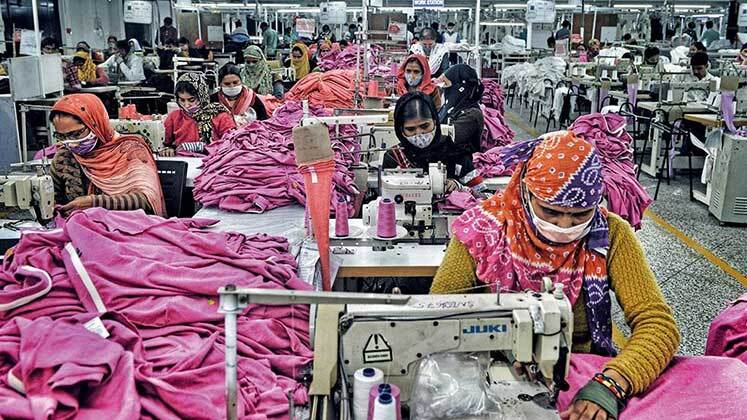
Bangladesh’s textile industry is facing one of its deepest structural crises, as prolonged shortages of gas and electricity, rising energy costs and a sharp dollar-driven liquidity squeeze continue to disrupt production nationwide.
Industry sources said more than 30% of textile production capacity has already gone offline, leaving thousands of skilled workers unemployed. Factory owners warned that if current conditions persist, nearly half of the country’s textile manufacturers could shut down by 2026, potentially cutting overall manufacturing capacity by around 50%.
Entrepreneurs identified the uninterrupted supply of electricity and gas as the most pressing challenge. In several industrial clusters around Dhaka, around one-third of machinery remains idle due to erratic gas pressure, despite marginal improvements in fuel availability over the past year. As a result, many factories are operating at roughly 50% capacity, according to industry insiders.
The crisis has been compounded by weaknesses in the power sector. A white paper prepared by a committee under the interim government identified the power industry as one of the sectors most affected by corruption under the previous administration. Despite receiving Taka 62,000 crore in government subsidies in the 2024–25 financial year, the Bangladesh Power Development Board reported an estimated loss of Taka 9,800 crore, placing additional financial strain on both domestic power producers and foreign energy suppliers.
Industry experts said limited progress has been made on renewable energy adoption and green electrification, despite policy commitments aligned with the chief adviser’s “three-zero” vision, including zero carbon emissions. With most green power projects still in development, energy-intensive sectors such as textiles remain exposed to supply volatility.
Energy specialists warned that without fresh investment and a stable policy framework, Bangladesh could face another major power supply crisis by 2031. Business leaders are calling for early investment decisions and policy consistency to prevent further industrial disruption.
The sharp depreciation of the taka against the dollar has further intensified the pressure, cutting entrepreneurs’ working capital by an estimated 35%. Textile manufacturers have responded by sharply reducing raw material imports, disrupting inventory cycles and production planning. Industry leaders cautioned that sustained foreign exchange stress could trigger widespread factory closures by the end of 2026.
Bankers also highlighted structural weaknesses in the sector’s financing model. In many textile firms, bank borrowing accounts for more than 80% of total funding, with entrepreneurs contributing only 10–20% equity. Rising interest rates are making this debt-heavy structure increasingly untenable.
Economists warned that small and medium-sized manufacturers and outsourcing-dependent units face the greatest risk, potentially leading to greater market concentration as larger, more modern and compliant factories are better positioned to absorb higher costs.
Industry bodies have urged the government to stabilise the domestic market by ensuring reliable supplies of gas and electricity, fixing energy tariffs for a defined period and tightening import controls. While power sector reforms—including contract reviews, subsidy rationalisation and the closure of ageing rental power plants—have delivered cost savings, experts cautioned that financial efficiencies alone will not safeguard the textile industry without dependable and affordable energy supplies.