Coupled with news from every sphere of manufacturing and retail industry the world over, hapless businessmen are blaming the economic slowdown for sluggish demand from the world’s second largest consumer base as well as the advanced economies. India’s apparel exports have declined 17 per cent approximately in the first quarter of FY ‘19.
According to the data compiled by the Clothing Manufacturer’s Association of India (CMAI), apparel exports stood at US $ 1.35 billion and US $ 1.34 billion in April and May of 2018, slumping 23 per cent and 17 per cent, respectively, from the same period previous fiscal. The total apparel exports that year saw a decline by 4 per cent to US $ 16.72 billion.
One of the unpopular schemes that has jolted the bedrock of Indian businesses is Goods and Services Tax (GST) that was implemented in 2017. A hasty implementation resulted in the blockage of working capital due to delay in refund of state levies and other refundable taxes.
Not only has GST been detrimental to the economy, a grossly unplanned demonetisation has created somewhat of a ripple effect in the slowdown whose effects go far beyond standing in line for converting cash.
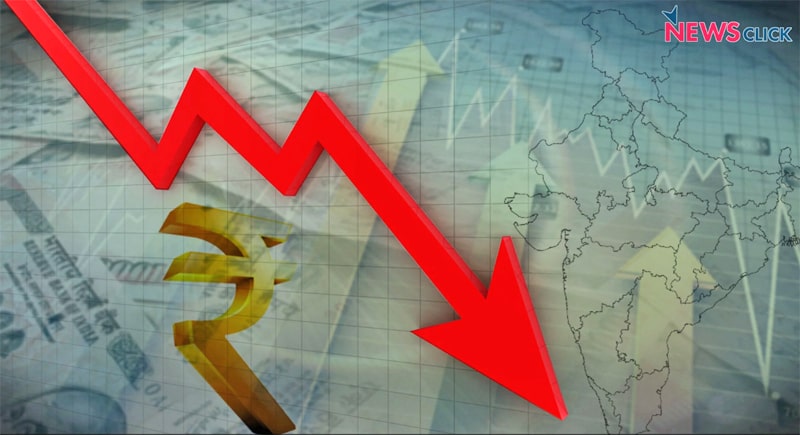
One of the worst-hit industries worldwide is fashion retail with 100s of store closures coming from even the most popular brands, especially in US, while in India, the pace of retail credit moderated to 16.9 per cent in May 2019 from 18.6 per cent in May 2018, reflecting slowdown in economy.
The data which comes from RBI confirms the fear of a slump but the Central bank of India has a few words of encouragement regarding the state of affairs. The economy is undergoing a cyclical slowdown rather than a deep, structural one, the Reserve Bank of India reiterated in its annual report for 2018-19. Despite that, it suggests that issues related to land, labour and marketing will need to be addressed as a major downturn will be experienced in sectors such as manufacturing, trade, hotels, transport, communication and broadcasting, construction and agriculture.

Director of Cantabil, Deepak Bansal is also of the view that slowdowns are inevitable but temporary, as he avers, “Slowdown is a cyclical phenomenon. No slowdown is permanent. World Economy saw slowdown in 2008 after sub-prime mortgage crisis in USA and in India there was again slowdown in 2012-13 when there was policy paralysis on part of Government. But economy bounced back very well after that. The biggest learning from last recessionary phases is to ‘keep your fundamentals strong’ and ‘prevent yourself from any knee jerk reaction’. So apparel companies with strong fundamentals may feel pressure on sales for short period of time but there will not be crisis kind of situation.”
We are yet to face the brunt of the slowdown but fearing the outcomes, consumers have already become cautious in their shopping habits that can be seen especially in e-commerce. According to Economic Times, the average ticket size has fallen 27 per cent in the first 6 months of 2019 compared with the same period in 2018 and average spending is down 21 per cent.
Although subdued sales were expected this festive season, not all brands have suffered the same fate. “Some brands have reported positive signs in their sales and are likely to match their overall revenue for the festive season last year, or witness a marginal growth,” Rahul Mehta, President, Clothing Manufacturers Association of India (CMAI) told
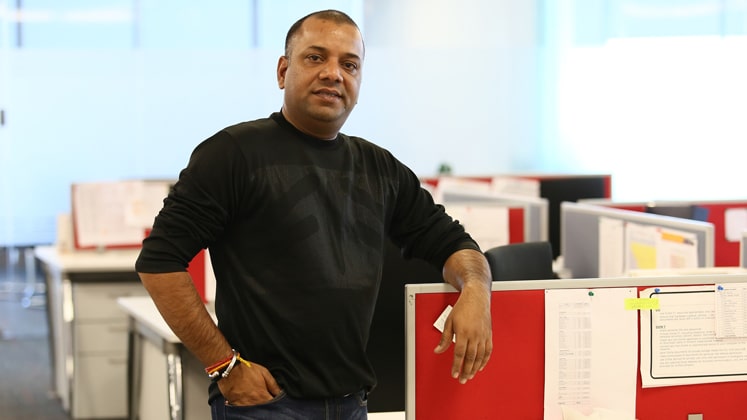
Ramesh Kaushik, Vice President of Brand Experience, Blackberrys, agrees, “The effect of the overall not so positive sentiments is being felt across industries and consumer spending has definitely been cautious. In spite of that, our business has been in line as compared to last year. In fact, the festive season was quite favourable for us. We are humbled to have a strong brand following, consumers who prefer us for the fit, quality, innovation.”
Speaking about strategies that may have helped in these times of struggle, Kaushik adds, “At Blackberrys, we build upon both online and offline strategies to ensure consumer delight and brand preference. Our idea is to spend in customer-facing segments, across product and services. Our right knowledge of consumer preference and our optimal reach-out media strategy, omnichannel retailing backed by some of the benchmark practices have helped us capture the available growth opportunities in the menswear market.”
Puma seems to have found the right blend of offline and online retailing as it has emerged the biggest sportswear brand in India. While other competitors like Nike are looking to close down as many as 150 stores in an effort to restructure, Puma is not deterred by the economic slowdown and will continue to operate its 360 stores in the country. It recently unveiled its first experience store in Bengaluru.
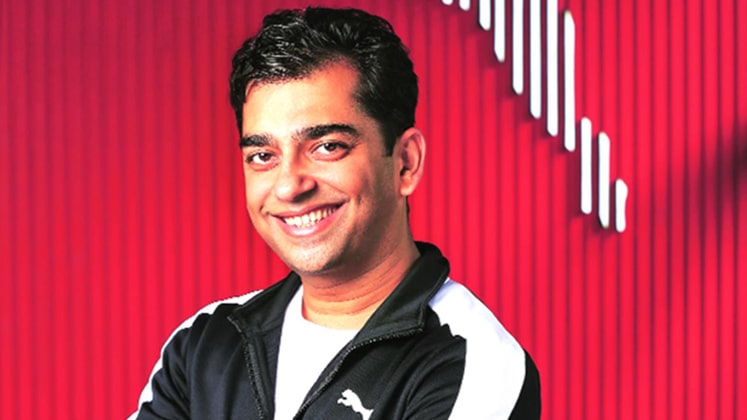
Abhishek Ganguly, MD, Puma, says, “We are not closing down any of our stores. We have not been affected by the economic slowdown. We have always been mindful of our expansion and our stores are growing at 30 per cent and we have had a strong growth compared to last year. We are bullish about India and will continue to invest in retail.”
The retail scenario might seem bleak to some but the positive accounts of these brands shine a ray of hope to retailers and manufacturers. However, in its monetary policy review, the RBI cut its growth projection for FY20 to 6.9 per cent from its June forecast of 7 per cent, attributing it to weak domestic economic activity and a global slowdown amid trade tensions. The Government will have to step up with structural reforms that are needed to ensure that growth gets back on track.
The RBI chimed in on this, saying, “This may involve strengthening the banking and non-banking sectors, a big push for spending on infrastructure and implementation of much-needed structural reforms in the areas of labour laws, taxation and other legal reforms, which will also enhance ease of doing business in pursuit of fulfilling the vision of India becoming a US $ 5 trillion economy by 2024-25.”