Denim Unspun, is a new robotics and apparel start-up company, which specializes in digital customization and automation to create “perfectly sized” jeans precisely to order. The company also works on the concept of “no inventory” or any kind of ancillary material that might result in waste.
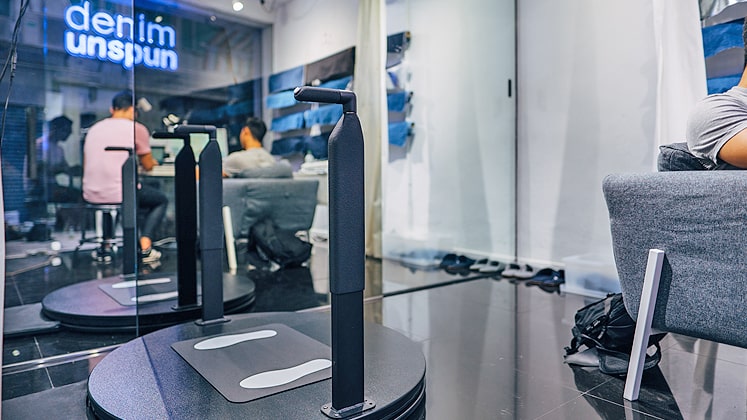
The process works with the help of a 3D scanner, which employs infra-red sensors and a rotating disk that gathers 100,000 unique data points in less than a minutes. These points are then used to create a virtual avatar, which is then enrobes in “digital denim” using proprietary software.
The company strategy of creating products only when customer places a order will seek to curb the inevitable waste that steams from unsellable clothing. As of the 150 billion garments the fashion industry produce every year, nearly 30 percent is never sold, according to Sharecloth, an on-demand apparel business. One of the reason to be blame can be the poor sizing. The unsold products is what that also become one of the major source of apparel waste.
Indeed, waste is a driving concern for the company, which counts the National Science Foundation, the H&M Foundation, venture-capital firm SOSV and Hong Kong’s The Mills among its early backers. As a part of its no-inventory model, Denim Unspun is developing a 3-D weaving machine that dispenses with cutting room waste by not creating any in the first place. It also follow few sustainability practices starting from the raw material. The brand uses TKK zippers derived from recycled plastic bottles and Candiani Denim and Cone Denim textiles that features organic and post-industrial fibers.
“From the inside-out, Denim Unspun jeans are truly and unequivocally sustainable. We can’t wait for 3-D tech breakthrough to eliminate the need for panel cutting and sewing, further propelling the positive impact each pair has on our planet.” – Denim Unspun
Furthermore, the brand also focuses on localized production which will help curtail the prodigious carbon emission generated by long distance freighting.
“It doesn’t make sense for raw materials to be moving around so much,” it said. “If you live in Los Angeles, San Francisco or Seattle you should be able to purchase clothing that was made where you live, or at least somewhere in your state.”